Follow Us on Google
By Damilola Fatunmise
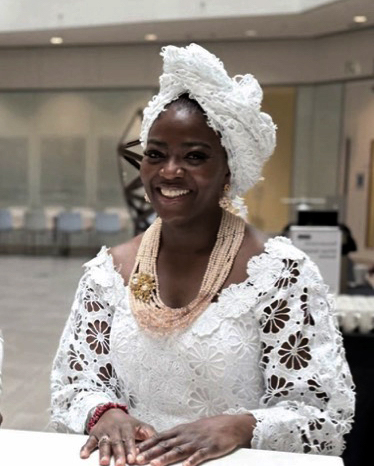
In a powerful convergence of royalty, culture, female leadership and African heritage, Her Majesty Queen Ashley Afolasade Ojaja Ogunwusi (nee Adegoke), Princess of the ancient city of Ile-Ife and Queen of the revered throne of the Ooni of Ife, joined distinguished African royal women and traditional leaders in the United Kingdom for the African Global Queens Summit 2026.
Convened under the patronage of Her Royal Majesty Obonganwan Marie Erete, Queen Aruk II, the African Global Queens Summit brought together queens, queen mothers, traditional rulers, princes, cultural leaders and representatives from across Africa and the Diaspora.
The programme ran from August 14-31, creating a platform for dialogue on the place of African royalty in an evolving global order.
Queen Ashley graced the opening days of the summit and delivered an address at the prestigious University of Oxford, where she spoke passionately about the significance of queens and queens consort within traditional institutions, the need for women in royalty to have a meaningful voice, and responsibility of royal women to transform influence into tangible impact within their communities.
Among the distinguished royal personalities and dignitaries in attendance were His Royal Majesty Oba Olusegun Aderemi of Aramoko Kingdom; Queen Mother Manal, also known as Naa Afoley Jormo; Her Royal Majesty Obonganwan Marie Erete, Queen Aruk II; Queen Thembi Tshabalala Manana of South Africa; and Prince Iganda Kamole, representative of Bashinjahavu-Bashaho, President, Movement for the Cultural Renaissance of Africa and representative, National Alliance of Traditional Authorities of Congo, alongside many other royal delegates from across the African continent and Diaspora.
The queen as the neck
At the heart of Queen Ashley’s Oxford address was a striking message about the often-understated influence of women within traditional institutions.
“A queen is not merely an ornament beside a throne. She is an integral part of the strength, stability and humanity of the kingdom. If the king represents the head, the queen is the neck – and the head cannot move effectively without the neck.”
The metaphor captured her central argument: the contribution of queens must extend beyond ceremonial appearances. Royal women have historically been counselors, mothers, mediators, cultural custodians, philanthropists and bridges between traditional institutions and the communities they serve.
For Queen Ashley, preserving tradition does not mean silencing women. Rather, she argued that Africa could honour its ancient institutions while recognising the intellectual, social and developmental contributions of the women within them.
“We can respect the throne without losing our voices. We can honour our husbands without abandoning our purpose. We can preserve tradition while allowing women to contribute meaningfully to the future of our communities,” she emphasised.
In a world where traditional and political leadership structures remain predominantly male, her majesty called upon queens and queens consort to understand that having a voice does not necessarily mean competing for authority. Instead, it means recognising the responsibility that accompanies proximity to leadership and using that position wisely.
Between tradition and feminism
Speaking as a woman deeply connected to Yoruba heritage and the ancient institution of Ile-Ife, Queen Ashley challenged the assumption that embracing tradition and advocating for women must exist in opposition.
Her philosophy is one of balance.
She spoke of a feminism that recognises women’s dignity, intelligence, economic independence, safety, and right to opportunity while remaining conscious of family, community and cultural identity.
“I do not believe that I must reject my culture to believe in the advancement of women,” she shared. “I can be traditional and still believe passionately that a woman deserves a voice. I can be a wife, a mother, a princess and a queen while remaining committed to the empowerment of other women.”
For her, modern African womanhood should not require women to choose between heritage and progress. The two can co-exist.
Charity begins at home
One of the most personal dimensions of the Oxford lecture was Queen Ashley’s reflection on the responsibilities of queens as wives and mothers.
Before attempting to transform nations, she said, leadership must have meaning within one’s immediate environment.
“Charity begins at home. Before we speak about changing the world, we must remember the people God and destiny have placed directly in our care. Our roles as mothers and wives must never become insignificant simply because the world gives us larger platforms.”
The queen argued that public influence becomes more credible when accompanied by private responsibility, compassion and discipline.
A queen may address international gatherings, lead foundations, advocate for women and participate in diplomacy, but she must remain conscious of the home, family and community from which her influence originates. It’s a message not of limitation, but of grounding.
Royal relevance
Queen Ashley also delivered a challenge to fellow royal women: do not rely on titles alone to remain relevant.
Royal relevance, she argued, must increasingly be measured by service.
According to her, “A title may introduce you, but your work must define you.”
In modern kingdoms, she said, queens must ask difficult questions: What problems exist among our people? Which women need support? Which children are being left behind? Which young people need skills? Which widows need economic opportunity? Where is injustice taking place, and what can our positions enable us to do about it?
She urged royal women to identify meaningful roles within their respective kingdoms rather than waiting for those roles to be created for them.
“Make yourself relevant to your kingdom. Find the gaps. Listen to your people. Discover where your influence can make a difference and work there consistently. Our crowns must represent responsibility, not simply recognition.”
That philosophy has shaped Queen Ashley’s own passion for charitable and community initiatives, particularly programmes supporting women and children, youth training and development, widow empowerment, education, economic opportunity and advocacy for justice and fairness within society.
She stressed that empowering young people is particularly important for Africa’s future. Royal institutions, she argued, cannot speak endlessly about preserving heritage without investing in the generation that will inherit it.
From Ile-Ife to the world
Queen Ashley’s presence at Oxford carried particular symbolism. She arrived not simply as an individual royal woman, but as a daughter of Ile-Ife – the ancient cradle of the Yoruba people and one of Africa’s most historically significant centres of civilisation and traditional authority.
Born Ashley Afolasade Adegoke, she is a princess by birth before becoming a queen through marriage to the ancient throne of Ile-Ife.
That dual identity – Princess and Queen – formed an important backdrop to her message.
Ashley’s journey represents the meeting point between ancestral heritage and contemporary African womanhood: tradition and education, royalty and professional accomplishment, family and public service, cultural preservation and global engagement.
Standing within one of the world’s most celebrated academic environments and speaking before African royalty, Queen Ashley’s message echoed beyond the walls of Oxford: Africa’s queens must be participants in the conversations shaping Africa’s future.
Global platform for African queens
The philosophy behind the African Global Queens Summit reflects that same ambition.
The gathering was conceived as a sovereign convergence of African royal women — women who have historically served as custodians of land, guardians of cultural continuity, community mothers and moral anchors within their kingdoms.
Its strategic vision includes the establishment of a permanent global platform for African Queens; the development of stronger collective positions on questions including land sovereignty, restitution and reparative justice; deeper royal and institutional diplomacy between Africa, the United Kingdom and Europe; greater participation of African royal women in peace building, governance and sustainable development; and the preservation of royal heritage while preparing a new generation for leadership.
Queen Ashley emphasised that such gatherings should ultimately translate into practical cooperation.
The significance of African queens coming together should not end with photographs, ceremonies and titles. It should create networks capable of supporting women, influencing policy conversations, preserving culture, championing education, promoting peace and creating opportunities for communities.
“When queens come together, our conversation must eventually reach the woman in the village, the widow trying to rebuild her life, the child who needs an education and the young person searching for an opportunity. That is when royal influence becomes royal impact.”
African queen in the 21st century
The Oxford gathering also raised a broader question: What should an African queen represent in the 21st century?
Queen Ashley’s answer was clear: She must be a custodian of heritage without becoming imprisoned by the past. She must respect the institutions she represents while possessing the courage to contribute ideas.
She must understand diplomacy. She must listen to her community. She must advocate for women and children. She must help create opportunities for young people.
She must protect cultural identity while understanding an increasingly interconnected world. And above all, she must serve.
Queen Ashley called for a generation of African royal women who understand that visibility without responsibility is insufficient.
“We must move from being seen to being useful; from influence to impact; from occupying positions to fulfilling purpose,” she urged.
One voice, many kingdoms
The African Global Queens Summit represents something larger than an individual gathering. It reflects a growing recognition that Africa’s traditional institutions remain important reservoirs of identity, cultural diplomacy, community trust and social influence.
Queens occupy a unique position within those institutions. They often stand at the intersection of palace and community, tradition and modernity, men and women, elders and young people.
That position can become an extraordinary instrument for development when exercised with wisdom.
Queen Ashley, therefore, encouraged royal women to collaborate across borders while maintaining the individuality of their respective cultures and kingdoms.
She believes that Africa does not need its queens to become identical; it needs them to become connected. “Our languages may differ. Our traditions may differ. Our crowns may differ. But the tears of a struggling mother are understood everywhere. The ambitions of our young people are understood everywhere. The desire for dignity, justice, opportunity and peace belongs to us all.”
Princess of Ile-Ife, Queen with global voice
From the ancient spiritual and cultural landscape of Ile-Ife to the academic halls of Oxford, Queen Ashley Afolasade Ojaja Ogunwusi’s message was ultimately one of purposeful royalty.
A crown is heritage.
A title is honour.
But service is legacy.
For the princess who became a queen of one of Africa’s most ancient thrones, the future of African royalty will not be secured by history alone. It will be secured by what today’s custodians choose to do with the influence history has entrusted to them.
And perhaps that was the defining message carried from Oxford to queens everywhere: Do not merely occupy your place in history. Make your presence matter.
As Africa continues to redefine its relationship with the wider world, its queens are increasingly refusing to remain at the margins of that conversation.
They are mothers, wives and custodians of tradition. They are advocates. They are professionals, philanthropists, educators and community builders. They are the neck supporting the head. And when that partnership works with wisdom, dignity and mutual respect, the entire kingdom moves forward.