Follow Us on Google
By Chinwendu Obienyi
Pricewaterhouse- Coopers (PwC) Limited, a prominent professional tax and advisory firm, has emphasised the need for a holistic and coordinated approach from the federal government and the Central Bank of Nigeria (CBN) to combat the country’s rising inflation.
In its recent Nigerian Capital Market report, PwC argued that comprehensive policy measures, rather than aggressive actions, are essential to stabilising the economy.
The report shed light on the challenges facing Nigeria’s economy, including persistent inflation and exchange rate volatility.
Despite the CBN’s efforts to control inflation through stringent monetary policies, such as raising interest rates by 800 basis points to 26.75 per cent, these measures have not successfully curbed rising consumer prices. PwC suggests that these inflationary pressures are being driven by factors beyond monetary policy, such as insecurity, climate change, and emigration from food-producing regions, which have severely impacted food supplies and prices.
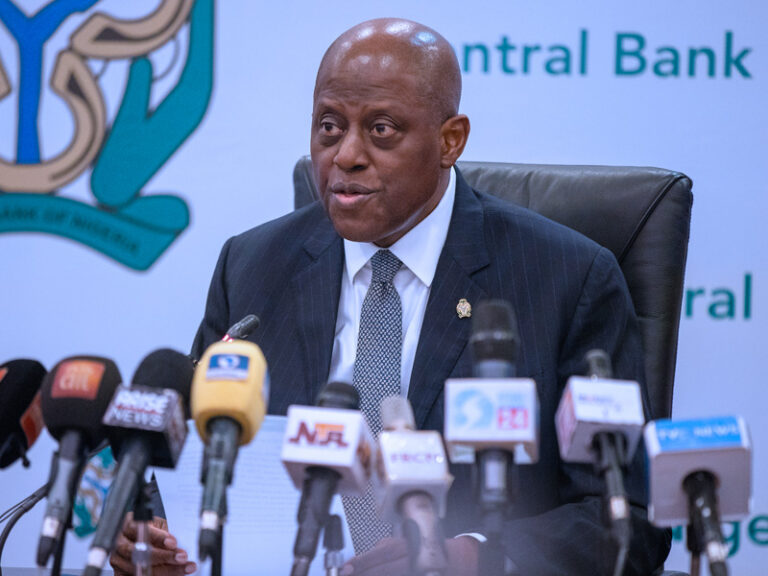
Olayemi Cardoso, who took the helm of the CBN late last year, has spearheaded efforts to target inflation.
The central bank adopted a traditional approach by incrementally raising interest rates, aiming to rein in the country’s inflation, which has reached a three-decade high. However, despite these efforts, many Nigerians continue to experience a decline in purchasing power, with basic necessities becoming increasingly unaffordable.
The PwC report highlights a worrying trend in food inflation, which soared from 25.25 per cent in June 2023 to 40.87 per cent in June 2024. The firm attributes this sharp increase to disruptions caused by insecurity, unfavorable climate conditions, and the outflow of workers from key agricultural areas, which have collectively exacerbated food shortages.
The value of the naira has also been a significant concern. While the currency initially showed signs of strength, becoming one of the best-performing currencies globally in early 2024, it has since suffered a dramatic reversal. As of July, the naira’s value fluctuated between N1,500 and N1,600 per US dollar, making it the second least-performing currency in the world according to Bloomberg. PwC notes a striking 48 per cent depreciation of the naira from N770.38/$ in the first half of 2023 to N1470.19/$ in the first half of 2024, following the unification of exchange rates and continued scarcity of foreign exchange.
To mitigate these economic challenges, PwC advocated for an increase in Nigeria’s oil refining capacity and the implementation of government initiatives aimed at ensuring food security. The firm believes that these measures, along with support from the African Development Bank to boost food production, will help alleviate inflationary pressures and improve the overall economic landscape.
Furthermore, PwC pointed to the ongoing recapitalisation of the banking sector as a crucial step toward achieving Nigeria’s long-term economic goals. The firm suggests that strengthening the financial sector will not only support the country’s aspiration to become a $1 trillion economy by 2030 but also create favorable conditions for growth in the equities market.
It stressed the importance of a coordinated and comprehensive policy approach to address Nigeria’s inflation crisis. By tackling the underlying causes of inflation and implementing strategic economic initiatives, the country can work towards stabilizing its economy and fostering sustainable growth.