Follow Us on Google
…Says poor observance of rule of law worsening poverty
• Sets agenda for Imo State
By George Onyejiuwa
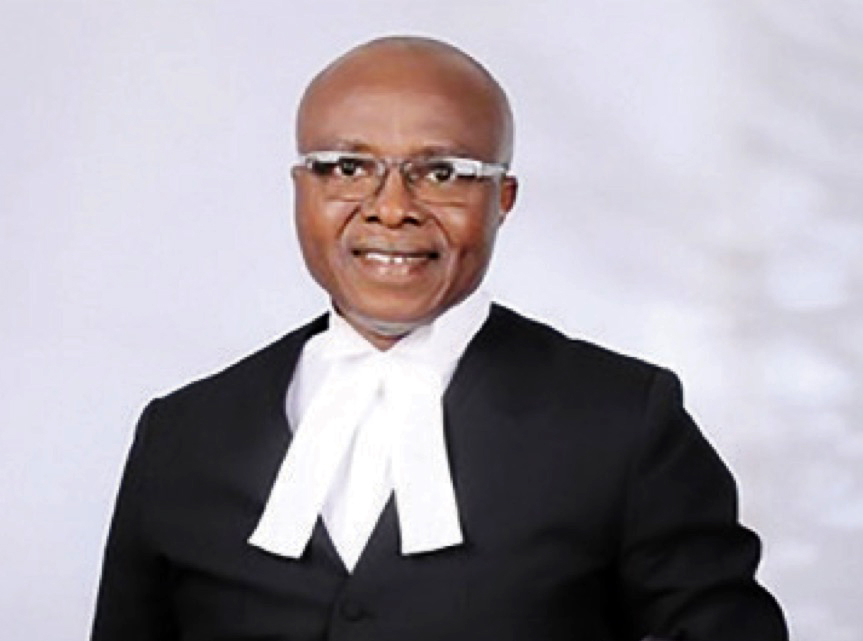
Senior Advocate of Nigeria, Mr Ngozi Olehi, was the governorship candidate of the Labour Party in the 2019 election. He is also a governorship aspirant in the Imo State off-cycle election scheduled for November 2027.
In this interview he laments that Nigeria has a democracy where those in power are not accountable to anybody. This, he asserts, has kept Nigeria grossly under-developed due to the crass and unchecked corruption among the leadership elite, thereby keeping the country in a terrible situation.
Nigeria is fast preparing for the 2027 General Election. Looking at the past years of democratic governance, what are your impressions? Are we getting it right?
Let me say that in the past few years, principles of democracy have continued to diminish in Nigeria. I have stated in several fora that what we have in Nigeria is the vestige of democracy, which is casting a shadow on our country. You cannot have a democracy where the government is not accountable to anybody, and it is not transparent. You can’t have a democracy where the government performs poorly, in the rule of law rankings globally. Democracy does not simply mean the occupation of an office. When these three things are absent, obviously and certainly, we don’t have a democracy. We have had a terrible leadership crisis in Nigeria, because we have always enthroned devourers rather than people who will promote the security and welfare of the citizens of Nigeria.
Going by democratic principles and values, accountability, transparency and rule of law generally pattern the people in government to serve and not to be masters of the people. In any democratic society the government serves the interest of the people and not the other way round. The servant must be accountable to his master. Any resource that comes in, you must declare it to the owners because they own the resource and not those in corridors of power. As somebody in government you owe it a duty to be transparent in your operations. In contract awards and service delivery you must follow established procedures. But that is not happening now even when the laws are there.
If you check the global rule of law ranking, Nigeria is always at the rear. There is a nexus between rule of law and economic development. You can’t find development where there is no rule of law. You cannot develop without interaction with the outside world and that is where direct foreign investment becomes key. You can’t ignore that importance. Let me give you an example, ordinary cassava which we regard as very common here is a critical raw material for no less than 10 industries. We have vast lands to cultivate cassava but the technology that can turn it into an exportable product is not here. But we can get foreign investors who will transform this cassava. But there must be rule of law. Internationally, the rule of law has nine dimensions now.
At the international level there are parameters used to ascertain the rule of law any state or country operates. Where it is absent, you don’t usually get foreign investors. That’s why in spite of the shouts by those in the corridors of power how many new foreign industries have opened businesses in Nigeria? Rather those that are already in the country are leaving and that is the situation. The point I am making is that our 1999 is better than our 2003, 2007 is better than 2011, 2015 is better than 2019 and so on. My point here is that the retrogression has been so terrible and that is why multidimensional poverty has been increasing as access to economic opportunities are no longer there.
President Bola Tinubu has said that the reforms initiated by his administration, though harsh, will bring prosperity for all. Do you agree?
That statement or claim is for babies. This assurance means nothing to people like me. By 1991 there was only one skyscraper in Dubai. When I visited Dubai in 2011, exactly 20 years later, it had become a global tourist centre. You can’t tell me to be patient when a policy statement can sway the economy positively. Nigerians will regret believing such statements because it is empty. They are wasters of opportunities and they have nothing to show. More than three years since he took office, where are we?
Some people have praised President Tinubu’s removal of fuel subsidy, saying that it made more money available to both the federal and state governments. What is your take on this?
This is a typical dishonesty in governance. The reasons for the removal of the subsidy was because there was so much corruption in the scheme. Why was it so difficult to arrest those who were using the system to defraud Nigerians? Has anyone been arrested? Has any person been prosecuted? In fact that fuel subsidy appears to be the only cake that any person from the remotest part of Nigeria can benefit from. But I’m not saying it should be permanently there, but there are economic principles that ought to be applied when a policy statement is hurting the people. You apply those measures so that there are palliatives. The palliatives we are talking about are not the handouts, like bags of rice, which the government is sharing but something meaningful to weaken the harshness of that policy. There was nothing like that and there has never been and that is why the economy is crumbling rather than improving. This is why they have been borrowing money every day. This is a terrible deception. The only thing that has kept Nigeria going is ignorance. If Nigerians know how bad the economy is, and how bad the government is performing, the kind of revolution that will be unleashed in every part of Nigeria will not be contained. But Nigerians do not know, even most of the elite do not know. For those working when they get their salary, whether it can solve their problem or not, it doesn’t matter to them; but they just keep managing. Nigeria is in a terrible shape.
Some Nigerians have said that President Tinubu has good intentions but that some of his appointees are incompetent in translating his policies into reality. Do you subscribe to that?
The buck stops at his table. There is no excuse for non-performance and incompetence. I do not know whether he has good advisers. He was a Nigerian when he became president and he will continue to be a Nigerian, particularly when he knows that the steps that the government is taking are in very bad faith. What happened to the Lagos-Calabar coastal highway? Should that be a priority when the economy is fast declining? Even if it is to attract international confidence, why didn’t he throw the bidding open? This would have signalled to the international community that Nigeria is ready to do business. Not only that, many other multi-billion dollar contracts were just awarded under the table with total disregard to the procurement law. And you want the international community to believe that you’re doing your best?
Isn’t the duty of the National Assembly to point out the breach of the Procurement Act and oppose it?
This current National Assembly by my own understanding is part of the Executive arm. Truly, We don’t have a National Assembly. There will be no corruption if the National Assembly is alive to its duties.The Constitution empowers it with oversight functions over the activities of the Executive. But these ones are there for their president. Many people who know something about governance know that we don’t have a National Assembly. The dismal performance ranking of the country in all developmental index ought to have stirred up the National Assembly to ask questions about what is happening. Maybe in a few of their sessions they may have made noises as usual. There can be no corruption in a country where the National Assembly performs its oversight functions relating to the activities of government agencies. This is why the corruption circle has continued to increase daily and poverty is everywhere. Nigeria is more endowed than the entire United Kingdom. If we have good and competent leadership we should be assisting the UK. I was in London in January and they were talking about potholes on some of their roads. But look at our roads here and another government will come and promise roads like President Bola Tinubu promised to give Nigerians 24 hours electricity supply during his campaign in 2023. Has he delivered? Rather he spent billions of Naira to install solar power in Aso Villa while Nigerians remain in darkness. Today, the same President Tinubu is telling Nigerians to vote for him again that something is being done about power.
How do you feel about the judiciary? What is wrong with it?
Other News
The Nigerianisation of the judiciary is the primary thing wrong with it. What I mean is that the judiciary is a sacred institution that should never be toyed with by any organ of government. The wicked ones who want to get away with corruption are the first to pocket the legislature that could impeach them, and the next is to capture the judiciary by influencing the appointment process. Now, when we also get into this system of normalizing corruption most people become afraid of confronting those responsible. Corruption has become a norm in Nigeria. In the attempt to capture the judiciary they influence those who go into it. That is what I mean by Nigerianisation. But one of the key elements of democracy is to have strong institutions like the judiciary. Sometime ago, I was interviewed by the HotFM Radio Owerri, when President Tinubu appointed a Senior Advocate of Nigeria, a lecturer as the INEC National Chairman. His alleged links with the APC wasn’t in the public domain then. I said during that interview that if we want to build strong institutions, the obligation is to protect the institution that you are serving, serve the people, no matter who appointed you.
Is that possible in Nigeria?
That is exactly the problem.
What do you think is behind the current trend where a politician says declare me winner first and then he tells his opponent to go to court?
It is because of the imperfections in the electoral system. Let me tell you this: there are two amendments that are compulsory in the Electoral Act. One is removing the burden of proof from the petitioner to the INEC. INEC conducted the election and appointed the electoral officers. Why is it that the law made it mandatory for the petitioner who did not appoint any of the electoral officers to prove malpractices in an election it did not conduct? That is why the corrupt politicians will tell you that the most important thing is to declare me a winner and their opponents should go to court. I have written articles where I have pointed out the mistakes made by judges. Of course they are human. One decision of the Supreme Court is that the courts have jurisdiction to be wrong in law. But there are ones they shouldn’t. If the law places the burden of proof on the petitioner who did no wrong to contest an election and then he cried to the court and based on the law the judiciary asked him to prove it. Is the judiciary wrong? That particular provision of the law came from the Evidence Act.
The amendment in the Electoral Act is to remove the inclusion from that Evidence Act in election petitions. If the operation of the Evidence Act is excluded from the Electoral Act it will make INEC to be more careful than it is now. Secondly, there is a presumption of the correctness of any document presented by a public institution. The onus is also for you to prove that the document is fake according to the provision of the Evidence Act in the Electoral Act.
Therefore, if the INEC scribbles anything on a piece of paper and signs it, it is presumed to be official from INEC. You have to prove that it was not the result from the INEC, that it was generated by someone in a particular office somewhere. That is the real problem. Until these amendments are done I don’t think we have a credible Electoral Act anywhere. The most important thing is that we the people should take governance for purposes of shaping the future of the next generation, and for the purpose of producing those who care for our welfare and security. If we do this, then our attitude to elections will be different.
Since 1999 the number of those who come out for voting has been decreasing. In 2023, of the over 90 million Nigerians who registered, less than 25 million people actually voted. The voter’s apathy has increased because they are not satisfied with the quality of governance. But that is a mistake. If you are not satisfied, you should consider it a duty to vote out the non-performers and corrupt people from office. If you say you wouldn’t vote, the wrong people in the corridors of power will mobilize those who will accept their crumbs to remain in office and continue the evil. In 2023 do you think that the results would have been the same if up to 50 percent came out to vote? Certainly, it wouldn’t have been so.
Could the apathy of voters be attributed to the perception that the polls have been rigged regardless of whether the people vote or not as has been the case in previous elections?
It is a wrong conclusion. INEC, as bad as it is, has declared results where the candidates of the ruling party have lost the elections. With all its weaknesses, I don’t think that it is that bad. We keep saying that votes don’t count, but what happened in Lagos State in 2023? Where Tinubu lost was it not INEC that declared the results? Even here in the state there were many people who won elections because they were in a particular political party not the ruling party and yet INEC declared the results. In Abuja where Tinubu lost too, INEC also declared the results. Yes, INEC has to do more and it is our duty to come out to support them.
Do you think that state governments having their own police will curb the insecurity surging across the country?
That will not stop the kidnapping or banditry. One of the things fueling insecurity is bad governance. State police will not improve the issue of bad governance. Secondly, ordinarily state police should be a step in the right direction towards federalism. I don’t know why the journey to real federalism is struggling. Toward federalism, having state police is okay, but with the kindergarten quality of governance in the country we may be arming state governors who think the world belongs to them. As they have the police and the resources of the people, they will not give account. We are three here and the governor may decide to send the police to come after us if we are conspiring against him. You understand what they are saying. But for a mature polity, state police is beautiful. But I am reluctant to accept it as an option for dealing with the high profile criminality that is going on now. Secondly, what is sustaining kidnapping, terrorism and banditry are saboteurs in government. State police cannot deal with saboteurs in government. Those who use the instrumentality of their office to assist bandits by disclosing information are even in the security architecture. We are losing Army Generals because of saboteurs within the system. These three things just show you that our usual prank is to toy with the constitution as if it will give you all the solutions that we need. I have always said amendment of the Constitution means nothing if we, the people, do not know the right thing to do. The American Constitution is one-tenth of the volume of the Nigerian constitution. It was made in 1787 or thereabout and has only been amended 27 times, and yet the judiciary is creative in interpreting the provisions to suit present day realities and in technological advancements.
The UK has no written constitution, Israel has no written constitution and New Zealand has no written constitution. All these countries are richer than Nigeria with a voluminous constitution. So, our problem is not a constitutional amendment. If you wipe out all those who are sabotaging our security, it will be easier to crush terrorism, kidnapping and banditry.
You have interest in the 2027 governorship contest. What is your agenda for the state if you win?
I have always canvassed the importance of accountability, transparency and the rule of law. From day one is to lay the foundation that this government should be believed by the indigenes, residents of Imo State and foreign investors, who are critical to the transformation that we need.
From day one, you are a servant of the people and whatever you do must be in the interest of the people. I am aware that Imo has no industries currently. From day one, we begin to prepare the minds of investors and create that platform for them to come in.
Industrialization is critical to the economic transformation of Imo State. All cries of insecurity stem from bad governance. When the youths are sure of getting employment you wouldn’t have the kind of criminality we have today. There are so many things that basic policy statements will begin to plant in the minds of the people. Making Imo an international tourist destination means that it ought to be as neat as Dubai. It has to be as neat as some of these foreign countries like Singapore and attractive to decent minds. Unlike what was done during the era of Rochas Okorocha, I don’t believe that we require 27 specialist hospitals. If you check what causes diseases, more than 60 per cent comes from the environment. The moment you start addressing environmental neatness you’re addressing the health needs of the people. Just basic healthcare in the local governments and specialist hospitals may be two in each zone that will be well equipped, well-funded and adequately taken care of. That will take care of the medical needs of the people. Education is critical. The standard of education has virtually collapsed. Restructuring what is on ground at present is imperative – I mean fundamental restructuring. When a government is accountable, transparent and complies with the rule of law, obviously corruption will be minimized and you invest more in education. I talked about restructuring education because I looked at the educational systems in Israel and Denmark, which are imbued with innovation and technology right from the cradle. I hope to transplant that into Imo State.