Follow Us on Google
From Aloysius Attah, Onitsha
A team of prominent scholars from Nigerian universities has embarked on a research project to develop an Artificial Intelligence-driven platform, “Naija Falsehood Buster,” and establish a national hub for tracking and evaluating falsehoods across the country’s digital and broadcast media space.
The project also involves creating national database of influential on-air personalities and social media influencers to detect, monitor and stem falsehoods in the media space.
The research team comprises Dr Toyin Onayinka, Dr Jacob Opele and Dr Lawrence Adewole of Federal University, Oye-Ekiti; Dr Chioma Agbasimelo of Nnamdi Azikiwe University, Awka; Dr Blessing Dakat of University of Jos; and another researcher, Mrs Grace Onipede.
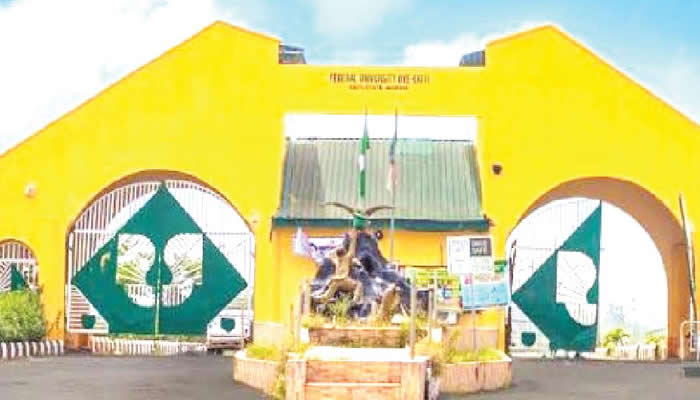
According to the Team Lead, Dr Onayinka, the interdisciplinary project, titled “Modelling” AI to Identify Falsehoods: Impact of On-Air Personalities, Social Media Influencers on National Integration” is a Tertiary Education Trust Fund-approved 2024 National Research Fund project. The project scheduled for completion within 24 months, will be hosted at the Federal University, Oye-Ekiti.
Dr. Chioma Agbasimelo, the immediate past Head of Department, Mass Communication, Nnamdi Azikiwe University Awka, who spoke to our correspondent said the proposed platform would minimize falsehoods in the media space.
“The researchers will, after rigorous research, develop an AI-driven system and a national database of influential on-air personalities and social media influencers to detect, monitor, and reduce falsehoods that threaten national cohesion,” Agbasimelo said.
She intimated that the project will create a database of influential OAPs and social media personalities for research as well as dashboards and analytical reports on falsehoods in the media space for public and private policy makers, regulators and media organisations.
The project, Onayinka explained, combines national languages processing machine learning and mixed-methods, fieldwork to map how on-air personalities and social media influencers contribute to the spread of misinformation and disinformation.
He added that the project would create a large annotated dataset for Nigeria and deploy an accessible software-as-a-service tool that flags, classifies, and visualises falsehoods in real time.
“This initiative is paramount at a time like this, where falsehoods and manipulated narratives can accelerate societal polarisation and erode public trust,” Onayinka stressed.
“This hub will provide real-time, locally trained tools and evidence based guidance to strengthen media literacy, support fact-checking and inform regulatory and policy interventions that project national cohesion”.
Onayinka lectures at the Faculty of Communication and Media Studies, FUOYE