Follow Us on Google

From Idu Jude, Abuja
The Federal Government of Nigeria has again been urged to jettison the punitive measures and adopt the newly introduced empirical methods of rehabilitating inmates to avoid a vicious circle.
This advice, however, came on the sidelines of Nigeria’s poor recovery system of inmates among Nigerian Correctional facilities, with an alarming record standing at 14.4 percent of banned substance intake against the 4.8 percent global rate, according to the WHO
Chairman and Founder of Hope Gilead Foundation, during a three-day engagement forum with medical staff of the Nigeria Correctional Service, highlighted that for Nigeria to succeed in the ongoing reforms, society should eschew stigmatisation and not see drug addicts as criminals but as sick people who can be permanently cured using empirical solutions.
Barikpoar, a British-trained evidence-based specialist, further highlighted that the nongovernmental organisation (NGO) is such that is set aside to provide evidence-based results, not just in training and support, but also an evidence-based framework that can bring about a change in substance use in Nigeria in general.
He noted that the initiative to reform Nigerian Correctional Services facilities arose during his PhD studies in the United Kingdom. “During my study, I realised that substance use in Nigerian correctional facilities has become a burning disaster as we speak.
“Currently, Nigeria has roughly 14.4 percent of cases of banned substance intake. The global level is about 4.8 or less, but Nigeria is three times higher than the global level. And the WHO has said that if nothing is done, it is going to be an impending disaster.”
Furthermore, he stressed that the precarious situation in Nigeria had contributed immensely to the increase in insecurity problems in the country. The insecurity problems in Nigeria are a result of high substance intake and that is where my burden of this NGO came about. Instead of talking and writing prose cases as we just had, we will be going through a vicious circle and have come up with an initiative to reduce substance intake, which in turn, would reduce insecurity problems in Nigeria.”
Meanwhile, Dr. Barikor has said that his conviction to change the way officials of Nigerian Correctional Services respond to people with addiction is for every Nigerian to have a change of orientation that addiction is not a crime but a disease like any other that can be taken care of like hypertension and diabetes. “It is not a crime, and we must change our orientation on how we handle those we find in our correctional facilities. We should stop treating them like criminals and see that these individuals need help, and we will be on the right track to solving it.”
He said the organisation was working on a synergy and partnership with the Nigerian government, using the EBEN system integrated model, which was developed to create evidence-based management and prevention of substance misuse, not only in correctional facilities but also across the country. “This comes with three different models, including the trans-theoretical model, the combi model, and the socio-ecological model. The EBEN model states that for every intervention to be effective, four key elements must align. The individual must be ready to be rehabilitated, the constraint must be moved and intervention must be in the right context, and there will be a need for reassessment. And if it is not followed sequentially, you will not get the desired results. EBEN model is the answer to the misnomer at the correctional facilities and the time is now,” he said.
While commending the programme facilitator, Mohammed Bashiru, Assistant Controller General of Corrections, who represented the Controller General, Mr. Sylvester Ndidi Nwakuche, said the three-day programme had opened a new vista to operational modernisation. “What this three-day programme has achieved is that it has boasted core principles and core mandate of rehabilitation, reintegration and reformation of inmates. This is because the contextual model of correction has to do with remodelling of inmates by touching into their domain, cognitive, psychomotor and affective domains. We appreciate the EBEN model, which is key to behavioural change and again fits into the realisation of our goals and is key to setting objectives as recommended in the 2019 Act of establishment of the Nigerian Correctional Service.”
On the possibilities to upgrade the facilities to international standards, he added that the ecosystem is a work in progress. He noted that the facilities in place across Nigeria are no longer in shape for human habitation but said there is work in progress to ensure they are upgraded. “If you carry out an analysis, we are not actually where we are supposed to be, but we have also left where we were. And with these lectures received, we are very much in tune with the reformatory process of the correctional facilities and with this human capacity building training, we are ready for modernisation.
He confirmed that the Nigerian correctional service has endorsed their training programmes for subsequent collaborations.
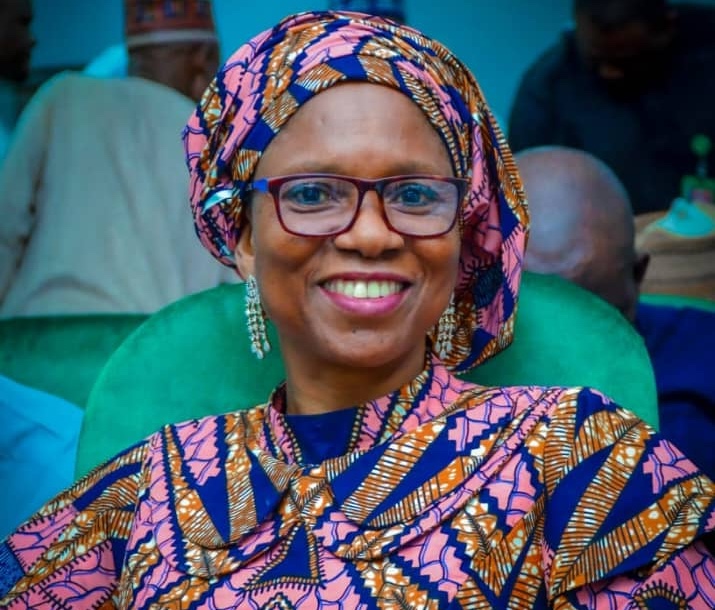
Another participant, Deputy Controller of Corrections, Mrs Velua Lagwa, in charge of mental health and psychological services, learnt that people should stop stigmatising those who are undergoing rehabilitation and resolve that they should not be criminalised. “My understanding is that it is not supposed to be. These are like people who suffer from other treatable ailments, but people outside do not understand them. As a professional, the role of empathy is topmost because it helps one to understand the experiences of whoever they are interacting with. It helps one to understand the person’s challenges, what the problems are and how to go about solving the problems. So, as a professional, you share in the person’s challenges for a better understanding and quick healing,” she stated.
She said the role of therapy is to make people change into better behaviour. It touches the cognitive domain of the person. “In our work, we have to do some cognitive change on how the person thinks, feels and acts. So, all these areas are targeted in therapy,” she said.
On the challenges facing the Nigerian correctional service, she blamed the government for lacking understanding of professionals in the system. “But I think with an increase in the mental health cases across Nigeria and now that there is little awareness, I believe the government is ready to do something. And I would suggest that the government should support the professionals who will do the work of behavioural change. There is no society with professionals without support to deliver, in terms of policy, remuneration and training, and there is nothing bad about the government endorsing exchange programmes for them to go out and see where it works and how it works and come back to replicate them,” she said.