Follow Us on Google

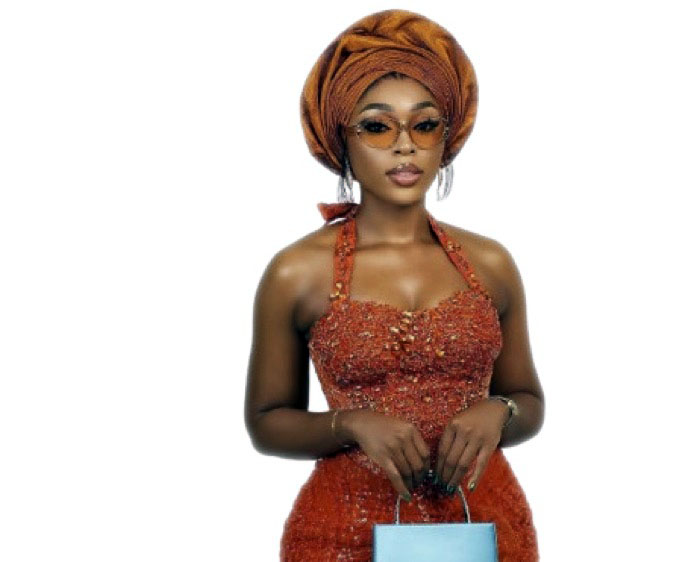
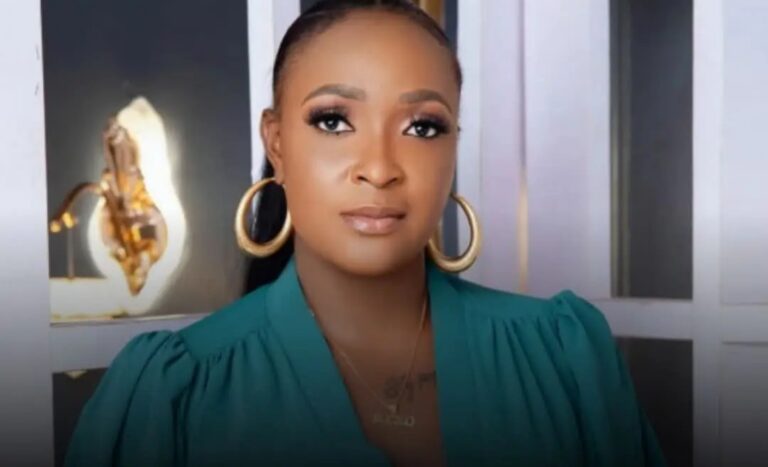
From her impressive evolution as an actress to building a thriving beauty business, Chinelo Ejianwu is a woman whose journey reflects resilience, faith and self-discovery.
During a podcast interview with Olive Emodi, the Nollywood actress and entrepreneur opens up about losing her mother at 16, surviving an uncomfortable first encounter in the industry, finding her footing in business, and discovering what she describes as her ministry in beauty and identity. Enjoy!
I’ve watched your brand evolve, and it’s exciting to see you blossom not just as an actor, but also as a businesswoman. Did you always set out to become an actor?
Yes, from when I was very little. Growing up, my mum hated the idea of acting. My elder sister and I were the two in the family who really wanted to venture into it, but my mum did everything she could to ensure my sister didn’t become an actress. And then there was me, her last baby and the love of her life. Anytime she caught me doing something related to acting, she wasn’t happy.
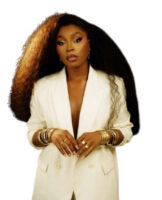
She wanted someone to follow in her footsteps in the medical profession. But I lost her when I was 16, and it became much easier for me to pursue acting.
What impact did losing your mother have on you?
I’d never been away from my mum. I didn’t grow up with my dad, so it was just the two of us. I also didn’t really grow up with my siblings because I’m the youngest, and my eldest sister is about six years older than me. By the time I was growing up, my siblings were already adults. They had their lives, and some were already in university.
It had always been my mum and me, and then I lost her. It was very difficult at first. I started living with my elder sister, and life became really challenging. I would wake up at 4:30 or 5 a.m. to help her get her children ready. Before then, I was used to waking up around 9 a.m. and taking my time.
Even after she was gone, it always felt as though she was watching me. Up until I left university, whenever I wanted to do something, I would ask myself, ‘What would my mum say?’ That thought kept me grounded.
And then you got into Nollywood. How would you describe your journey into the industry?
Beautiful. I said earlier that there’s a grace I’m only now beginning to recognise in my life. What other people see as struggles, I genuinely don’t always see that way. Many of the things that have pushed me to the next level have come quite effortlessly.
Let me give you an example. When I was trying to gain admission into university, I didn’t actually meet the departmental cut-off mark. But I went to meet the Vice-Chancellor and, as a young girl, told him, ‘Sir, this is my JAMB score. I didn’t meet the cut-off mark for my department, but I want to be here. I believe I deserve a chance.’
I remember what the VC told me. He said, ‘Do good to others so that good will be done to you.’ When the next admission list came out, which was the final list, my name was on it. That’s how I got into university.
My journey into the industry was similar. When I came to Lagos to live with my brother in Surulere, I was finally free to pursue acting. Nobody was holding me back anymore. I thought, ‘Now that my mum is no longer here, I have to focus on myself and do the things I want to do.’
I went for my first audition, and it wasn’t a pleasant experience. It was the usual Nollywood proposition of, ‘Come and sleep with me.’ That was my first encounter.
I almost concluded my mum was right and that I didn’t belong in the industry. Then someone tapped me on the back. It was an audition on Nnobi Street, Surulere.
Guess who it was? Uncle Ernest Obi.
He asked, ‘Hi, what’s your name?’
I said, ‘My name is Chinelo.’
He said, ‘Okay, I’d like you to come for this audition.’
I agreed. First of all, Ernest Obi himself was inviting me to an audition!
On the day of the audition, I didn’t even have money to get there. I almost didn’t go, but my sister insisted and gave me money. I went, and I didn’t even read up to two lines before I was hired. Cherika, the producer of Dear Mother at the time, said, ‘Yes, that’s it.’
After Dear Mother, I returned to school. I wasn’t very consistent with acting because I attended FUTO in Owerri, and Lagos was quite far away. I couldn’t juggle school and acting in Lagos, so I had to concentrate on my studies.
I finished school and returned to Lagos. By then, I had also started selling wigs because I didn’t want to be idle. I took ushering jobs, too.
Who helped you make those financial decisions?
Nobody. But I had a good boyfriend who really opened my eyes to what standards should be in dating.
I was at home making wigs when Nicole called me.
She asked, ‘Where are you?’
I said, ‘I’m at home.’
She replied, ‘There’s an audition I was invited to, but I don’t have time. Would you like to go?’
I said, ‘Okay, let me go.’
They came to pick me up. First, I saw Auntie Funke. I was like, ‘Ma, please, can I hug you?’
She said, ‘Yes, my darling. You can hug me.’
I read one line, and she said, ‘You’re hired.’
Six months later, my pictures were everywhere. My siblings and I were amazed by how quickly everything was happening.
What made you refuse to give in when the first person who auditioned you demanded sex?
My mum. I kept asking myself, ‘What would my mum say?’
I also wouldn’t want to discount my upbringing. I grew up in Onitsha, and somehow, Onitsha is a very grounded place. Certain things aren’t considered normal among girls in Onitsha. Onitsha girls can be quite reserved. They may appear loud and expressive, but deep down, many aren’t the type to venture out, experiment, or try new things.
Other News
For me, it always came back to my mum. What would she say? Giving in wasn’t even an option.
I recently visited your store, and I was blown away. How did your business evolve into the big brand it is today? What were the defining moments?
I’m going to be very honest. I don’t know exactly when it happened. I know that I kept putting one foot in front of the other.
But there was a defining moment in October 2020. Harvesters Church organised a programme for entrepreneurs, and the late Herbert Wigwe of Access Bank was one of the speakers.
That day, I decided I was going to fight for myself. I was going to do things right and get the life I deserved.
I also made a conscious decision the following Sunday. For the first time, I paid my tithe, and it was the last money on my account.
There’s something that happens when you’re convinced about doing something. When there’s a conviction in your heart, it feels like a personal conversation between you and God.
Before then, I was just a young girl. I still had boyfriends I could call and say, ‘Please, give me money.’ Sometimes, you would lie, and they would give you money. But after that programme, I became very clear about the kind of life I wanted for myself.
On that Sunday, I made a vow. I said, ‘God, for the first time, it’s going to be You and me. I’m giving You everything I have. If I’m going to suffer, let it be that You see me and approve of my suffering.’
After that decision, I literally cut off every single person I depended on financially.
If I tell you that I genuinely know exactly how my business grew to what it is today, I’d be lying. But has it grown massively? Yes, it has.
My Isaac offerings in a year now are something I cannot even mention here.
It’s no longer about a transaction. It’s a relationship of trust. I know that I will fund the running of God’s house because, at the end of the day, that’s why I’m here. That’s why I’m alive.
Do you believe you’re called into ministry?
Yes. But my ministry is in beauty.
I always say beauty and aesthetics are the gateway, while identity is the heart.
Many women want to be beautiful, and there’s nothing wrong with that. But imagine combining beauty with identity. That’s where my ministry lies.
You need an identity, and I genuinely believe that’s where my ministry lies.
For people struggling with their identity, what would you advise them to do? Where should they begin?
Introspect. You need to look inward and be very honest with yourself about who you currently are and what identity you have.
I’ll use myself as an example. When I began this journey of looking inward, I realised that I had daddy issues.
I was trying to fill an emptiness. I had never really experienced a man yearning for me or wanting me in the way I imagined a father would.
So, no matter what other men gave me, there was always something missing. I didn’t even know what I wanted in a man. There’s a difference between knowing what you want and then going after it. I didn’t know what I wanted.
If you want to discover your identity, you have to look inward. You need to understand who you are, your hurts, how you approach things and the kind of person you are.
Then you can begin working towards the identity you desire.
We know that our identity is in Christ, but we have to be conscious of that. From there, you can begin to understand how to live out that identity.
I find that many people make poor choices as young people, and it all boils down to identity.
When I was reading the Bible, particularly Genesis and the story of Adam and Eve, I saw how Eve experienced an identity crisis.
The serpent told her that if she ate the fruit, she would become like God. But she had already been made in God’s image.
She made a poor choice because she didn’t fully understand who she was.
A lot of our choices would be different if we understood our identities.
I believe all of this comes from fellowship, intimacy and spending time with God. You need to get to know the person who created you, then sit down with yourself and reflect.
It’s about saying, ‘God, we’re in this together.’
But we’re often too busy. We want to fill everything with noise.
Another thing people need to understand is that identity isn’t something you figure out in one year or one month. It’s a journey.
You keep discovering things about yourself every single day. I think the most important thing is to stay conscious and aware that you’re on a journey to discover who you are.
Even the smallest things can open your eyes to a deeper understanding of your identity, what you stand for, the things you don’t want and the things you cannot tolerate.
You seem to dress so effortlessly. What changed, and how important is style to you?
Style is very, very important because we live in a world of perception.
People award you contracts based on how they perceive you and who they think you are. That’s why style matters.
How you present yourself to the world influences how people perceive you.
A lot of people perceive me as someone who is gentle and not problematic. But you cannot take what belongs to me or undermine me.
Sometimes, people mistake meekness for weakness. That’s also the power of perception.
For me, I knew I wanted to be known for modest styling because I’m genuinely comfortable when my body is covered.