Follow Us on Google

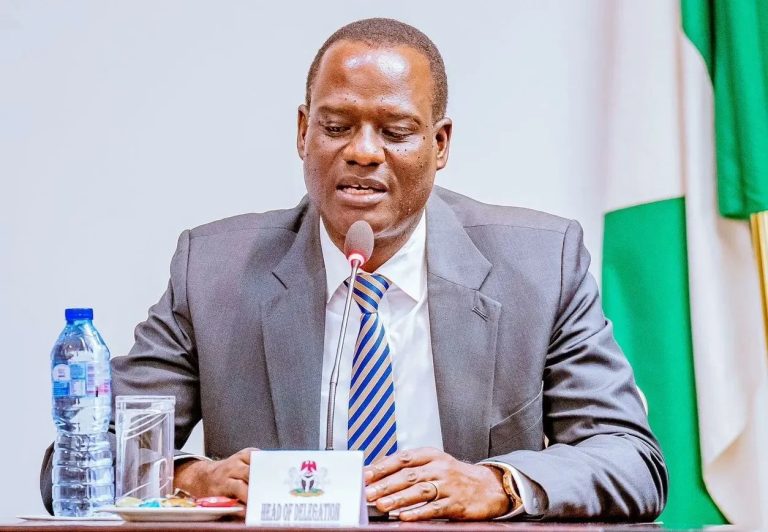
The Federal Government’s promise to enhance the welfare of teachers and their professional development is laudable. The Minister of Education, Dr. Maruf Olatunji Alausa, stated this during the celebration of the 2025 World Teachers’ Day (WTD). The WTD is marked globally on October 5 every year. The theme of this year’s WTD, “Recasting Teaching as a Collaborative Profession,” underscored the importance of teamwork and shared responsibility in strengthening education delivery. Speaking at the event, Alausa described teachers as “the custodians of knowledge, the builders of character and the architects of the nation’s future”, stressing that teachers remain the foundation of all professions and deserve improved welfare scheme.
The 2025 WTD was marked on the heels of the alarm raised by the United Nations Educational, Scientific and Cultural Organisation (UNESCO), the United Nations International Children’s Emergency Fund (UNICEF), International Labour Organisation (ILO) and Education International that additional 44 million teachers are needed worldwide to achieve universal primary and secondary education by 2030. UNESCO, ILO, UNICEF and Education International emphasised that “it is only through effective cooperation at all levels that we can build truly inclusive, equitable and resilient education systems worldwide.”
The World Bank ranks Africa among the most severe in the teacher shortage. According to the Universal Basic Education Commission (UBEC), only 915,913 teachers were available for 31,771,916 pupils in public and private primary schools in the country, indicating a teacher-pupil ratio of 35:1. This is below the UNESCO recommendation of one teacher to 25 learners for Lower and Middle Basic levels of education.
Unfortunately, many teachers in the country are not adequately remunerated. In some private schools, teachers are paid N30,000 per month. According to the Nigeria Labour Congress (NLC), most teachers working in private schools are not paid the national minimum wage and do not have health insurance neither or entitled to pensions. The neglect of teachers has undermined the teaching profession and made many fresh graduates to detest it. This can explain why teaching is no longer attractive to many young graduates. Teachers at all levels in the country are not adequately motivated.
Even official pronouncements on their welfare are hardly implemented. According to data from the National Union of Teachers, 16 states of the federation are yet to implement the 65-year retirement age after it was signed into law by the federal government. The 65-year retirement threshold for teachers was signed into law by the ex-President Muhammadu Buhari on April 8, 2022, as part of the Harmonised Retirement Age for Teachers in Nigeria Act, 2022.
Section 1 of the Act clearly states that “Teachers in Nigeria shall compulsorily retire on attainment of 65 years of age or 40 years of pensionable service, whichever is earlier.” Section 3 of the Act provides that the Public Service Rule or any legislation that requires a person to retire from the Public Service at 60 years of age or after 35 years of service shall not apply to teachers in Nigeria.
Apart from increasing the retirement age and years of service, the bill also introduced bursary awards, special rural posting allowances, and other items that will encourage brilliant Nigerians to take up teaching. Unfortunately, many states are yet implement the policy. The non-implementation of the policy by some state governors is a disservice to the profession and the education system.
The government must keep to its promise to enhance the welfare of Nigerian teachers. Without doing it so quickly, the education system is bound to collapse. Adequate funding is necessary in repositioning the education sector and making teaching attractive. Doing so requires increasing the annual budget for education at the federal and state levels.
The report that nine states had yet to implement the N70,000 minimum wage bill signed into law in July 2024, as at August this year, is not encouraging. Also disturbing is the fact that 12 states were still paying teachers the N18,000 minimum wage approved in 2011 as at October 2024. According to the Nigerian Union of Teachers (NUT), 16 out of the 36 states did not recruit teachers between 2018 and 2022. This is unacceptable.
The Federal Government’s budgets of N1.54 trillion, or 6.39 per cent, for education in 2023, and N2.18 trillion, or 7.9 per cent, in 2024, also fell far below UNESCO’s recommendation of 15 to 20 per cent for developing countries. There is need for improvement. Most states have not done better in this regard.
The theme of the 2025 WTD is a wake-up call on the federal government and other stakeholders in the education sector to address the challenges of teachers and the teaching profession. The role of teachers in the training of children and building the nation cannot be over-emphasised. Teachers mould character and train the leaders of tomorrow. Therefore, they should be fairly treated. Let the federal and state governments prioritise teachers’ welfare and ensure that promises made to the education sector are fulfilled.