Follow Us on Google
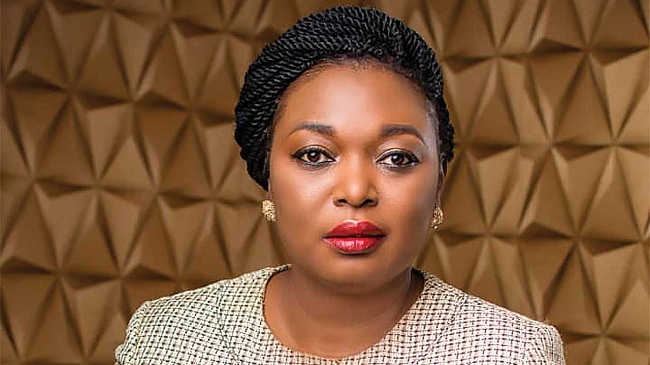
A former governorship aspirant and women leader, Princess Grace Iye Adejoh, has called on Black and interracial women across the world to stop playing second fiddle, develop themselves and rise to become global leaders in their respective fields.
Princess Adejoh, who was a guest speaker at the Black and Interracial Women Conference in Bradford, United Kingdom, on Saturday, said Black and interracial women should not be limited by the colour of their skin but by their God-given abilities to make a positive difference wherever they are.
While urging them to become visionary leaders, she encouraged them to position themselves strategically for the future they desire through hard work, focus and resilience.
In a paper titled “The Importance of Black and Interracial Women in Leadership: Driving Progress, Innovation, and Social Transformation”, she said women are shaped by what they hear and learn.
In her words:
“One thing I have learned is that what you hear shapes who you become. The voices you listen to, the conversations you engage in, and the ideas you expose yourself to all influence the direction of your life. So congratulations for positioning yourself strategically here tonight.
“So be intentional about what you hear. Listen for wisdom. Listen for strength. Listen for ideas that inspire you, challenge you, and encourage you to become the very best version of yourself.”
Princess Adejoh, who said the story of Black and interracial women is one of resilience, determination, courage and perseverance, urged them not to be docile but to become women of extraordinary strength, insight and wisdom.
Adejoh said:
“Being a woman comes with challenges. Being a Black or interracial woman often means confronting both gender and racial barriers. Many of you have had to work harder, prove yourselves repeatedly, and overcome obstacles others never see.
“Research confirms it: organizations with diverse leadership teams are more innovative, make better decisions, and achieve stronger outcomes. Diversity is not just about fairness. It is about results.
“Excluding capable women is not only unjust. It is a loss of ideas, innovation, talent, and potential. History has already shown us what happens when the door opens.
“Ngozi Okonjo-Iweala became the first woman and first African to lead the World Trade Organization, demonstrating excellence in global economics.
“Ellen Johnson Sirleaf became Africa’s first elected female president and guided Liberia through recovery after conflict.
“Kamala Harris broke multiple barriers as the first woman, first Black American, and first person of South Asian heritage to serve as U.S. Vice President.
“Dr. Mae Jemison became the first Black woman in space. As a physician, engineer, and astronaut, she showed that Black women can excel at the highest levels of science and innovation.
“Different fields, one lesson: When talent meets opportunity, extraordinary things happen. Leadership is not determined by race or gender, but by vision, competence, perseverance, and character,” she added.
However, Princess Adejoh said none of these women woke up one morning with a title, stressing that leadership is cultivated long before it is recognised and that it begins in childhood.
“For too long, many girls have been raised primarily to support leadership, not to aspire to it. While caring for a family and building a home is valuable, we must also prepare our daughters to lead organizations, influence policy, build businesses, create innovation, and transform nations.
“We must raise our daughters with confidence, ambition, and purpose. Encourage education, skill-building, independent thinking, and the belief that they can make a difference.
“My dear father will say to us, the same way other fathers sent their sons to school, was the same way he sent his daughters, so he expected no less from us—if anything, he expected more. Again he will say to us, ‘I want to be the father of someone like Ngozi Okonjo-Iweala. I want to be the father of someone like Ellen Johnson Sirleaf.’
Other News
“He never lowered the standard; he kept raising it, believing that ‘what a man can do, a woman can do even better.’ And those words revolutionised our mindset and changed our life’s trajectory. Those words made it clear to us whose father he wanted to be, and since we wanted to be his children, we had to align,” she posited.
Continuing, she stressed:
“The girl child must know this: Leadership is not reserved for others. It is a path open to her.
“As women we must be serious and intentional about our own self-development and involvement in leadership, regardless of the odds against us. It’s a no retreat, no surrender approach we must engage.
“With time, the barriers will give way. Society will shift, and it will make room for us to take our rightful place.
“It is never too late, and you are never too old. History is full of proof. Colonel Sanders founded KFC in his 60s. Nelson Mandela became President of South Africa at 75. Their greatest chapters began when many had already quit.
“Self-development is your first act of leadership. Read. Learn. Build a skill. Show up. The world is open now in ways it was not 20 years ago. Your phone is a school. The internet is a library. A mentor is one message away.
“So take advantage of technology. If you cannot afford paid courses, take free online courses. Keep networking. Keep seeking mentorship. Never give up is the key. Start now, not tomorrow. Do not procrastinate. Because the woman who starts today will be ahead of the one waiting for ‘the right time’ that never comes.
“And remember leadership is not only about titles. It’s about influence. Lead in your community group. Lead a project at work. Lead your family’s financial plan. Every time a woman leads well, she makes it easier for the next woman.
“Mentorship is equally important. Women who have succeeded must create opportunities for others. True leadership is measured not only by personal achievement, but by the number of lives you empower along the way.
“I have been privileged to benefit from great mentors, including Ambassador Nonye Rajis Okpara and the late Alhaji Musa Ujah. Be intentional about choosing mentors whose values and reputation align with your goals.
“As I look around this room tonight, I do not just see attendees. I see future business owners, community leaders, policymakers, educators, mentors, and role models. Your influence will extend far beyond this gathering and into future generations,” she counselled.
Rounding off her speech with a story, Princess Grace Iye Adejoh said:
“A woman’s car caught fire on the road. People ran from every direction to help extinguish it. After the fire was out, someone asked, ‘Who owns the car?’ Only then did the woman step forward.
“Imagine if they had first stopped to ask her race, nationality, gender, or status. By the time they finished, the car would have been gone.
“The lesson is clear: When there is important work to be done, we cannot delay progress because of prejudice or stereotypes.
“The world’s challenges are too great to exclude capable people because of skin colour or gender. What matters is ability, vision, character, and willingness to serve. Inclusion is not just moral. It is practical. It is necessary for progress, innovation, development, and a better future.
“Because when Black and interracial women rise, you do not rise alone. You lift families, strengthen communities, and inspire generations. You help build a world that is more just, more innovative, and more prosperous for all.
“The future needs visionary, courageous, and prepared women. And perhaps the next Ngozi Okonjo-Iweala, the next Ellen Johnson Sirleaf, the next Kamala Harris, or the next Dr. Mae Jemison is sitting in this room tonight.
“Let us believe in her. Let us invest in her. Let us encourage her. And let us never underestimate what she can achieve,” she added.
The conference, which had the Mayor of Bradford, Councillor Chris Herd, as the special guest of honour, also featured notable speakers, including Anthonia Adebisi Adebowale, Linah Makembu and Tracy Sheldon, who spoke on different topics.