Follow Us on Google

Nigeria’s higher education is on a death bed. It is currently on a life-support machine. Everyone but the government is scrambling to save it. After decades of lying in a state of unconsciousness, the situation remains grave. Things are deteriorating. There is no sign of improvement.
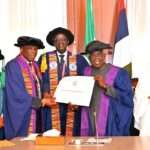
Worried by unparalleled levels of paralysis into which education in Nigeria has fallen, Nobel laureate, Wole Soyinka, and other distinguished persons have expressed concerns over the rapid decline. They spoke at an event to mark the 90th anniversary of the Government College, Ibadan, last week. 
Soyinka said he was not particularly impressed with the swift degeneration of higher education in the country. He said: “We are in serious trouble, education-wise, in this country. Let me not kid you; it’s horrifying. That was why I was happy about the initiative of creating a model school and trying to resurrect this Government College and present it as the ideal. We are really very low, education-wise.”
Professor Femi Osofisan said government needs to provide more support for educational institutions. The support, he suggested, could come in the form of enhancement of infrastructure and increases in the salaries and allowances of teachers. He observed: “What pains us now is that the school (Government College, Ibadan) could produce people of worth before, but the whole thing has gone down now. We are hoping that this help would generate new impetus and action about the school and education.”
The symptoms of a dying education system are all too evident. They include but are not limited to poor performance or mass failure of students in examinations and worrying instances of cheating in examinations. In many instances, fewer than half the number of students who participate in examinations achieve five credits or more.
Significant drop in student performance have occurred not only in examinations conducted by the West African Examinations Council (WAEC) but have also been observed in tests conducted by the National Examinations Council (NECO), as well as examinations conducted by the Joint Admissions and Matriculation Board (JAMB). The trend has persisted and the results are depressing.
Based on comparative research data, there is the belief that standards of education have buckled in Nigeria. In response, the government has remained apathetic, wringing its hands to signify unwillingness to take responsibility and, in panic, has introduced unsustainable and unreliable measures aimed at treating the signs rather than the causes. Everyone must be concerned. Education is too important to be left in the hands of clumsy bureaucrats.
Although the quality of primary and secondary education has diminished significantly, only a few have tried to identify the factors that contribute to the fragile health.
Of all these problems, the most overwhelming is lack of funds. State governments are too stingy in funding primary and secondary education. When funds are provided, they are done unsystematically, sporadically, and they are often embezzled by officials who see government funds as money to be converted to personal use.
Other factors that account for the worsening of the quality of education over the years include but are not limited to non-provision of essential structures to support quality and innovative teaching, indiscipline among teachers and students, lack of appreciation of the value of education by students particularly in our society that venerates affluence, employment of unqualified teachers, poorly resourced libraries, ill-equipped science laboratories, and irregular assessment of school curriculum to ensure that it is reflective of the realities of our environment. These are some, not all, of the obstacles that hinder the growth and development of quality education in Nigeria.
Even in our miserable environment, some people often argue that students are not blameworthy. Perhaps they are right. Or, perhaps they are wrong. What these apologists for low quality education overlook is that an increasing number of students are no longer self-driven, no longer self-directed, and no longer inspired to learn. They believe education holds no value in their life. They look for short-cuts to attain their dream educational qualification.
The collapse of standards in secondary and primary schools is a national disaster. Comprehensive reforms must be introduced in order to save primary and secondary education in the country. At the moment, many public and private schools have no basic facilities, including computers, as well as sports equipment and playgrounds. Indeed, an environment favourable to teaching does not exist.
To understand the awful situation, you have to ask questions about the level of support that is provided to schools by state education ministries. Without financial, technological, and technical assistance, many schools would crumble. They would not be able to deliver the kind of quality education parents expect, they would not be able to attain the lofty objectives they set out for themselves, and they would not be able to assist students to accomplish their learning objectives.
Primary and secondary education in Nigeria should be guided by a curriculum that makes it compulsory for schools to offer fundamental courses in computer appreciation. Exposing students to computers at an early age, as well as getting them to appreciate the basic applications of new technologies should engage the attention of education administrators. Unfortunately, many students lack computing skills because they have no access to computers both in their homes and in their schools.
In a knowledge economy, students who lack access to computers as well as those who have no computer skills make no meaningful contribution to the development of their society. Nigeria’s science and technology policy should aim to expose students to computers and other digital devices. New knowledge cannot be acquired or developed when students are denied access to modern technology. We live in a knowledge economy, an economy driven by technological interventions in our society such as artificial intelligence, data analytics, biosecurity, and so on.
Nigeria is a part of the global village. Primary and secondary school students should not suffer economic and technological deprivations their predecessors experienced prior to the emergence of modern technology. Primary and secondary school students must not be isolated from the rest of the world.
Modern technologies are the basic tools for survival in the 21st Century and beyond. For this reason, primary and secondary schools must incorporate in their curriculum basic computer appreciation courses. It should be an accelerated computer education programme that targets future generations. Schools can start by establishing computer appreciation clubs. The central objective of the clubs should be to teach students the essential elements of computer awareness and understanding. Students need a lot of education and enlightenment about the values of modern technologies.
Research evidence suggests that the key to the transformation of any society lies in widespread uptake of modern technologies. It is important for Nigeria to have in place policies geared towards science and technology skills acquisition by students. Even as we aspire to introduce students to technology, we must also acknowledge some of the challenges such as poor infrastructure that will support the technology. Another problem relates to maintenance or service culture, that is, keeping the technologies in good, working condition.
Nigeria must commit to developments in modern technology. As the saying goes, the future is not only in evolving technology, the future is indeed now.