Follow Us on Google
• Food items becoming exclusively for wealthy Nigerians
By Chinelo Obogo
One hundred and twenty-three days after the federal government promised to significantly crash food prices to give Nigerians some breather from scathing economic reforms, the exact opposite has played out.
Food prices, from Daily Sun’s investigations, reached stratospheric heights in recent weeks with no sign of a possible slump.
On July 15, government raised the hopes of Nigerians that the days of peppery food costs were numbered as it gave a 180-day window to achieve that.
But on the contrary, households, especially those in the low-income cadre, were battling the worst level of squalor, epitomised by worsening living conditions and growing cases of severe malnutrition in children. For many, the prevailing economic austerity seemed like plot to exterminate vulnerable members of the population as food prices quadrupled, while income depreciated in value; no thanks to the raging inflation that battered the naira and eroded its worth.
Added to the horror list were unending-increase in fuel pump price, zero social amenities, escalating transportation costs, high cost of medicines and others. With many states unable to pay the N70,000 minimum wage, social scientists raised the alarm that Nigeria’s subnational population face existential threats.
In Lagos, the minimum cost of a derica of imported rice
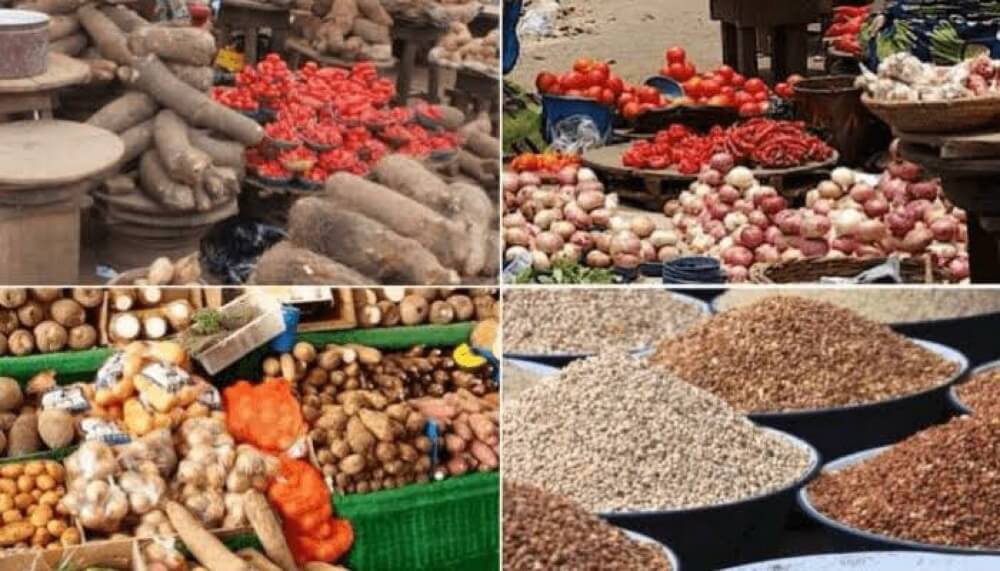
(depending on the brand) rising to N1,600, a painter of hand peeled egusi (melon seeds) cost N8,000, a painter of beans sold for N6,500, a kilogram of stockfish cost N14,000, a painter of tomatoes cost N3,000, a small tuber of yam is sold for N2,500, while an average sized egg now sells for N250 a piece.
The federal government had on July 15, 2024, announced that it would enact a policy which would give a six month window for selected food (wheat, corn, rice and other crops) to be imported duty free in order to help bring down the cost of food prices. But months later, the waivers have been ignored as food prices skyrocket, with reports claiming that the policy has not been embraced because the government does not want to hurt local food manufacturers.
In June, when the Minister of Agriculture and Rural Development, Dr Mahmood Abubakar, made the promise that the prices of food would crash in 180 days, the National Bureau of Statistics released data for the average prices of food items, comparing the prices in June 2023 vs June 2024. In June 2023, a kilogram of beans was sold for N651 compared to N2,292 in June 2024. A kilogram of local rice was sold for N608 in June 2023 compared to N1,702 sold in June 2024, while a kilogram of tomatoes was sold for N547 in June 2023 but soldN2,302 in June 2024.
By September 2024, three months after the Minister’s promise, the NBS reported that food inflation had risen to 37.7 percent from 37.52 percent in July 2024.
The NBS food inflation report for September 2024 across the 36 states and the Federal Capital Territory (FCT) showed that Sokoto State had reached a staggering 50.47 percent, surpassing the national average of 32.70. Gombe was at 44.09 percent, Yobe, 43.51, Jigawa, 43.17, Borno, 42.54 and Edo, 42. 52 percent, while Kwara State was the least at 32.45 percent, falling just below the benchmark.
Industry stakeholders have asked the federal government to declare a state of emergency on food production so all challenges stacked against food production would be addressed.
Recently, a report by FAO, IFAD, UNICEF, WFP and WHO, titled ‘Financing to end hunger, food insecurity and malnutrition in all its forms’, revealed that a staggering 172 million Nigerians were reported to lack access to healthy food.
Mrs Martha Johnson, a food vendor in Ikeja has this to say; “Hope of survival in Nigeria is near zero. Families come to my shop to book leftover foods and drinks.
“Before it used to be for their dogs but now families rush leftover foods. It tells you how low we have sunk. Suicide numbers are increasing. They said good prices will crash but the costs have tripped. We are in a mess”, she lamented.