Follow Us on Google

Omoniyi Salaudeen
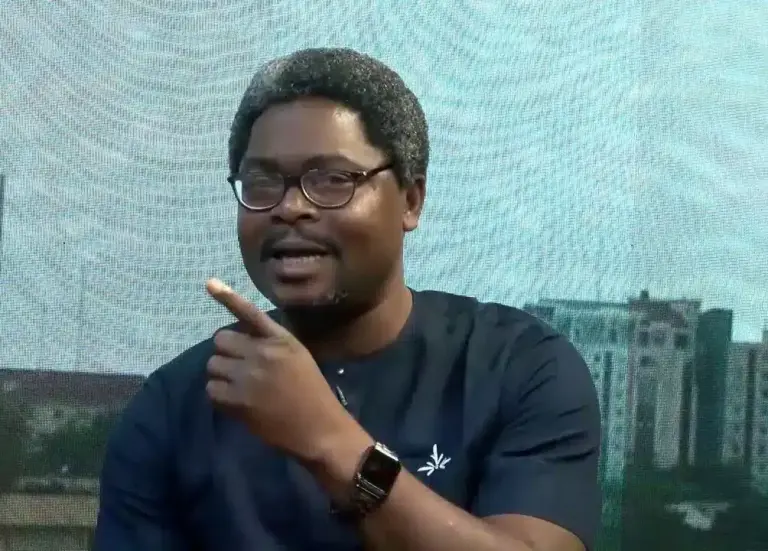
Opinions have continued to defer on the credibility or otherwise of the just concluded general election. In this interview, Prof of History, Banji Akintoye, traced the origin of election rigging in the country to the North.
According to him, the pre-independence election of 1959 was massively rigged in the North on the directive of the then Governor-General. And from there, it became a Nigerian thing, he said.
Governor Kayode Fayemi has indicated the plan of Ekiti State government to name some proposed secondary schools after some prominent natives of the state and you happen to be one of them. What is the state of education in the state and how do you feel about it?
Ekiti State is the most educated state in the Southwest, which means it is the most educated state in Nigeria and probably in Africa. But now, there is a shortage of high schools in the state. The existing secondary schools are no longer able to absorb all of the students that are pouring out of the elementary schools and are ready to go to secondary schools. Governor Fayemi has taken a very sensible and laudable decision to establish a number of large comprehensive high schools. And he has taken further decision to name some of those high schools after some Ekiti prominent citizens. As one of the people being so honoured, I can only see that I am more than delighted, I am overwhelmed actually by this patriotic gesture. I will cherish it very much because that is my Ekiti home. I am proud that my Ekiti State governor is giving me that type of honour. He has done a great thing for Ekiti and I thank him very much.
There has been a lot of controversy about the just concluded general elections. Some say it is a free and fair election; others dismiss it as a sham. What is your own assessment?
I don’t want to comment of the election that has just ended for important reasons. One is that a person at my level needs to look at the society from deep down and not just from the surface. Secondly, the contest is still going on in one way or the other. And I don’t want to be seen to be interfering with that. The truth about election in Nigeria is that democratic people’s elections have had troubles from the beginning of the introduction of election in 1951. The reason is that while it harmonizes with political tradition of some people, it does not harmonize with the political tradition of some other people. For instance, the Yoruba people of the western region have been used from the time immemorial to selecting their rulers. The Yoruba people are the only known example in the world of a monarchical system in which the people recognize the royal family, but insist that they themselves must select one of the princes of the royal family to be their king. In other monarchical system in the world, when the king dies, he is automatically succeeded by one of his sons, usually his first son. So, it is ‘the king is dead, long live the king.’ The people have no voice in the matter. But in the Yoruba case, it is a system in which there is a royal family, but the people themselves select one of the princes of that royal family to be their king. So, the European style of open election is not too far from what the Yoruba people already know. The two major political parties in the Southwestern region ran the system more or less like you would find even in Britain. So, the system was fair and credible in the Western Region. But not all the people of Nigeria had that type of tradition. For instance, in the North, the Fulani were the rulers of Hausa land. They had been so since the Jihad of the early 19th Century. And when the British came, they recognized them as native rulers of Hausa land. But suddenly in 1952, when the British introduced an arrangement whereby the rulers of Hausa land would be elected in an election, it wasn’t clearly understood because it sharply departed from their tradition. And since election had to be, the people who had political power in the land used the power to determine the type of persons who would be elected. The main political party of the Northern elite was NPC. So, political candidates of other political parties were arrested, harassed and so forth. From then, news began to spread all over the country that there was election rigging in the North. And so we gradually rose to a situation in which the electoral system became more and more confused, more corrupt and more degraded. In 1959, the pre-independence election was rigged massively, especially in the North. Harry Smith, one of the men who rigged the election, later wrote a memoir. An Oxford graduate and a lawyer by profession, he was the law officer in the Governor-General’s office. And he has written his memoir that the Governor-General himself told him to lead a covet organization to rig the election for the Northerners. What we then inherited from those things as a people is this: all the noise and hoopla about election campaign are just mere jamboree. The real persons who will choose the rulers are the people who control power. In the case of 1959, it was the British who controlled power and decided the people who would rule, while the general populace was running around. We Nigerians have since taken that and perfected it more and more. When 1964 came, the first national election after independence, it was massively rigged, especially in the Northern and Western regions. Meanwhile, the Western Region had come under Federal Government since 1962 and they had declared emergency, imposed a sole administrator, put the main leader of the region in prison and installed his deputy with whom he was having some dispute as premier after the emergency was over so that Federal Government could be in control of Western Region. So, election rigging apparatus was brought massively to the Western Region. In fact, one of the leaders in the regional government went on television and told the people ‘whether you vote for us or you don’t vote for us, we have the formula for winning and we will win. So, when the election came, it was so blatantly rigged in the Western Region that we were taken aback because we never saw anything like that before. But other people, especially in the North were not taken aback. It was the way things were done. Then, the danger came. When the election of Western Region came in October 1965, they also rigged it exactly the way they rigged the former federal election. One of the things they used to do was to make sure that the electoral officers would sign the nomination form of some candidates, and then run away as not to sign the nomination papers of others. So, some candidates were declared returned unopposed though the opponents were there. In the North, people were arrested and locked up and when the elections were over, they were released. Now, it is no longer a Northern thing. It has become a Nigerian thing. The system now in Nigeria is that everybody in power at any level of government knows that all the running around for election campaigns is just mere celebration. The real people who will determine who will rule are the people who hold power. There is no independent electoral commission. Elections are usually decided before they are held.
What then was the situation in the Eastern Region?
In the Eastern Region too they were not used to this idea about election. But they were ruled by persons like Nnmadi Azikwe who essentially ran what he knew was the democratic system in the Western world. So, election was reasonably free and fair most of the time, but not all of the time.
So, one can reasonably infer that the idea about election rigging started in the North?
Yes, I will say historically that is correct. But you have to take cognizance of the circumstance of the time. We were more or less forcing a new and essentially hostile system upon the situation and the persons who controlled power in those situations used their powers to elect people they wanted.
But in the recent time, we have had a situation where the incumbent president lost power to his opponent
(Cuts in) A few people who have managed to win election against the rulers are really tough people. What they have done is to find all sorts of ways to outsmart and out-maneuver the person in power.
A lot of people still celebrate former President Jonathan for losing election to the opposition candidate
(Cuts in)…President Jonathan too rigged the election, but his opponent outsmarted him and came out on top. Jonathan did not accept that they should just go and hold election. He too was a believer in the Nigerian doctrine that the man in power controls the direction and outcome of an election and he operated according to it. But his opponents were smarter.
Does this now mean that election rigging has come to stay?
It doesn’t mean it has come to stay, but it is here. It is the reality of our political life. Of course, we can change it. But to change it, we have to change a whole lot of things. For instance, how do we make the police and the military not to be agents of the political party in power? How do we make them responsible to Nigerians and not the person in power? How do we make EFCC a true servant of Nigerians and not an agent of the people in power? How do we make the electoral commission to be truly independent and do the best for Nigeria? How do we execute laws about election funding?
Are you for or against the idea of a two-political system?
I will say I agree with two or three at most. And the big question is: How do you do that? You legislate it into being. We can say any number of political parties can contest the next federal election, but the two parties or three parties that emerge with the largest number of votes will become the officially recognized parties in the land and the rest will stand dissolved. Thereafter, if you cannot find yourself belonging to any of the three parties either because you are too big for them or your ideas are too smart for them, then you don’t have to do politics. Go and do other things. If you want to serve your country, there are million ways to serve your country.
The INEC has already indicated its plan to deregister some of the political parties. Is that the way to go?
It is not the INEC that should do it. We need a law for it; a law that will specify that we need two or three political parties. INEC can then use the process of election to implement it. If INEC tries to do it, it will end up in court and it will become another mess. There has to be a law, which states specifically that only two or three political parties shall be recognized by Nigeria’s electoral democracy.
If they do it, there will be so much trouble; there will be so much legal contest. INEC should advise the Federal Government. We need a law upon which to base the establishment of two or three parties. When government has created that law, the National Assembly passes it and the president signs it into law, INEC will then have the authority to deregister political parties. If INEC does it on its own, our politicians will fight INEC forever. We need to create a law that will enable INEC to enforce a two-party structure.
Why in spite of the formidable array of young bright men who contested for the last presidential election, only Buhari and Atiku made all of the showing?
The reason is obvious. We have constructed a system in which power and money combined determines who wins an election. President controls all the powers and the resources of the nation. Atiku Abubakar was once our vice president, a very capable man; he has used position to build power, money, resources in the country. Only him was available to confront Buhari. The people who nominated him knew they were nominating a very formidable candidate. And he fought a good fight and he is still fighting. But these 71 others, some of them most brilliant young men this country has ever produced, could not make any meaningful impact. At different times, I have listened to some of them speak about their dreams for their country, things they know they could easily do, if they become president, and it is sad to walk away from listening to them because you have a feeling that they don’t have a chance because they don’t have the money, they don’t have the clout, they don’t have political power to influence INEC, they cannot influence the security forces. We call Nigeria a democracy; we are really not a democracy.
What is the hope of such brilliant young men becoming the president of the country?
They are young, they have shown their faces. But they have been told in unmistakable term, you are too small here. If I could gather all of them together, I will say let’s get together and work for a change in this country without contesting an election. If they could come together to make that statement, they could really change this country.