Follow Us on Google
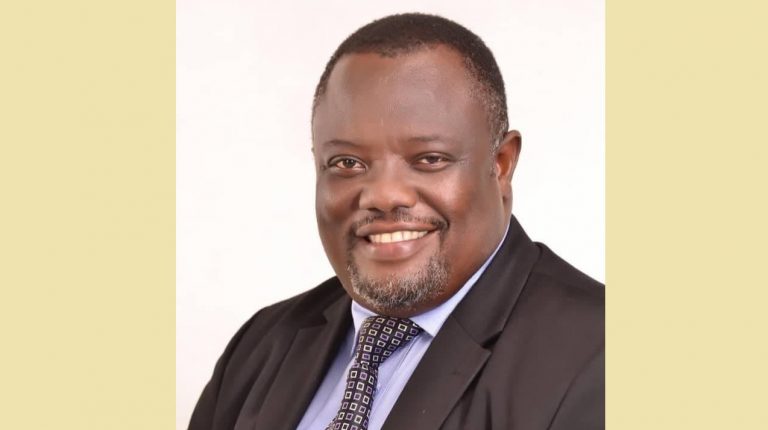
Professor Oka Obono of University of Ibadan has challenged security personnel to regard financial planning as an essential component of their careers, warning that financial insecurity can become a major vulnerability when active service ends.
Obono, Chairman of Case Studies Consulting Limited and a scholar of Sociology at the University of Ibadan, said security personnel spend their professional lives confronting uncertainty, making sacrifices and serving society, but often fail to adequately prepare for the financial realities that come with retirement.
He noted that no sooner does the uniform come off the body than financial insecurity sometimes becomes the visible reality for officers whose years of service have been defined by sacrifice and responsibility.
According to him, an officer may possess the courage and technical capacity to confront danger on the streets, yet face a different kind of vulnerability when salary stops, family responsibilities continue and years of active service give way to retirement.
Obono spoke in Lagos during the second day of the September edition of the Lagos State Security Trust Fund (LSSTF) Statewide Inter-Agency Training for Security Operatives.
He said financial wellbeing was not merely about personal comfort, but was increasingly connected to dignity, peace of mind, family stability and the ability of security personnel to remain focused on the demanding responsibilities entrusted to them.
He urged officers to develop the discipline of managing, saving and investing their resources early enough, stressing that financial planning should begin long before retirement makes it a necessity rather than a choice.
Obono explained that financial security should be viewed as a process that begins with understanding one’s income and expenditure and progresses towards deliberate wealth creation and retirement preparedness.
Using the acronym LAGOSPMMP, he took participants through different stages of financial development, beginning with Living without income, through Accessing income, Growing income and Ordering income, before progressing to storing resources and creating longer-term value.
His central argument was that earning a salary was only the beginning of financial security.
“It’s not enough to have access to an income,” he said, stressing the need for officers to learn how to make their money work for them rather than simply working for money.
Obono urged participants to track their expenditure, establish budgets and deliberately create room for savings and investment.
He introduced the 50:30:20 framework, explaining that income could be structured around essential needs, social and community obligations, as well as savings and investments.
He also exposed the participants to possible investment pathways, including stocks, mutual funds, real estate, Federal Government savings instruments and Treasury Bills, while emphasising that investment decisions should be guided by knowledge, planning and individual circumstances.
Beyond the mathematics of money, however, Obono placed retirement at the centre of his message.
He described working life as a cycle that eventually reaches a productive terminus, urging officers to consider what happens when active employment ends.
Other News
His concern was that retirement should not represent a sudden descent into financial uncertainty, but a stage for which individuals have deliberately prepared throughout their productive years.
“If you are blindly walking into the future, you crash into stuff,” he said, stressing that advance planning could transform the future from a source of anxiety into a period of greater peace of mind.
For security personnel, he argued, financial stability has implications beyond the individual officer.
He said a financially distressed officer could face pressures capable of affecting family relationships, personal wellbeing and, potentially, professional concentration.
Conversely, he noted, an officer who develops sound financial habits and a realistic retirement plan could approach both active service and the future with greater confidence.
Obono also encouraged officers to invest in themselves through continuous learning and skills development, particularly as technology continues to reshape the workplace.
The ability to acquire new competencies, he noted, could itself constitute an important form of investment and provide protection against future economic uncertainty.
His presentation ultimately reframed retirement planning as part of the broader responsibility of protecting those who protect society.
Financial preparedness, in this context, he said, becomes another form of resilience that begins long before the final day in uniform.
The atmosphere at the conclusion of the two-day programme reflected the participants’ appreciation of the initiative, as officers expressed excitement and gratitude for the opportunity to acquire practical knowledge extending beyond conventional operational training.
The programme culminated in the presentation of certificates to officers who successfully completed the training.
For an institution charged with protecting society, helping its personnel build financial resilience is ultimately another investment in the strength, dignity and sustainability of the security architecture itself.
The Executive Secretary/CEO of the LSSTF, Dr Ayodele Ogunsan, who was represented by his Executive Assistant, Adaobi Nwankwo, expressed appreciation to the facilitators for their contributions to the two-day training and commended officers of the participating security agencies for their commitment to the programme.
Nwankwo reaffirmed the Fund’s determination to make continuous training an integral part of strengthening the capacity and welfare of security personnel.
She noted that an officer’s effectiveness is influenced not only by operational skills, but also by personal wellbeing and preparedness for life beyond active service.