Follow Us on Google
From Noah Ebije, Kaduna
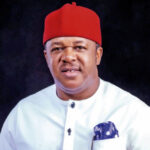
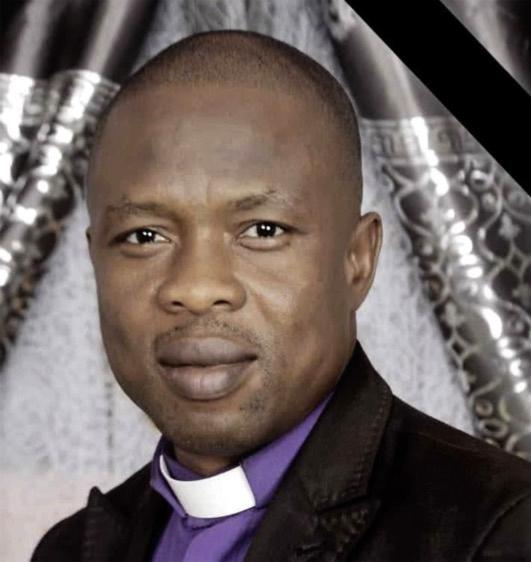
Rev. Emmanuel Olorunmagba is the National Financial Secretary of the National Rescue Movement (NRM). He was the candidate for the Federal House of Representatives, Kabba-Bunu/Ijumu Federal Constituency of Kogi State in the 2023 general election, and candidate for the House of Representatives, Chikun/Kajuru Federal Constituency of Kaduna State in the 2025 bye-election.
In this interview, Rev. Olorunmagba has expressed the fear that Nigeria is drifting towards a one-party state, warning that democracy will die if opposition political parties are muzzled by the ruling party in its bid to achieve a one-party state. The NRM scribe also spoke on other national issues.
The 2027 general election is around the corner. Where is the National Rescue Movement (NRM) at both the national and state levels of the election?
The National Rescue Movement (NRM) will be presenting candidates for different positions, from the presidential election to gubernatorial, Senate, House of Representatives and State House of Assembly elections.
Is your party likely to join a coalition? If not, can it stand on its own for all the elective races? We have said it and we will keep saying it: the NRM will present our own presidential candidate, so we are not part of any coalition. It may interest you to know that from the NRM, the David that God will use to rescue Nigeria will emerge, and Aso Rock will be our destination through a keenly contested election that will shock not just the whole of Nigeria, but even the world at large. The David from the backside of the desert is being prepared already to defeat the political giants in the country who are well versed in political experience, and this will be the wonder of this jet age. As I said earlier, he will come through the NRM.
There is this fear among some Nigerians that the country is headed towards a one-party system. What is your reaction?
Considering how the powers that be go after opposition political parties in Nigeria, either directly or indirectly, it is clearly pointing in the direction of driving Nigeria towards a one-party state. While one man is being used to hold the Labour Party down until the exit of the 2023 presidential candidate, another man is laying hold on the PDP, yet he is indirectly in the APC and is being backed by the powers that be to keep holding the PDP to ransom. The ADC, meanwhile, is engulfed in sponsored crises, such that it is most likely that the ADC may not be able to legally field candidates for elections in the forthcoming 2027 general elections. The possibility that the PDP and the Labour Party will be able to legally present candidates for the general elections is also very remote. In fact, it will take a special miracle for the ADC, PDP and Labour Party to be able to legally present candidates for the 2027 elections. Nigeria was never designed to be a one-party state, and Nigerians must never allow fear, intimidation, poverty or political manipulation to push us in that direction. What we are witnessing today is not just about party politics; it is about the future of democracy itself. When opposition voices are weakened, when institutions appear to serve power instead of the people, and when politicians defect not because of ideology but because of survival, ordinary Nigerians begin to feel that their choices no longer matter. That perception alone is dangerous for democracy. But let me say this clearly: Nigeria is bigger than any political party, bigger than any government, and bigger than any individual. Our democracy was built on pluralism, debate, accountability and the freedom of citizens to choose leaders based on performance. A one-party culture, whether official or unofficial, destroys competition, weakens accountability and encourages arrogance in leadership. And when leaders stop fearing the voice of the people, suffering increases. Look around the country today. Nigerians are battling rising food prices, unemployment, insecurity, unstable electricity and a collapsing standard of living. This is the time government should welcome constructive criticism and alternative ideas, not a time for silencing opposition or creating an atmosphere where dissent is treated like disloyalty.
Strong opposition is not an enemy of Nigeria. Strong opposition is a protection for Nigerians. It keeps democracy alive. It forces government to perform better. It gives hope to citizens who may not agree with those currently in power. What Nigerians want is not a one-party state; Nigerians want a one-nation state that works for everybody, regardless of tribe, religion or political affiliation. They want affordable food, security, jobs, quality education, stable power supply and leaders who feel their pain. So my reaction is simple: every patriotic Nigerian, regardless of party, should defend democracy, defend independent institutions and defend the right of citizens to have real choices at the ballot box. Democracy dies when opposition disappears, but democracy grows when leaders are held accountable by the people.
Do you see the African Democratic Congress (ADC) as a strong opposition to the ruling All Progressives Congress (APC)?
Other News
The African Democratic Congress (ADC) would have been a viable opposition, were it not for the powers that be going after the party, and the inordinate ambition of His Excellency Atiku Abubakar. His speech and body language clearly portray that the ADC presidential ticket belongs to Atiku. This has served as the last straw to break the camel’s back. Just as many people decamped to the ADC, so many are now on an exodus out of the party at this juncture, all for the inordinate ambition of one man who erroneously assumes he forgot something in Aso Rock and desperately needs to go back and retrieve it. Do I need to remind Nigerians that it is the desperation of that one man that, to a large extent, resulted in the decimation of the PDP, before the President Tinubu-led APC got hold of former Governor Wike to bury the PDP that Atiku Abubakar’s inordinate ambition had started killing since 2015 and finally killed in 2023, before Wike helped Atiku to bury the party he had already destroyed Likewise, it is still the inordinate ambition of the same Atiku that has crashed the fast-growing ADC. As someone observed, he deserves the award of “Destroyer of Nigerian Opposition Political Parties since the Year 2015.”
How do you feel about the Supreme Court ruling on the ADC national leadership?
The Supreme Court ruling may be a trap for the ADC. First and foremost, I view it as a ploy to make the supporters of the ADC praise the ruling by the judiciary; then, if the David Mark-led faction is not favoured by the main judgement, those same supporters who once praised the judiciary when the case appeared to favour the ADC will turn and attack the very judiciary they once celebrated. It will be so obvious that they celebrate the judiciary only when judgements favour them, only to turn back and attack it when the outcome is otherwise. Secondly, I suspect it could be a ploy to lock the David Mark-led faction into the ADC before the axe falls on the party at a point when it will be too late to prevent it.
The fact remains that politics is not only about what happens openly; it is also about understanding timing, perception and consequences. The Supreme Court ruling may appear favourable to the ADC today, but every serious political actor must be careful not to confuse temporary legal relief with final victory. One danger in Nigerian politics is the selective celebration of institutions. If politicians praise the judiciary only when judgements favour them and condemn it when judgements go against them, they weaken the moral foundation of democracy itself. As opposition leaders, we must be principled enough to defend institutional independence consistently, not emotionally or conveniently. Secondly, we cannot ignore the strategic dimension of politics. There is a possibility that this situation could create overconfidence within the ADC camp. If key opposition figures fully commit themselves structurally, financially and politically to the party before the substantive judgement is delivered, and the final outcome later goes against them, it could destabilise preparations for future elections. In politics, timing is everything, and uncertainty can become a weapon. That is why the ADC and all its stakeholders must avoid emotional celebrations and instead focus on legal preparedness, organisational stability and contingency planning. The real battle is not on television or social media; the real battle is whether the opposition can build a structure strong enough to survive legal, political and institutional pressures. Nigerians are watching carefully. They do not just want opposition parties that react emotionally to court rulings; they want mature political leadership that remains focused regardless of temporary victories or setbacks. At the end of the day, democracy becomes dangerous when institutions lose public trust. So every political actor, whether from the ruling party or the opposition, must be careful not to create the impression that institutions are only credible when they produce favourable outcomes.
Some Nigerians have called for the sacking of the INEC chairman over his alleged loyalty to President Bola Ahmed Tinubu. What is your reaction to this?
In every democracy, the credibility of the electoral system is as important as the election itself. Once citizens begin to lose confidence in the neutrality of the electoral umpire, the entire democratic process comes under suspicion. That is why concerns about the leadership of the Independent National Electoral Commission must never be dismissed casually. However, calls for the removal of the INEC chairman should not be based merely on emotions, political bitterness or speculation. Such a serious action must be grounded in clear constitutional processes, verifiable evidence and the broader national interest. Democracy must not operate on mob pressure; it must operate on law and accountability. Without equivocation, the call for the removal of the INEC chairman is a mere exercise in futility, because the President Tinubu we know will completely ignore the agitation as though he has not heard of it. And on the other hand, even if this INEC chairman were removed, is it not the same President Tinubu who would appoint another one?
President Bola Tinubu’s frequent foreign trips have come under criticism from some Nigerians amid economic hardship in the country. How do you feel about this?
In leadership, perception matters almost as much as policy. At a time when many Nigerians are facing severe economic hardship, including rising food prices, inflation, unemployment and declining purchasing power, it is understandable that President Bola Ahmed Tinubu’s frequent foreign trips would attract public criticism. The issue for many Nigerians is not simply about travelling itself. Presidents everywhere travel for diplomacy, investment discussions, security cooperation, international partnerships and economic negotiations. In a globalised world, international engagement is part of governance. However, the concern is about timing, optics and measurable outcomes. When citizens are struggling to feed their families, when businesses are collapsing under economic pressure and when insecurity remains a serious challenge, Nigerians naturally expect to see a president who appears deeply connected to the pain and urgency within the country. Frequent foreign engagements during such a difficult period can create the impression, whether fair or unfair, of distance from the suffering of ordinary people. In fact, there are times when a major calamity befalls a part of the country and the president will only issue a statement as usual and jet out of the country, as though he is unconcerned. Such situations would cause the president of any other country to cut short a trip already under way and return home immediately; yet in our own case, this is precisely when our president jets out. I therefore call on President Tinubu to be more present in Nigeria and to take decisive action against the myriad problems bedevilling the country.
What is your political ambition for the 2027 general elections?
By the grace and help of God, I am seriously preparing to go to the Green Chamber in 2027, having taken a shot at it twice. And as God helps, members of my team are ready with me to give it everything it takes to emerge as winner of the House of Representatives election in 2027.