Follow Us on Google

By Steve Agbota
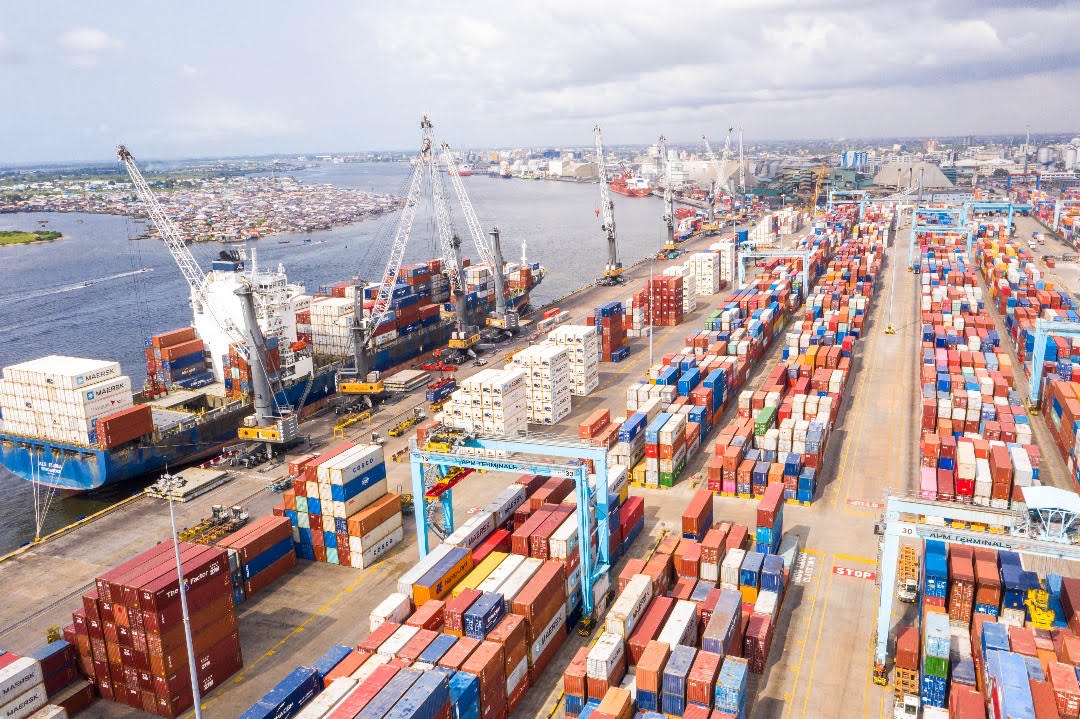
Nigeria’s largest container terminal, APM Terminals Apapa, has called for the next phase of port concessions in Nigeria to reflect current operating realities while providing the certainty required to support long-term private-sector investment.
The Government Relations Manager, Olayinka Akinlade, made the call at the 17th Annual General Meeting of the Nigeria Maritime Lawyers Association (NMLA), held recently in Lagos.
The event brought together maritime lawyers, private-sector operators and representatives of government regulatory agencies across Nigeria’s maritime industry.
Speaking during a panel discussion titled “Port Concessions 2.0: Economic Regulation, Private Capital and the Next Phase of Nigerian Port Development”, Akinlade said the experience of nearly two decades of port concessions had demonstrated the importance of clarity, predictability and a long-term approach to infrastructure investment.
“The first lesson is that port concessions are long-term partnerships and require the certainty necessary to support long-term investment. The responsibilities of the grantor and concessionaire must therefore be clearly defined and supported by appropriate tenure, contractual certainty and a predictable regulatory environment,” she said.
According to her, the next generation of port concessions must also be sufficiently flexible to respond to significant changes that have taken place in the global and Nigerian maritime environment since the commencement of the concession programme.
“Second, concession terms must reflect today’s realities while anticipating tomorrow’s needs. The operating environment has changed significantly since 2005. Vessel sizes, technology, cost structures, trade patterns and regional competition have all evolved. Concessions 2.0 must therefore be sufficiently forward-looking and flexible to accommodate these changes and enable future investment,” Akinlade said.
She noted that the private sector had an equally important responsibility to translate investment certainty into measurable improvements in port performance.
For APM Terminals Nigeria, this means continuing to invest in modern infrastructure and technology, improving operational capacity and efficiency, and applying global expertise in partnership with government and other stakeholders.
“Government, on the other hand, has a critical role in providing not only the policy/regulatory certainty but also ensuring that critical enabling infrastructure, such as marine infrastructure, access roads, effective rail connectivity and reliable power supply, develops alongside private-sector investment.
Other News
“Over the next decade, the success of the concession model should ultimately be measured not only by investment within the terminals, but also by its impact on cargo flow, trade capacity, competitiveness and the overall cost of doing business in Nigeria,” she added.
Earlier, Professor Adi Bongo, Professor of Economics at the Lagos Business School, had delivered the keynote address on the AGM’s theme, “Nigeria’s Maritime Paradox – from Maritime Potential to Global Competitiveness”.
In his address, Bongo identified bankability as a critical issue in unlocking the full potential of Nigeria’s maritime sector.
He argued that bankability should not be viewed solely as a banking or finance concept, but also as a legal issue, because investors and lenders required confidence that contractual rights and security could be enforced predictably.
“For lenders, the key question is not simply what the rules say, but how effectively the courts apply them. At present, we cannot answer that question with sufficient data. A ship is one of the most mobile forms of collateral, and lenders will price a Nigerian ship mortgage based on the speed of the slowest court likely to handle it, not the fastest,” he said.
“Ultimately, lenders price what they can measure. What they need is clear evidence that the law works within a predictable and measurable timeframe.”
Bongo urged the NMLA to develop and publish its first Lagos Maritime Justice and Competitiveness Scorecard by its 18th AGM in November 2027, providing measurable evidence on the efficiency and predictability of maritime dispute resolution.
He further challenged Nigeria’s maritime legal community to recognise its role in strengthening the country’s competitiveness and improving investor confidence in the sector.
“When you draft a commencement clause, structure security over a vessel or seat an arbitration in Lagos, you are helping to repair that chain,” he said.
“Nigeria does not lack potential; what it lacks is the ability to convert that potential into measurable value. Potential is what we often talk about, but price is what the world charges us. Make Nigerian law fast, predictable and enforceable, and prove it with data, and the world will stop discounting us,” he added.