Follow Us on Google
From Fred Ezeh, Abuja
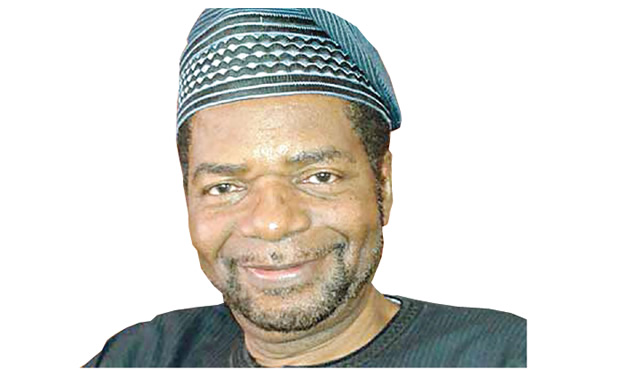
Dr Goke Adegoroye is the pioneer Director General of the Bureau for Public Service Reforms (BPSR). Recently, the retired federal permanent secretary celebrated his 75th birthday. He used the occasion to celebrate a decade and half of activities geared towards civil service reforms.
A scientist and academic turned civil servant, Dr Adegoroye said he has committed his daily life and writings to advocating excellence and integrity in the public service.
He told journalists in a chat in Abuja that his dream is to see a public service that is capable of driving the socioeconomic growth and development of Nigeria, insisting that the expected socioeconomic growth will continue to elude the country until its civil service is reformed for a better performance.
You have been tirelessly involved in a campaign for an effective public service in Nigeria…
Yes, it’s my passion to see to the fact that we have public service in Nigeria where justice, competence, and equity are the order. It’s this desire that led to the establishment of the BPSR, and I was made the pioneer Director General. I undertook significant reforms in the system, which have sustained the civil service over the years. There’s much work ahead because the public service in Nigeria is still immersed in corruption, injustice, incompetence, ineptitude, and several others, which requires a strong commitment to purge the system and position rightly to drive the policies and programmes of the government, that will expectedly, bring in socioeconomic growth and development.
You have authored several books on public service reforms, yet, we are still far from the reforms. Why is that so?
The books I authored were to inform the people about what had transpired over the years in the civil service system. It has been a decade and a half since I retired from the civil service, yet I have never disengaged from conversations around governance or public administration. My book titled Leadership in the Nigerian Civil Service-Five Decades of Lessons in Performance, Encounters and Triumphs” is borne out of a sense of guilt, call it frustration, that I hadn’t done enough for my country as a Public Sector Reformer. At my retirement in 2010, I had lamented that I was at a loss pointing to my contribution in nation building and had emphatically stated that more than Wole Soyinka, who in 1984 lamented that he belonged to the wasted generation, but at least had a Nobel Prize in Literature two years later in 1986 as a recognition of his contribution, indeed, myself and a few of my likes are the ones that belonged to the wasted generation.
What do you think are the major challenges of the public service?
The challenge is that, most of the time, the civil service is at the blind spot of the President’s attention. You will often hear and see movements on tax, finances, contract awards, etc. But, the political leaders often forget that the success of all of their plans and policies are contingent upon public service leadership effectiveness. Sadly, the civil service hardly ever gets the thrust from the throttle of governance, except by drawing the daggers against it. Yet the charge lies with the president. By his 4th title of Chief Executive of the Federation, he and only he, indeed, is the number one bureaucrat and Head of the Public Service of the Federation. As I asked in my address at the Public Presentation of my book in June: how can we enthrone a merit-driven public service when not just the body language but the open directives of government officials are driven by political patronage? With public sector corruption becoming the oxygen of politics in Nigeria, how can the civil servant be emboldened to stand up to uphold the public trust? Additionally, what can we say about the plight in retirement of public servants who, in their service years, served with integrity: a classic case of the failure of the pension policy? How do we ensure that such failures do not shape the behaviour and values of those still in the service?
Other News
What are the answers to these questions?
The answers are contained in one of my books. After retirement, I spent five years reflecting and researching the ills plaguing effective bureaucratic performance and came up with the two volume publications titled “Restoring Good Governance in Nigeria: The Civil Service Pathway Volume 1; and Restoring Good Governance in Nigeria: Leadership and Political Will Volume 2, in 2015; with a view to assisting those still on the stage to improve performance. In the book, five solid chapters were devoted to discussing civil service integrity in governance. The chapters covered such issues as the anti-corruption drive; the quality question of permanent secretaries, directors and CEOs of government agencies; institutional integrity of the delegated powers of appointment of permanent secretaries; abuse of budgets of MDAs by political office holders.
How can public servants appreciate public service as a sacred duty, a moral obligation to serve the public good, and uphold the interest of the citizens and the nation?
It is up to the President to deploy the necessary political will to implement all the recommendations made over the years, especially the one contained in several books I have authored. The onus for ensuring quality leadership of the civil service is on the president. Just as a person gets the government it deserves, there is also a real sense in which a president gets the civil service he deserves. In a democracy, state capture will always be the goal of political electioneering. To the populace, the distinction between the state and the executive is so blurred that they see the head of the nation as embodying the state. That perception is not helped by his four titles of the President/Head of State/Commander-in-Chief of the Armed Forces/Chief Executive of the Federation, through which state organs are easily appropriated to sustain power. Arising therefrom, the civil service and judiciary have become the citizens’ last institutional defences to uphold public trust and protect national interest. Capacity, competence, and professionalism are needed. But, only until we can demonstrate the courage to make integrity a defining factor in the selection of leaders in the public service can we begin to see commitment to public service as a sacred duty. Those of you in the media serving as the guardian of truth and national interest should assist us to prick the conscience of our leaders at all levels of governance to chart a new direction on the way forward.
What’s your assessment of the current Head of Service, Mrs Didi Walson-Jack?
I like the current Head of Service of the Federation, Mrs DidiWalson-Jack. She is open-minded to criticism, welcoming and responsive to ideas. And she makes every effort to apply the rules. But how far could she succeed in this aspect? Recall the case in the media a week ago about a Permanent Secretary who has spent eight years and not wanting to vacate office. But even if she strives to perform at the best of her capacity and capability, there are constitutional and structural limitations to what her office can do. How can we make succeeding president as the driver of the nation’s wagon to be ever conscious of what lurks in his blindside? Reciprocally, how can the Head of Service position the service away from the blindside to the direct view of the President and make her appreciate that doing so is not an admittance of failure in leadership but a result of dedication to proactive initiative?
What are your fears for the civil service and the Head of Service?
I sympathise with every succeeding Head of Service. They are clothed in a robe that exaggerates the powers of the office they hold. At the Federal Executive Council chambers, the Head of Service sits two seats away from the President, projecting to the nation that he/she represents the public service, whereas the total percentage of the federal workforce under his/her management is at all times less than 10 per cent. As I said in my writing, he or she is like a cockerel brandishing ear lobes and wattles as weapons amid lions, tigers, buffalo, etc, with by far more potent and effective weapons. To work around the constitutional and structural limitations of the office of the Head of Service demands a combination of capacity and capability to execute the mandate of the office, driven only by national interest and devoid of any modicum of personal interest. The OHCSF requires a capacity and capability that will ensure that the appointment, deployment, and job delivery expectations of Permanent Secretaries to ministries and the key centre of government offices will be driven by national interest It is for this reason that I have called for the establishment of the Federal Public Service Council and/or the appointment of a Minister of Public Service.
Have you made this suggestion to the government?
Yes, repeatedly. It was in my presentation to President Yar’Adua in August 2007. In addition to that, I recommended the establishment of a coordinating platform for the public service. I am also advocating capacity enhancement in leadership integrity. Even the NSPSR that was facilitated by the World Bank and developed by a team of experts led by the renowned Professor Ladipo Adamolekun, Nigeria’s foremost living Professor of Public Administration, has as one of its key recommendations the appointment of a Special Adviser on Governance and Institutional Reforms. Fourteen years since the adoption of the strategy, no administration has considered it fitting to experiment with that recommendation. Compare that with the number of presidential advisers on information. We owe this nation a duty of repositioning the public/civil service from the blind spot of the President.