Follow Us on Google
… Journalists urged to battle fake news, promote unity ahead 2027
From Charity Nwakaudu, Abuja
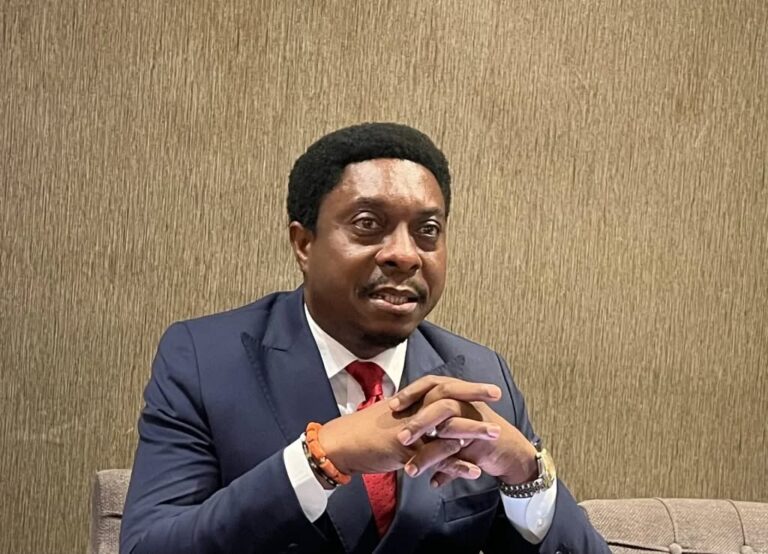
Nigeria is becoming more divided than it was two decades ago, with politics, ethnicity and religion increasingly driving wedges among citizens and weakening national unity, Executive Director of the Africa Polling Institute (API), Prof. Bell Ihua, has warned.
Speaking at a capacity workshop for journalists, media practitioners and policy executives on fostering social cohesion in Abuja, Ihua said findings from the institute’s annual Social Cohesion Survey revealed a disturbing decline in trust, national identity and civic participation across the country.
According to him, political affiliation has emerged as one of the strongest fault lines in recent years, with some Nigerians allegedly denied access to public benefits because of their political leanings.
“You go into communities and find citizens who cannot access public benefits because they belong to a different political party or are not affiliated with any political party. These are symptoms of weak social cohesion,” he said.
Ihua explained that the institute has tracked social cohesion indicators since 2019 and decided to engage journalists and policymakers because of their strategic role in shaping public opinion and government policies.
“We’ve been measuring social cohesion since 2019 and this is the fifth edition. Journalists and policymakers are critical stakeholders in building social cohesion because they influence narratives and decisions that affect citizens,” he said.
He lamented that many Nigerians now place greater trust in family members, religious organisations and ethnic groups than in government institutions, describing the trend as evidence of a weakening social contract.
“Our data suggests there is a gap between the social contract enshrined in the Constitution and what citizens feel. Trust in government has weakened, while trust in traditional and religious institutions remains stronger,” he said.
The API boss also linked declining voter turnout to growing public disillusionment, noting that despite over 90 million registered voters, only about 20 million Nigerians typically participate in elections.
“That gap speaks volumes about the disconnect between citizens and government,” he added.
To reverse the trend, Ihua called for the establishment of social cohesion desks in Ministries, Departments and Agencies (MDAs) to screen public policies and ensure they promote unity, trust, social justice and civic participation.
He disclosed that the findings of the 2026 Social Cohesion Survey would be presented at a National Dialogue slated for June 25 in Abuja.
Also speaking, journalism scholar and lecturer at Veritas University Abuja, Dr. Obiora Chukwumba, urged journalists to uphold professional ethics and intensify fact-checking ahead of the 2027 general elections.
He warned that misinformation, fake news and disinformation would likely increase as political activities gather momentum.
“Politicians may put out misleading information, but journalists have the tools to verify claims through fact-checking. It is our responsibility to give the public the right information and perspective,” he said.
Chukwumba maintained that fact-checking enhances credibility and public trust, insisting that journalists must remain independent and professional despite mounting political pressures.
In his presentation, development communication expert, Odoh Diego Okenyodo, challenged journalists to move beyond official statements and focus on the people directly affected by government policies.
“My key message for journalists is to focus on the human being. When you take people’s perspectives into account, your stories become more balanced and contribute to social cohesion,” he said.
Okenyodo criticised the practice of relying solely on government press releases, urging reporters to seek out the voices of ordinary citizens.
“When government issues a statement, I ask who it will affect and then go to those people. The government’s perspective should be a rider; the people’s reaction should be the main story,” he said.
On regional journalism, he stressed the need for inclusiveness and balance, warning against narratives that elevate one group at the expense of others.
“There should be more voices from different parts of the country, but not to the detriment of national cohesion. It is when all the voices come together that the music becomes great,” he said.