Follow Us on Google

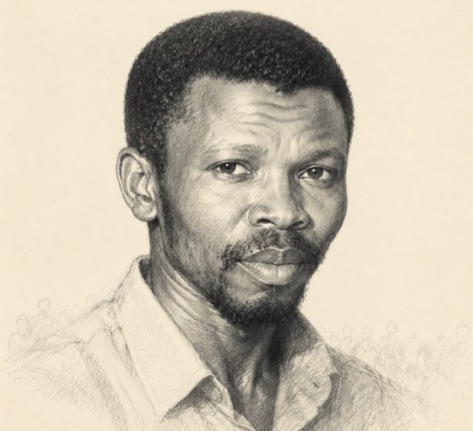
By Femi Meyungbe Olufunmilade
In the summer of 2013, I was privileged to be a course participant at the United States’ apex Executive Education citadel – The Brookings Institution – situated on Massachusetts Avenue in Washington DC.
The course I attended was “Politics and Policymaking”, the title of this write-up. For this course, the teaching faculty comprised professors from George Washington University nearby and distinguished practitioners, prominently including the House Speaker in President George Bush Jnr’s presidency, Dennis Hastert.
The goal of politics is the attainment of political power, while the goal of policymaking is the delivery of campaign promises.
Politics entails skills in public-speaking, which may not be more than demagoguery and cajolery, to achieve its goal. On the other hand, policymaking is a serious business. It requires skilled researchers, who may be academics, to produce blueprints, and seasoned bureaucrats to implement policies.
In the United States, lots of politicking go into policy formulation, as various interests, especially along party divides and congressional caucusing, jostle to influence the outcome.
However, once a policy is formulated, politics ends. What follows is implementation and there’s no excuse for failure. The US is one country where policy failure is a rarity in contemporary times. This is so because the best brains are normally harnessed in designing both the blueprint and implementation.
While a policy is being implemented, review and evaluation attends it. Where lapses are observed, fine-tuning is promptly done.
This leads us to the Nigerian experience in the Fourth Republic. It’s no gainsaying to assert that the administration that made ample use of abundant intellectual resources of Nigeria in policymaking and implementation was Obasanjo’s.
President Olusegun Obasanjo would summon a Presidential Retreat – comprising scholars, technocrats, lawmakers, civil society etc – whenever he was embarking on a major policy or programme to debate the best course of action to take. Next to this, he would organise a Presidential Retreat on Policy Implementation. That is strictly for the senior civil servants, ministers, and other officials involved in implementing the policy or programme in view. It is also no gainsaying to assert he’s so far the most result-oriented in terms of the goals he sought to achieve, though you find those playing politics pointing out what he didn’t do, as if his eight years was meant to right everything that was wrong with Nigeria. A catalogue of his achievements cannot be exhausted in one piece and, in any case, that’s not the intent of this write-up.
To be sure, every previous administration in this dispensation had its shortcomings, including Obasanjo’s, but the APC era, starting from President Buhari to President Tinubu (2015 till date), has been bedeviled with more than an average share of policy failures and errors.
President Buhari proclaimed a three-point agenda: Economy, Security, and Anti-Corruption. He had hardly settled into office when his media agency tagged the Buhari Media Center (BMC) began to bombard Nigerians with his achievements! Those who saw things differently were labelled “wailers”.
The Buhari handlers harassed every dissenting voice as though it was a season for politics as opposed to policymaking. They maintained a steady stream of defensive and attacking write-ups on the social and print media, as well as pugilistic vituperations on the broadcast media.
Not once did the administration call for a Stakeholders Summit on any issue of public concern, nor organise a Presidential Retreat to hone the skills of its officials for policy implementation.
Unfortunately, the President Tinubu Administration is following exactly the pattern of its predecessor that amounted to eight years of setbacks.
The Bayo Onanuga-led media team and self-appointed hangers-on are as intemperate as the Buhari Media Center. The president will be marking his second year in office in four months time and there’s no tangible achievement so far, except that some refineries are now functioning.
Some of us are not jubilating over this for two reasons. First, the Dangote Refinery that could meet all our domestic needs for refined products was the first to be ready. It’s 650,000 barrel per day refining capacity was more than the estimated 400,000 barrels required for domestic consumption. But, alas, we were witnesses to the shenanigans of powerful elements in the Tinubu Administration to frustrate it. This is not the place to rehash the long list of official sabotage against the refinery. It left a bitter taste in the mouth that government denied Nigerians the benefits of local refining early in the day!
Second, the price per liter of petrol is still above N900 and more in some places. Tinubu met it at N197. Yet, his praise-singers are beside themselves in jubilation in the spirit of we-told-you- so! Competition is crashing the price! They harangue us. Well, when competition crashes it to triple what Tinubu met – that’s N591 – we shall also begin to see the goodness of competition unfolding.
Some of us had argued strongly against deregulation or the removal of subsidy untill the refineries can handle local demand for petroleum products. If our advice had been countenanced, the horrendous inflation the precipitate, unresearched, and unplanned subsidy removal has caused would have been averted. We, most likely, wouldn’t be paying more than N400 per liter now with adequate social safety net measures in place to mitigate inflation. But all that has eluded us, as the refineries now have to contend with inflation pressure on factor cost.
President Tinubu appears unaware of the distinction between politics and policymaking, hence his precipitate declaration at the Eagle Square during his swearing-in that oil subsidy was gone. No policy research to advise on the implications and mitigation measures. He then blundered through, running from the pillar of ineffectual palliatives to the post of CNG tokenism. Has CNG, for instance, helped 0.5 percent of Nigerians – I mean roughly 1 million? You know the story of palliatives.
In a country where the vast majority of citizens are extremely poor, finding it difficult to afford one meal a day, a compassionate and responsible leadership will see to it that the best available options are explored and the best hands engaged in policymaking and implementation.
To compound our woes, we are further saddled with a National Assembly that makes mincemeat of whatever articulation goes into the president’s annual budget. A budget is an annual breakdown of policy implementation with attendant costs.
Our National Assembly, as though they were elected to mess us up, would pad up the budget in a most unbelievable manner. Each lawmaker strives to insert one project or the other for his constituency and the agency over which he has oversight. In other words, they prioritise politics over policymaking at a time politics is supposed to be over and all hands ought to be on deck to govern well.
We can only pray that President Tinubu will soon get his acts together, lest we mourn another era of propaganda achievements with no impact on the well-being of citizens.
• Prof. Femi Meyungbe Olufunmilade