Follow Us on Google
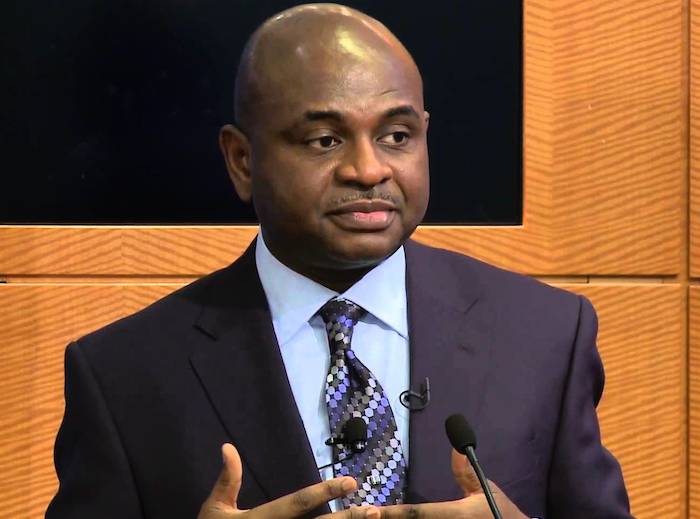
From Juliana Taiwo-Obalonye, Abuja
President of the Institute for Governance and Economic Transformation and former Deputy Governor of the Central Bank of Nigeria, Kingsley Moghalu, on Tuesday told a global audience of civil servants that Nigeria’s biggest barrier to economic transformation and regional stability is the rot in its civil service — “politicisation, frequent purges that erode institutional memory, quota systems that sometimes trump merit, corruption, and bureaucratic red tape”.
“Let me be blunt,” Moghalu said in his keynote at the 2026 International Civil Service Conference. “The service has been politicised. Frequent purges destroy institutional memory. Quota systems sometimes place ethnicity or patronage above competence. Corruption corrodes delivery, and red tape strangles initiative. Until we fix these, everything else is aspirational.”
He argued that political interference has hollowed out the civil service’s capacity to implement durable policy. “Politicians often err by believing technocrats alone can revive economies while political actors prioritise short-term patronage, ethnic balancing, or electoral cycles in ways that erode institutions,” he said. “When appointments and promotions become instruments of politics, you lose the continuity and expertise a state needs to function.”
He offered a pointed diagnosis: “Frequent purges mean you keep re-learning the same lessons. Institutional memory vanishes and the country pays the price. That cycle must stop.”
On the federal character principle and quota systems, Moghalu struck a nuanced but firm tone. “Federal character was meant to build unity, but it must not be a licence for mediocrity,” he said. “Where quota trumps merit, the system fails citizens. We must balance inclusion with competence. Promotions and recruitment must reward performance — not political calculations.”
He warned that preserving unity through poorly implemented quotas is a false economy. “If the price of unity is inefficiency and corruption, we will pay with poverty and instability,” he said.
Corruption, Moghalu said, is a multiplier of failure. “Corruption does more than steal resources; it kills accountability, it kills trust,” he told delegates. “Citizens must see taxation funding schools, hospitals and roads — not elite consumption. If people do not see returns on public resources, the social contract frays.”
He also blasted bureaucratic bottlenecks. “Red tape is throttling innovation. Our systems often reward form over function — paperwork over outcomes. Civil servants who want to deliver are blocked by needless procedures and a risk-averse culture. We must empower officials to solve problems, not hide behind forms.”
Other News
Linking these internal faults to national outcomes, Moghalu said: “You cannot achieve economic transformation on a technocratic island when the bureaucratic machinery is politicised and corrupt. Nigeria’s GDP per capita sits low because wealth creation is blocked by poor governance. Banks declare trillions, yet most citizens see no meaningful improvement in living standards. This paradox is governance failure.” He pressed the point: “IMF projections put per-person output at about $1,556 in 2026. That is not destiny; it is a symptom of institutional dysfunction.”
Moghalu did not stop at diagnosis. He urged: “Depoliticise core administration. Restore security of tenure for technical roles. Stop firing and rehiring public servants with each regime change. Let expertise accumulate.”
He called for “merit-based recruitment and continuous training,” and asked that the public sector “adopt corporate governance discipline — treat ministries and agencies like enterprises with clear KPIs, board oversight, and transparent reporting. Citizens are stakeholders who deserve returns.”
He noted that selective New Public Management tools can help, but insisted “NPM alone won’t work if the basics — rule of law, low corruption, and institutional independence — are absent.” He framed the remedies as both technical and political: “Implementation requires political will. Civil servants can own reforms, but leaders must commit to them politically.”
Drawing a direct line from civil service failings to insecurity, Moghalu said: “Insecurity in the North-East, banditry in the North-West, separatist agitations in the South-East, and militancy in the Niger Delta — in part these are governance failures. Where the state is absent or corrupt, grievances fester and violence fills the vacuum.” He argued: “Fix the civil service, and you shrink the space for criminal profiteers and political spoilers.”
Moghalu stressed a return to accountability. “We must measure performance and enforce consequences,” he said. “KPIs without consequences are theatre. Boards that oversee SOEs must be independent and professional. Those who steal public resources must face the law. No exceptions.”
He also urged a cultural shift: “Governance is culture. We must cultivate a public service that prizes integrity and results. Otherwise, culture will eat strategy for breakfast.”
Moghalu closed with a clear challenge: “Governance reform is the gateway to economic transformation and regional stability. Our civil service — dedicated men and women in this room and beyond — holds the keys to unlocking our potential. But we must stop pretending that superficial tinkering is reform. We must remove politicisation, end the purges, make merit paramount, crush corruption, and cut the red tape.”
“Let this conference mark not just dialogue, but decisive commitment,” he said. “The world watches; our citizens await.”