Follow Us on Google
By Chinyere Anyanwu
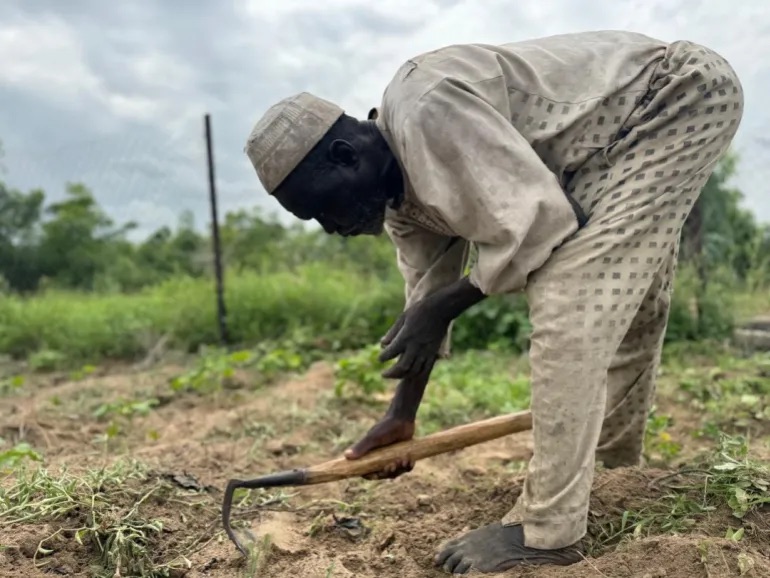
The Plantation Owners Forum of Nigeria (POFON), in collaboration with other stakeholders, has called on the Federal Government to ensure that efforts geared at making food affordable for consumers do not inadvertently weaken and impoverish the farmers whose labour sustains the country’s food system.
The call was made yesterday at a joint press conference in Lagos tagged, “Current Government Food Strategy, the Concomitant Effects and the Implications for Food Security in Nigeria.”
Speaking on the topic, “Balancing Food Affordability and Farmer Vulnerability: Nigeria’s Food Strategy and the Path to Sustainable Food Security,” the keynote speaker, Fatai Afolabi, said “Nigeria’s current food strategy, particularly the recent market adjustments around food importation, the observed decline in food prices, and what these developments portend for local farmers, investors and our collective quest for sustainable food security,” should be put in proper perspective.
Afolabi, who noted that Nigeria’s food system is navigating an exceptionally difficult period marked by inflationary pressures, climate variability, insecurity in major food-producing regions, rising costs of energy as well as logistics which have all combined to strain both producers and consumers, stated that “the Federal Government’s decision to temporarily relax restrictions on selected food imports is understandable. “The primary objective has been to stabilise markets, increase food availability, and ease the burden on households struggling with high food prices.”
“Following this policy adjustment, the market has responded swiftly. Prices of major staples such as rice, maize, cassava products, tomatoes, and vegetable oils have declined. For millions of Nigerian consumers, this has brought much-needed relief. However, beneath this welcome price moderation lies a more troubling reality for local farmers and agriculture value chain investors, one that calls for urgent and careful attention.”
Other News
According to him, “while output prices have fallen, the cost of producing food in Nigeria remains stubbornly high. Farmers continue to contend with expensive fertilisers, high fuel prices, rising transportation costs, costly improved seeds and agrochemicals, limited access to affordable credit, poor and epileptic electricity supply, poor road infrastructure, and weak storage and processing infrastructure that leads to significant post-harvest losses. This scenario, where farmers sell produce at declining prices while production costs remain elevated, has created widespread distress across agricultural ecosystems.”
He said the stakeholders are, therefore, proposing careful timing of imports to avoid peak harvest periods; strengthening of price stabilisation mechanisms; aggressive subsidising of critical farm inputs; support for agro-processors to remain competitive, and clear communication of policy intentions so that farmers understand that import measures are strategic and temporary.
Also speaking, the Chairman, Vegetable Oil Subsector, Manufacturers’ Association of Nigeria, Mallam Mohammed Tahir, called on government to rethink policies that are hurting the agriculture sector, farmers and investors.
He stressed that food security is not only about bringing food into the country but “government being courageous enough to say, ‘how do we help local producers of all these crops we are talking about, whether it is vegetable oil, palm oil, soy oil, groundnut or sunflower.’ Government should think, ‘how do we help them? If there are policies already on the ground, how do we enforce those policies? Who are responsible for enforcing those policies? Are they doing their work? These are just the questions we are asking.”
He called on government to protect industries that are already on the ground, saying, “there is a need for government to come in, understand, and take immediate action. Make it attractive for others that are not there to come in and invest. Take lessons from other populous countries that have done so much to secure their food production, not through importation. Nobody actually relies on somebody else to produce for them.”
The event, which was well attended, played host to Oil Seeds Farmers’ Associations and Plantation Owners; Vegetable Oil Processing Association and Companies; Oil Seeds Buyers, Aggregators and Marketers; Large Corporate Nigerian/Foreign Investors and Promoters; Managing Directors and CEOs of Oil Palm Companies and Oil Seeds Farms, among others.