Follow Us on Google
By Adewale Sanyaolu
Nigeria’s effort to reduce its cost of oil production has suffered a major setback, as incessant pipeline attacks have pushed the cost of crude oil evacuation to $12 per barrel. The cost of crude oil evacuation is just one aspect of the total cost of oil production.
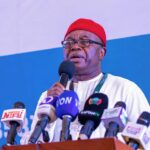
The Chairman of the Petroleum Technology Association of Nigeria (PETAN), Mr. Wole Ogunsanya, stated this at a Townhall Session at the 14th Practical Nigerian Content (PNC) Conference and Exhibition in Yenagoa, Bayelsa State at the weekend.
Worried that a growing number of upstream operators are exiting the pipeline system and adopting barging at what it considers a very high cost, sometimes as much as $15 per barrel compared to around $5 per barrel for pumping through the pipeline, the Federal Ministry of Finance Incorporated (MOFI) recently set up a committee to evacuate the crude oil evacuation infrastructure in the Niger Delta basin.
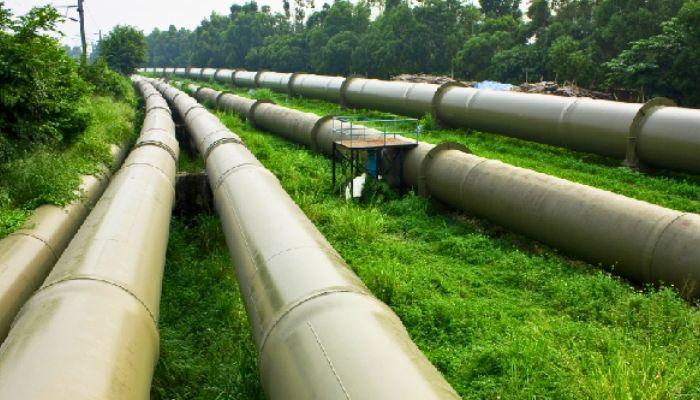
The PETAN boss explained that the unabated attacks on oil and gas infrastructure, especially pipelines, have forced evacuation costs to an all-time high of $12 per barrel.
“The number one cost driver in Nigeria’s oil and gas industry operations is the evacuation of crude oil and gas. Our pipelines are vandalized, and some companies use vessels and barges to move crude oil at a cost of $12 per barrel,” he said, adding that costs include payments to security agents as guards or escorts.
Despite the rise in evacuation costs, Ogunsanya declared that the cost of providing services in Nigeria’s oil and gas industry remains relatively the cheapest on the African continent.
Ogunsanya, while providing a detailed analysis of project costs across Africa and elsewhere, insisted that a distinction must be made between the capital expenditures (CAPEX) of the oil industry and operating expenditures (OPEX).
He stressed that Nigeria’s CAPEX rates are arguably the lowest in Africa, attributing what some industry observers refer to as Nigeria’s uncompetitive production costs to challenges of evacuation, security costs, and the activities of portfolio companies that habitually manipulate their clientele.
According to him, PETAN, the umbrella body of reputable indigenous technical oilfield service companies, has been analyzing production costs in different countries over time, using capital expenditure (CAPEX) and operating costs/expenditure (OPEX), and, in the case of Nigeria, carefully identifying cost elements at successive stages of oil and gas production.
The PETAN boss, who is also Chairman/Chief Executive Officer of Geoplex Drillteq Limited, said whereas contracting a land rig in India costs as much as $60,000 per day, the same services in Nigeria cost as low as $30,000 for the same duration.
Other News
Part of the explanation for the relatively lower costs in Nigeria, he noted, is that “local content policy and practice in the industry here subsidizes oil and gas production” in ways that might not be apparent to some analysts.
He lamented that some portfolio companies in Nigeria. companies without the requisite operational assets, often constitute another grievous dimension in the escalation of costs. PETAN, he revealed, is “aware of portfolio companies that had previously obtained the Nigerian Content Equipment Certificate (NCEC), became registered on NIPEX (Nigerian Petroleum Exchange), and had services and projects awarded to them.”
The PETAN Chairman argued that the Presidential Directive on Local Content Compliance Requirements, introduced on March 24, 2024, had mandated that such portfolio companies be barred from participating in the Nigerian oil industry, while companies bidding on projects must demonstrate genuine, tangible capacity to perform the work independently.
Ogunsanya called on the NCDMB to allow specialists in PETAN to provide guidance on equipment required for different industry operations. He also urged the Federal Government and NNPC Limited to facilitate PETAN’s efforts to benchmark project costs in other markets, enabling the association to advise authorities on global trends.
“So when any of the IOCs or even indigenous companies say we are doing a $5 billion project to produce 100,000 barrels, we have a basis for comparison.”
Other issues deliberated upon at the Townhall Session, moderated by the General Manager, Corporate Communications Division (CCD) of the NCDMB, Mr. Obinna Ezeobi, included key requirements for NCEC and whether the $400 million Nigerian Content Intervention Fund (NCDF) of the NCDMB could be accessed by startup companies or for research and development.
On NCEC requirements, the Director of Capacity Building of NCDMB, Mr. Abayomi Bamidele, disclosed that NCDMB has developed “Guidance Notes,” showing documents that are mandatory and others that are specific to assist companies or individuals seeking the certificate. He advised companies applying for the NCEC to choose one or two of the eight categories of NCEC in which they possess the requisite equipment and assets, and not attempt to register for all.
Bamidele and Ezeobi added that a platform would be opened by the NCDMB for complaints relating to NCEC.
On the Nigerian Content Intervention Fund (NCI Fund), the Director of Finance and Personnel at NCDMB, Mr. Uchendu Ossaowa, said research and development (R&D) operations are not eligible to borrow from the NCI Fund scheme because the fund is specifically for contributors and firms that have running contracts with oil and gas operating firms.
However, companies engaged in R&D could access the $50 million Nigerian Content Research and Development Fund, instituted by the board, the Director of Corporate Services of the NCDMB, Mr. Abdulmalik Halilu, clarified. He also pointed out that there are hackathons, innovation contests sponsored by the NCDMB, where R&D-focused firms can benefit from the board’s support.