Follow Us on Google
…As medicare gallops out of reach
• Patients, healthcare providers tell pathetic stories
By Cosmas Omegoh
This is about the worst time to be ill in Nigeria. To be afflicted at this time is one big misfortune that can befall anyone.
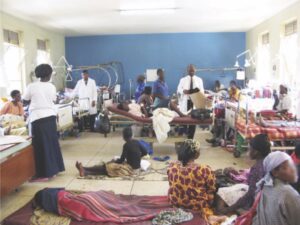
Victims see themselves standing alone – oftentimes with no one to care for them. They struggle to raise money for cure; they are confronted with high cost of healthcare services and drugs, yet, they have the scourge of fake and substandard drugs to deal with.
Indeed, many Nigerians who are ill at the moment are finding life difficult. Not every one of them is surviving the difficult times. Many are giving up hope and dying.
About two years ago or so, the cost of drugs and medical care was barely affordable. Now, it is no longer so. Healthcare cost has not only shot through the roof, but attained heights far beyond the blues. And the reality is that many of those who hitherto afforded quality services a year or two ago, are no longer able to do so now. They are merely surviving – some are self-medicating and managing their lives with whatever they can afford. The rest of the vast numbers cannot access drugs and other healthcare services. They wallow in quagmire, turning their attention to alternative means of treatment wherever they can find them. That, too, is not cheap, although it offers some consolation. At least the ones involved get this feeling that they are doing something to help themselves. And you have guessed rightly: the rest of the people are succumbing to their diseases – dying – and getting forgotten as soon as their deaths are announced.
Then the very few, who are privileged to have access to the nation’s treasury by virtue of their positions in governance or are senior corporate executives earning income from lucrative enterprises, go overseas to take care of themselves. And the beat goes on.
Cause of current challenge
Sunday Sun investigations revealed that a greater number of sick persons in the country are right now passing through the valley of the shadow of death.
Analysts believe that the devastating policies of the current government have cast very many people into miry waters.
One of such policies is the removal of subsidy on petroleum products nearly two years ago.
This, many believe, has had severe impact on every individual’s economy. The second policy is the floating of the Naira. This also is believed to have caused the local currency to lose substantial value.
The purchasing power of Nigerians has been eroded. Then the amalgam of taxes and tariffs are having their own effects on the economies of the people. High electricity tariff and import duties, among others, have unleashed untold hardship on the people.
Those in position to know suggest that aside the people’s pains, they have been brutally beaten down below the poverty line where they now encounter the harsh reality of multi-dimensional poverty.
So, many people can no longer afford three meals a day. Most people merely eat what they can afford – just to get life going. This no doubt tells on their health.
As of today, the various medical institutions, including the public health facilities, are grappling with high cost of electricity – if ever they have any supply. The cost of medical consumables and transport have continued to soar, thus adding another burden on healthcare delivery.
Our correspondent learnt that healthcare facilities now struggle to render and sustain their services.
Some of them absorb some cost just to help their patients to keep coming. The ones they cannot bear they pass down. Only those that can afford them benefit. The rest stay away. When sick, they are marooned at home, sulking. By the time they eventually make it to the hospital, their case may have probably deteriorated. Most don’t recover and don’t go back home alive. They die.
Power sector challenge
The power challenge afflicting the country is one that has had great impact on healthcare delivery in recent times. Virtually every health facility in the country has its own unfair share of this ill.
Sunday Sun learnt that doctors in some public hospitals have had to complain of poor or lack of power supply to conduct medical and surgical procedures. Some have had to improvise with torch light from their cellphones.
In the same vein, radiologists and technologists who operate electronic medical diagnostic equipment as X-ray machines, Ultrasound, CT and MRI scanners, have also complained that very poor power supply or lack of it is detrimental to such equipment designed to work with regular power supply.
In recent days, the University College Hospital (UCH) Ibadan, Oyo State, was in the news for not having electricity supply for long months.
At some time, it was noted, alumni of the premier health institution made huge individual donations to save the institution. Probably their effort ended like a drop in the ocean as they could not surmount the challenge.
There had been tales of patients being made to bear the cost of energy supply – possibly from generating sets whose impact was far too small – as a way of sustaining services.
The improvisation came on the heels of power cut to the facility following unresolved issues around supply and consumption between the institution and the power distribution in charge of the area.
Following the unpopular categorisation of various areas in the country into various bands, many people and various institutions have been compelled to pay astronomically for power supply. Failure to do so had led to power cuts, leaving many health and educational institutions offering very essential services in quandary.
Patients share bitter experiences with healthcare system
For many unfortunate Nigerians for whom going to the public hospitals is the only alternative to the prohibitively costly private facilities, accessing healthcare services has been a harvest of bitter experiences, Sunday Sun learnt.
A journalist, Tony, who lives in Owerri, Imo State believes that things are getting worse for the common man and might further deteriorate if urgent care is not taken to halt the trend.
Tony recalled that he was afflicted with a kidney disease and was already going to die if his case had not been detected on time.
He said that lack of funds was already enough to kill him if God had not intervened.
“November last year would have been the first anniversary of my death if God had not intervened.
“I was always having this weakness; every morning, it was war before I could get up from the bed. Shortly after every little activity, I would be sweating and feeling tired, among other things.
“Funny enough, on each occasion, the tests I ran always showed that I had malaria fever. I kept managing my condition until signs began to show my condition was going to get worse.
“Sadly, there was no money for me to go to hospital to see a doctor. At some point, I knew it that I was headed for the worse. I think my case mirrors the plight of many other Nigerians at the moment,” Tony said.
He said that when he eventually made it to the hospital, it was discovered that he would soon experience kidney failure.
“There is this newly-built hospital – New Medical City in Awaka, Owerri. It was there that I was saved. I ran a series of tests costing averagely N200,000 at that time. Thereafter, they detected I was at the preliminary stage of kidney failure. So, I began raising money for my treatment. Everything I raised went into the project. I’m happy that they saved me.
Other News
“If I had continued with treating malaria fever things could have gone worse. I would have died by now and the first anniversary of my death could have been last November,” he recalled once again with pain and gratitude in his voice.
The case of Mama Vera, a housewife is as pathetic as it can be.
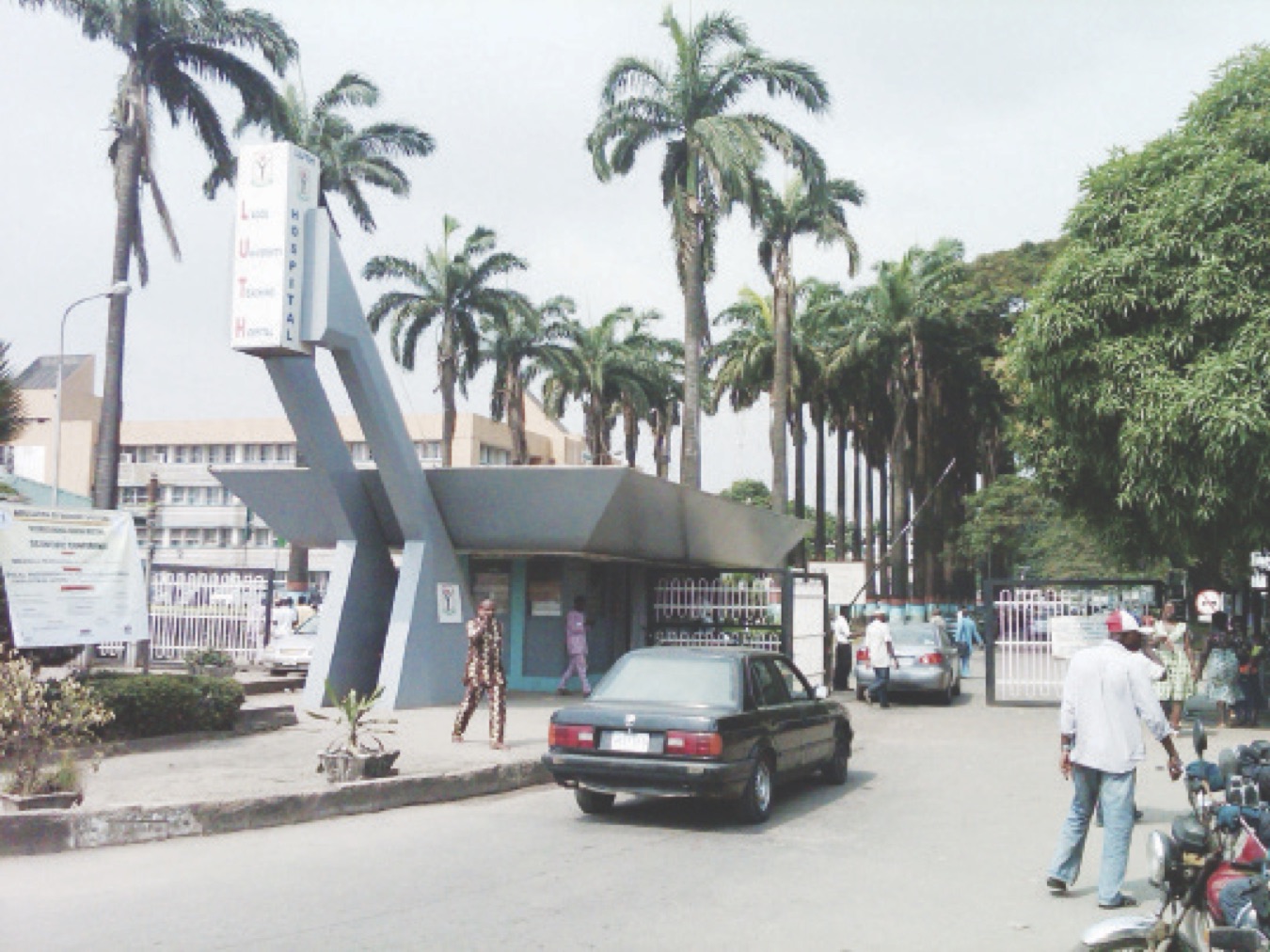
She said that she was having a problem with her right jaw following a motor accident she was involved in some years ago. Towards the middle of last year, the challenge escalated, forcing her to seek help at University of Lagos Teaching Hospital (LUTH) Idi Araba, Lagos.
Shortly after she presented at the facility, her right jaw got badly bent to the right, distorting and disfiguring her face. Many who knew her could not recognise her anymore.
“After several visits, doctors wrote out several tests, I would have to do. My husband was running here and there to raise money for the tests to be done.
“After days on admission, I was discharged and asked to go home to see how the jaw bones would respond ahead of the main operation. My situation did not get any better.
“When I returned, I was sent to run another round of tests that cost about N300,000 ahead of the operation. My husband paid for several pints of blood too. Then I was booked for operation.
“I had already spent two days in the ward waiting for the scheduled operation when my husband was told the procedure could not go on. They said a few things which we did not understand, but the major one was that they could not guarantee power supply on the said date. So we left for home disappointed.
“When I was invited for the operation, sadly we were told that the tests we had earlier run were no longer valid.
“My husband was forced to look for additional money – about the same N300,000 to repeat the same tests. About that time, my situation was getting worse,” she recalled.
Mama Vera spent five days in hospital after the successful operation.
She said she could not remember what her husband eventually paid, but it was no less than N.5 miĺlion as bills, giving glory to God that he could raise the money.
Now recuperating at home, Mama Vera wondered what her fate would have been if no money was available to continue with the fight after every hiccup.
Also a middle-aged man, Tobi, is dealing with some health challenges that force him sometimes to think he is having an unfair share of life’s many woes.
He was recently diagnosed of severe arthritis and a degenerative condition doctors called spondylosis which causes him immense pains while walking.
He told our correspondent that while he battled to find cure, he began to experience issues which his doctor suspects could be heart-related.
He said that fighting both challenges in the face of cash crunch has been as difficult as water flowing up hill.
“At first, I was having this pain that appeared not to be in the flesh or bone, but in the nerves. It got worse if I walked for a little long distance. All the pain killers I took worked momentarily.
“When I visited Isolo General Hospital, Lagos, I was asked to go for three x-rays. The result showed I had severe arthritis and the said spondylosis. All the drugs I was given did not solve anything.
“Next, I went to Lagos State University Teaching Hospital (LASUTH), Ikeja. After a back and forth, I met with a consultant orthopedic surgeon, who sent me for MRI, and a series of other tests and x-rays. I spent close to N200,000. The services are run by a private concern within the premises.
“When all the tests were out, I queued up to see the consultant. While standing on the occasion, he looked at the tests and x-rays and wrote loads of drugs all of which I bought. He asked me to come back to commence physiotherapy treatment.
“But I wondered how I could be coming from home, which is far away to do the physiotherapy? So I engaged one physiotherapists who was coming to my house for the treatment for a fee of N100,000. But since then, nothing has changed,” he lamented.
He added: “I have contacted consultants overseas through other doctors on what to do next. But they all have divided opinions: live with it; the procedure is expensive with 50-50 chance of success.”
Tobi said while he figured out what line of action to take, he started having what he suspected might be a heart-related challenge.
So he had to seek help in a hospital in Lagos.
“My blood pressure was rising, hitting 180/110, my heart palpitating badly. Since then, I have been on blood pressure drugs,” he said.
“After a series of tests, the doctor I was seeing, a general practitioner, referred me to a consultant cardiologist who I pay N30,000 on every visit.
“After our second meeting, he sent me to do nine tests and x-rays including ECO, ECG, among others – two he insists should be done at a big diagnostic centre based in Oshodi.
“He suggested if he could not reach any definitive conclusion, he would pass me over to a neurologist.”
Our correspondent learnt that such is the fate of the average Nigerian at the moment as regards healthcare. Thus those who are unable to help themselves are suffering endlessly. They are the unlucky ones, who are dying heartbroken.
Health personnel speak
During an encounter, the Chairman, Board of Fellows of the Pharmaceutical Society of Nigeria, Dr Joel Adagadzu lamented the cost of drugs in the market.
“The cost of drugs now is becoming far more expensive than ever before. Even I cannot afford my own drugs,” he cried out.
He appealed to the government to do something urgent to ensure that the cost of drugs is brought down to the level that ordinary people can afford.
“The people are the biggest resource any country has,” he said, adding: “As it is said, healthy people make a healthy nation.”
A medical practitioner, Dr Abayomi Ogunbekun of Horse Memorial Methodist Hospital, Yaba, Lago, recalled that the clinic had had to hold down on the bills charged by the hospital in order to keep the patients coming when they are ill.
“At some point, we resorted to explaining to our patients the position of things. We had to effect a cut on our consultancy services fees, leaving them paying fully for cost of drugs and test. We appealed to them to understand that they needed to pay for the cost of drugs and tests so that we would be able to replenish our stock and sustain the services we render.”
The fake drugs threat
Among all the challenges facing Nigerians and the entire healthcare delivery chain is the vexing issue of fake drugs.
Recall that more than a decade ago, the late Prof Dora Akunyili, who was the director general of the National Agency for Food and Drug Administration and Control (NAFDAC), had lamented that the issue of fake drugs, a situation she described as “vexing and embarrassing to our healthcare system.”
A doctor who spoke on condition of anonymity lamented that some pharmacists who are company representatives often bring him expired drugs.
“The issues are complicated. Even those who we believe will be fighting to save the society come here to dump fake drugs on us.
“When you use loads of such drugs on a patient, they don’t seem to get any better. You rather add to their woes,” he stated in frustration.