Follow Us on Google

Change is the only constant thing in life. Dr Nnamdi Azikiwe, the first President of Nigeria, once declared that no condition on earth is permanent. There is nothing that even a whole army can do against an idea whose time has come. Nigeria, under its successive incompetent governments, used the oil industry as a cash cow that serves only the interest of the powerful, not the people. This attitude of the corrupt leaders turned the oil blessing to oil curse. In all honesty, when a bunch of cursed leaders are in charge of a country, whatever they lay their hands would be stolen, killed, or destroyed. They are agents of darkness.
The colonial masters governed Nigeria successfully without oil revenue throughout their more than 100 years sojourn in Nigeria and Nigeria never lacked. They used proceeds from agriculture to build Nigeria and its initial capital cities and provinces. The first generation of Nigerian leaders in the persons of Nnamdi Azikiwe, Tafawa Balewa, Ahmadu Bello, and Obafemi Awolowo followed in the footsteps of the colonial masters and governed their different provinces with proceeds from agriculture. Nobody lacked in Nigeria. This country was a net exporter in products and the naira was one of the most powerful currencies in the world, superior to the dollar and pound, the American and British currencies respectively. Nigeria didn’t need oil to be successful, however, Nigeria could be more successful with oil.
Oil was first discovered in commercial quantities in 1958 in Nigeria. A wise nation would have capitalised on this natural gift from God to turn its country into paradise like Dubai did, like most Arab nations are doing now. However, not long after the discovery, easy money started flowing in and laziness and corruption crept in to frustrate the transformation of Nigeria into a first world nation. Gen Yakubu Gowon declared that Nigeria’s problem is not lack of money, but how to spend it. Indeed, Nigeria didn’t know how to spend the money. They managed to build four refineries, but mismanaged them to death. All the billions of dollars invested in the purported repairs of the refineries was stolen by the kleptocratic Nigeria leaders. None of them till date has been held accountable for such open display of stealing. Whosoever is a citizen of Nigeria who is 30 years old never witnessed the working of the refineries. This meant that Nigeria had been importing all the refined petroleum products it needed for more than 30 years despite having four hitherto functioning refineries. No bi juju bi that? During these periods of inactivity of the refineries, persons were still recruited as workers in the refineries and paid handsomely for the jobs they were not doing.
It’s not on record that the Petroleum and Natural Gas Senior Staff Association of Nigeria (PENGASSAN) and the Nigeria Union of Petroleum and Natural Gas Workers (NUPENG) threatened to go on strike any day to protest the monumental corruption that resulted in the death of the refineries through stealing of all the monies budgeted for their repairs and the continual employment of workers where there are no work to do. Even the PENGASSAN and NUPENG had stood against the privatisation of these refineries, yet they have not proffered alternative solution to the privatisation of the refineries.
The President of PENGASSAN, Comrade Festus Osifo, practically convinced Nigerians that the Port-Harcourt and Warri refineries have been fully repaired by Mele Kyari and would become fully operational in line with the promise by the Nigerian National Petroleum Company Limited (NNPCL) under Kyari. Till date, after the empty demonstration of readiness to commence production of refined petroleum products, the refineries went dead once more. Osifo’s defence was that the refineries outputs were of lesser value than the inputs. So the refineries came out worse than they were after pumping billions of dollars for their repairs.
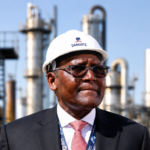
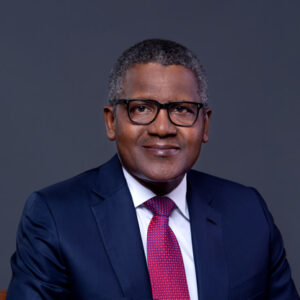
Aliko Dangote’s intervention in the oil sector became the real turnaround maintenance of the oil industry Nigeria needed. Dangote’s interest in the industry has been long determined. In 2007, Dangote bought the Port-Harcourt refineries to kick-start his refining business, under Obasanjo’s regime. President Umaru Yar’Adua reversed the sale partly because of the resistance from the Labour Unions. Dangote went ahead to build a brand new refinery, one of the biggest in the world, during President Buhari’s regime and employed his own workers. He finished the refinery within three years, and the government couldn’t repair existing refineries within 30 years. This means that Nigeria, with right policies, can recover within three years what its incompetent and corrupt leaders have destroyed in 30 years.
Within a year, after the commencement of the refinery, Dangote started producing enough fuel for domestic consumption and for exporting to other countries. Even Europe is now importing jet fuel from us. What a moment of national pride! Nigeria has what it takes to be an important player in the world. Dangote is proving this theory to be true. Unfortunately, without effective distribution, the production will suffer. As a matter of analogy, the electricity power industry is suffering today, not because of power generation, because principally because of power transmission and distribution to target consumers. The government privatised power generation and retained power distribution for itself for some nebulous reasons, which would have been necessitated by the interests of some corrupt officials to continue providing work for the boys. The transmission failed to evacuate produced electricity and the production became useless. Because the government had agreed to pay for all the power produced, whether used or not, the government ended up paying, with taxpayer’s money, for a product which the people never utilised. Having this at the back of his mind, Dangote was interested in the distribution from day one. He suggested the NNPCL purchasing all his products and distributing to Nigerians, using NNPCL’s distribution outlets. This failed. The only choice to ensure efficient distribution of petroleum products from his refinery was to establish his own and he did.
The workers, fearing the emergence of a monopolist with the possibility of shylock profit at the expense of the workers, fought back. The allegation was that Dangote rejected the idea of allowing his workers to unionise and he sacked 800 of his workers who dared to be part of a trade union in order to exploit them. According to the Nigeria Labour Congress (NLC), “Dangote facilities are not workplaces but plantations of exploitation, where the dignity of the worker is systematically crushed to maximise profit for the few.” Dangote denied firing workers for such reason and even denied disallowing his workers to unionise. The battle line was drawn. The unions threatened and indeed embarked on strike, which shut down some plants, causing disruption to Dangote’s operations and the entire system.
The Federal Government intervened and both sides reached a compromise. The Minister of Labour and Employment, Mohammed Dingyadi, in the early hours of Wednesday said, the matter was resolved after two days of negotiations. Among the resolutions is that unionisation is a right of workers in accordance with the laws of Nigeria and should be respected. It was agreed that the management of Dangote Group shall immediately start the process of taking the disengaged staff to other companies within the Dangote Group, with no loss of pay. Consequently, PENGASSAN called off the strike.
The disagreement between PENGASSAN and Dangote is natural and inevitable. It stems from the cost-benefit analysis. What is a cost to Dangote is a benefit to the workers. The aim of Dangote is to minimise cost and the aim of the workers is to maximise benefit. These inherent differences always result in crises if not well managed. The government ought to have been proactive in the management of the crises. It would have ensured that there is no monopoly. The only thing that can challenge Dangote is competitors, not workers. Dangote is a private business and by law, nobody can force a willing employee on an unwilling employer or vice versa. The employer has the right by law to fire any worker for good, bad, or no reason at all subject to fulfilling all terms of the contract of employment or paying compensation or damages for any wrongful dismissal.
The trade unions are still acting as if they are dealing with the government, which they can harass to submission with strikes. It’s important that they should start making preparations for a life outside unionism within Dangote affiliates. Immediately Dangote provides enough safeguards and alternatives to the trade unions stranglehold on some aspects of the industry, he will call the bluff of the workers and proceed alone with his industry dreams. There’s no doubt that a monopoly in any industry is not to be encouraged. In advanced countries, it’s even against the law for a monopoly to exist and courts have consistently broken any emerging monopoly to compel competition. The government must immediately take steps to compel competition to Dangote refinery by privatising the existing refineries, licensing new ones, and ensuring that Dangote is not allowed to engage in practices that will frustrate the emergence of competitors.