Follow Us on Google
• The making of deal that ended 16-year FG, ASUU rift
From Fred Ezeh, Abuja
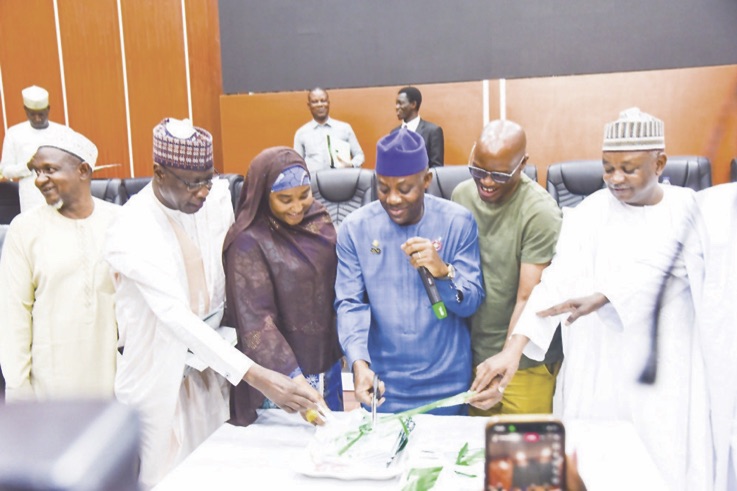
Sixteen years of cold war, suspicion, blame and animosity between the Federal Government and the Academic Staff Union of Universities (ASUU) ended in Abuja last week. This followed the signing of a new deal (renegotiated 2009 agreement) between both parties and approved for implementation effective January 1, 2026.
Within the period, ASUU had “confrontations” with the Federal Government that resulted in months of nationwide strikes, disrupting academic and non-academic activities in the campuses. The new deal is expected to usher in stability, dignity and excellence in tertiary institutions. It is also expected to restore confidence to the lecturers, predictability to academic calendars, and hope to stakeholders, particularly students and parents.
Why past efforts failed
In 2017, former Minister of Education, Mallam Adamu Adamu, inaugurated the FGN/ASUU 2009 Agreement Renegotiation Committee with a single mandate of renegotiating the reviewed 2009 FGN/ASUU agreement document. FGN and ASUU agreed on the specific goals to be achieved through the process, and these include the reversal of the decay in the Nigeria University System (NUS), to reposition it for its responsibilities in national development.
Another term of reference was the reversal of brain drain challenge, not only by enhancing the remuneration of academic staff, but also by disengaging them from the encumbrances of a unified civil service wage structure. The team was also charged with the responsibility of restoring the glory of the universities through immediate, massive. and sustained financial intervention and ensuring genuine university autonomy and academic freedom.
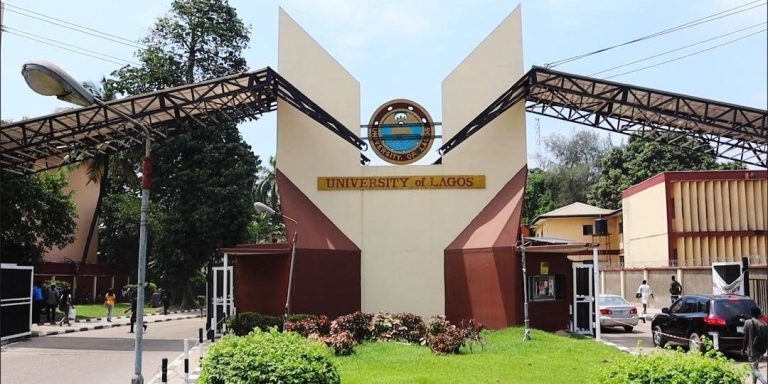
The was led by Dr. Wale Babalakin, then Pro-Chancellor, of University of Lagos (UNILAG). ASUU team was led by its former President. Prof. Biodun Ogunyemi. On Monday, March 6, 2017, the committee held its first joint meeting at the National Universities Commission (NUC), Abuja.
ASUU presented a proposal on the review of the 2009 agreement. The meeting also exchanged views on the principles that would guide the conduct of the renegotiation process, the formation of a joint secretariat and mechanisms of record keeping, dissemination of information and harmonization of positions.
Government team formally responded to ASUU’s proposal, forming the basis of engagement during the subsequent renegotiation meetings. The meeting was adjourned for six weeks at the government’s instance due to the closure of Nnamdi Azikiwe International Airport, Abuja. It was extended later due to COVID-19.
Government reconstituted three different teams afterwards. It first reconstituted a team led by Prof. (Emeritus) Munzali Jibril, then Pro-Chancellor, Federal University Lafia as Chairman in December 2020. Munzali was later replaced with the late Prof. Nimi Briggs, then Pro-Chancellor, Federal University Lokoja, in 2022. Sadly enough, all the committees failed to conclude the renegotiations and were disbanded.
In October 2024. Former minister, Prof. Tahir Mamman, inaugurated a reconstituted government team, led by Dr. Yayale Ahmed. An agreement was reached with all parties about 14 months after the inauguration of the Ahmed-led committee. That document was signed by both parties last week.
The agreement focused on conditions of service, funding, university autonomy and academic freedom, and other systemic reforms to reverse decay, curb brain drain, and reposition universities for national development.
Components of the new pact
The deal provided for the review of the remuneration package of the academic staff in federal tertiary institutions, as approved by the National Salaries, Incomes and Wages Commission (NSIWC), with effect from January 1, 2026.
The emolument of the university academic was reviewed upward by 40 per cent, to enhance morale, improve quality of service delivery and global competitiveness of tertiary educational institutions and reverse brain drain. It recommended that the review be done through the platform of the Consolidated University Academic Staff Salary (CONUASS) and Consolidated Academic Tools Allowance (CATA). However, the 40 per cent review will be represented by CATA, and it’s peculiar to university academic staff.
It also covers journal publications, conference participation, internet access, learned society membership, and book allowances, which are critical tools required for effective teaching, research, and global academic competitiveness.
The Earned Academic Allowances (EAA) have been clearly structured for transparent earnings, and strictly tied to duties performed. It promotes productivity, accountability, and fairness. It also consists of enhanced provisions for postgraduate supervision, fieldwork, clinical duties, moderation, examination responsibilities and leadership roles within the tertiary education system.
A copy of the agreement obtained by Daily Sun indicated that the basic monthly salary of a university professor has been raised to N1.061,106 (N12.733,270 per annum) with effect from January, 2026, and subject to periodic review.
For Reader category, it was raised to N782,472 monthly (N9, 389, 658 per annum); Senior Lecturers monthly salary raised to N595,623 (N7, 147, 598 per annum); Lecturer 1 category to earn N438, 957 monthly salary (N5, 267, 479 per annum); Lecturer Il to earn N360, 931 monthly salary (N4, 331, 172 per annum); Assistant Lecturers to earn N324, 964 monthly salary (N3, 699, 596) in the new package; while Graduate Assistants earn N290, 945 monthly salary (N3, 491, 336 per annum).
Meanwhile, full-time Professors and Readers are expected to make additional earnings through the newly introduced Professorial Cadre Allowance that applies to only senior academics at the level of full-time Professors and Readers in the tertiary institutions.
Professors would earn additional N1,740,000 per annum which is equivalent to N140,000 per month; and N840,000 per annum which is equivalent to N70,000 per month for Readers.
There should be a comprehensive review of the agreement every three years, and shall be based on the provision of the International Labour Convention (ILO) on collective bargaining. This means that the agreement shall be due for review in 2029. But within the period of the agreement, review of any item(s) covered therein may take place at any time by a six months’ notice given by either party.
The new agreement signing was witnessed by the Ministers of Education, Labour and Employment alongside their permanent secretaries; heads, tertiary institutions; heads, agencies and parastatals, Ministry of Education; members, National Assembly and officials of NSIWC as well as ASUU.
Alausa for decades, unresolved remuneration concerns, welfare gaps and recurring industrial disputes disrupted academic calendars, undermined staff morale, threatened the future of young Nigerians especially the students in various universities: “But government deliberately chose dialogue over discord, reforms over delay and resolution over rhetoric.
“The Professorial Cadre Allowance is specifically designed to support research coordination, academic documentation, correspondence, and administrative efficiency, thereby, enabling scholars to focus more effectively on teaching, innovation, mentorship, and global knowledge production.
“This intervention is not cosmetic. It is structural, practical, and transformative. We are optimistic that this agreement will strengthen our tertiary educational institutions, inspire our academics, and secure the future of our nation.”
ASUU laments, alleges mismanagement
ASUU President, Prof. Chris Piwuna, acknowledged and appreciated the efforts of the renegotiation teams that culminated in the new agreement that would, expectedly, propel significant progress in the university system. He was optimistic that the agreement will be implemented in totality by the Federal Government:
“But there still exists that pessimistic side, looking at our history with the government and the poverty of sincerity. It is our belief that the union would not need to issue a strike threat for the full implementation of the 2025 ASUU/FGN Renegotiated agreement.
“University autonomy is universally recognised as a cornerstone of a functional higher education system. Although university autonomy in Nigeria is recognised in principle and partially entrenched in law, its practical implementation remains weak.
“The governing council is legally the highest decision-making body of a Nigerian university, responsible for policy direction, financial oversight and appointment of principal officers. But in practice, the councils are often at the whims of government authorities.
“A recurring challenge is the arbitrary dissolution or suspension of governing councils by the federal or state governments and the reckless intervention in the appointment of the Vice Chancellors. Such actions send a clear message that councils exist at the pleasure of government, not as independent statutory bodies.
“There have been instances where governing councils’ recommendations were rejected by the visitor/ministry. Preferred candidates are imposed despite not emerging as the best-ranked by selection panels. Appointment processes are often skewed to favour political interests. Such interventions erode meritocracy and create legitimacy crises for appointed vice-chancellors, often leading to prolonged internal conflicts, litigation, and staff polarisation. This does not speak well of what the university stands for.
“We have also observed a culture of acting vice-chancellors slowly creeping into the system. Perhaps, it is time to turn searchlight on the pro-chancellors and members of governing councils. Some of these council members are destroying our universities.
“Research funding is not a luxury but a necessity for any university that seeks relevance, excellence and societal impact. A university without strong research funding risks becoming a mere teaching institution, disconnected from innovation, policy influence and national development.
“Nigerian universities have faced paucity of research funding for a very long time, and I am glad that research and development funding is a component of the 2025 ASUU/FG renegotiated agreement. It was agreed that the National Research Council (NRC) Bill shall be forwarded to the National Assembly for consideration.
“The proposed bill shall provide for at least one per cent equivalent of the Gross Domestic Product (GDP) as a source of funding for research, innovation, and development. We believe, as stakeholders, that members of the National Assembly will expedite action in the passing of the bill.
“There are limited institutional mechanisms for the union to enforce accountability beyond strikes, petitions and public statements. This creates a situation where funding battles are won, but resource efficiency battles are lost.
“Across our universities, there are repeated documented instances where vice chancellors have been accused of mismanaging public resources, ranging from alleged corruption and contract irregularities to financial recklessness. These cases are not isolated stories but mirror deeper governance weaknesses in the sector, where autonomy, accountability, and administrative culture intersect with personal conduct and institutional oversight.
“Our universities are now run by consultants! It has become a clean way of ‘cleansing’ funds fought for by our union. The federal ministry is not innocent of the ‘consultancy syndrome’ in government cycles.
“Unfortunately, many councils are themselves politicised and compromised, making them ineffective watchdogs. Some Federal Colleges of Education were converted to the Federal University of Education recently. The structure of a college of education is quite different from that of a university. The same way as the promotion criteria, especially for the rank of professor and chief lecturer.
“You would have expected the new universities of education to take their time to upgrade their structure to reflect the current status. But the vice chancellors have started converting some of the chief lecturers to professors without due process. These are new universities without a senate and yet to develop promotion guidelines for their current status.
“Even where senates were quickly ‘arranged’, procedures were blank and left much to be desired. Rather than focus on developing a university structure, they are converting chief lecturers to professors which are never equivalent.
“Promotion to the rank of professor has a common standard in universities. It involved research outputs, postgraduate teaching and supervision and external assessment, among other things. We should not allow the conversion of a college of education to a university of education to erode the standard requirement to become a professor. Vice chancellors of these universities should take a second look at the promotions, with a view to do the right thing.