Follow Us on Google
From Ndubuisi Orji, Abuja
The Peoples Democratic Party (PDP), since its formation in 1998, has witnessed difficult times. But never, in its 26 years history, has the opposition experienced the kind of turbulence it went through in 2025. For the opposition party, it didn’t just rain in the outgoing year, it poured.
Ironically, at the beginning of the year, hopes were high that the opposition party would quickly resolve all conflicts from the preceding year, and organise itself effectively ahead of electioneering for the 2027 contests. In 2024, the PDP had constituted a high-powered Reconciliation Committee, headed by former Osun State governor, Olagunsoye Oyinlola to resolve all differences among members.
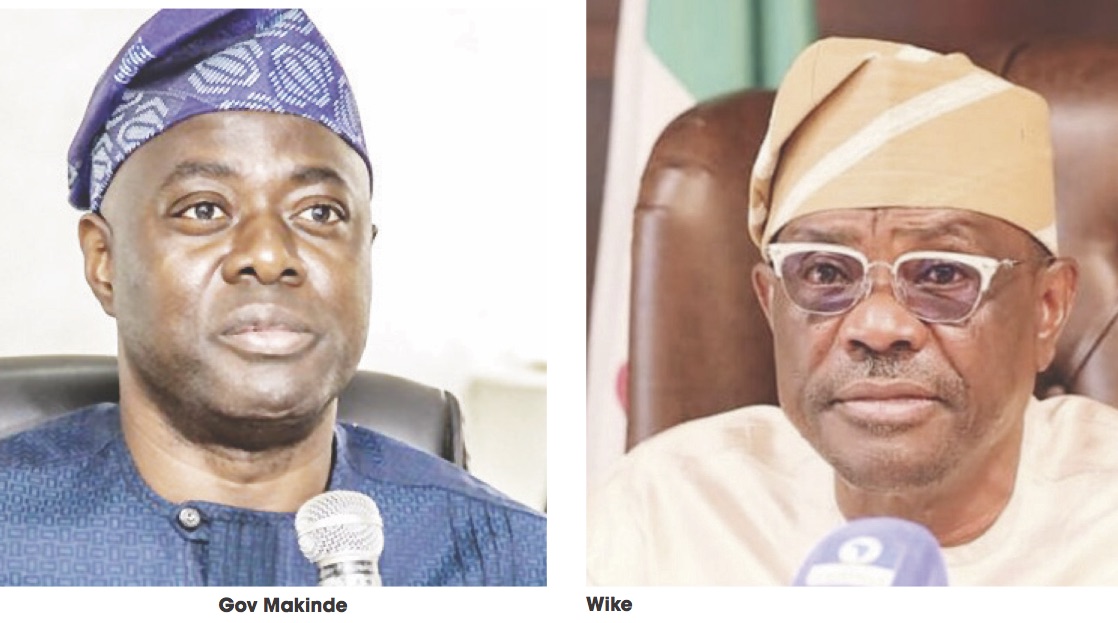
Recall that the major opposition has been embroiled in crisis since 2023 following a battle of supremacy between the PDP Governors Forum led by Governor Bala Mohammed of Bauchi State and his Oyo State counterpart, Seyi Makinde, on the one hand and the Minister of the Federal Capital Territory (FCT), Nyesom Wike, on the other hand.
Therefore, PDP leaders and supporters were enthusiastic that the Oyinlola panel would midwife peace in the party and that the national convention, where new National Working Committee (NWC) members will emerge, would serve as a launchpad for the next general election. However, that was not to be.
In all, 2025 birthed more problems for the opposition party, providing an alibi for governors, as well as several lawmakers elected on the PDP platform to migrate to the ruling All Progressives Congress (APC). Thus, a year, which was expected to bring a soothing balm to the troubles of the major opposition party, ended with the PDP still sharply divided.
Battle over national secretary position
The year opened with the tussle over who is the authentic national secretary of the major opposition party, following a December 20, 2024, decision of the Court of Appeal, Enugu Division, which upheld the judgment of an Enugu High Court, affirming the replacement of Senator Samuel Anyanwu with former National Youth Leader of the PDP, Sunday Ude-Okoye as the national secretary of the party. The South-East caucus of the PDP had in 2023, nominated Ude-Okoye to replace Anyanwu as national secretary of the opposition party, after the latter emerged candidate in the last Imo gubernatorial contest.
Ude-Okoye, armed with the judgment of the court, stormed the PDP secretariat on December 30, 2024 to assume office. On the flipside, Anyanwu, was at the party’s secretariat on January 13, to resume office. On Wednesday, February 12, 2025, the tussle deepened with the PDP NWC recognising the former national youth leader as the authentic national secretary. The PDP Governors Forum, as well as the Board of Trustees(BoT) also endorsed Ude-Okoye as party secretary.
However, on March 21, the Supreme Court overturned the majority judgment of the Court of Appeal, noting that the matter was an internal affair of the party, which ought not have come to court in the first instance. The judgment elicited different interpretations. While the various party organs insisted that judgment affirmed Anyanwu’s ouster, the latter insisted that the judgment was in his favour.
Amid contestation over who is the authentic National Secretary, the Federal Capital Development Authority (FCDA), on May 26, sealed-up the PDP National Secretariat, Wadata Plaza, over non-payment of ground rent. The secretariat was unsealed after some days.
Regardless, the dispute assumed a new twist, after the Independent National Electoral Commission (INEC) rejected a notice of a National Executive Committee (NEC) meeting on the grounds that it was not properly signed. In the aftermath of the rejection of the correspondence, PDP leaders, led by the immediate past National chairman, Umar Damagum, met with INEC over the issue. After the meeting, the former PDP chairman announced Anyanwu’s return as national secretary, describing it as a bitter pill.
According to him “After due consultation and everything, we thought it is a bitter pill and we have to swallow it. I want to use this opportunity to call on all our party faithful to know that it was a difficult decision. But the survival of the party is more than all of us, more than everything that you feel that you know and yearn for.” Anyanwu’s return as party scribe was later ratified at the 100th PDP NEC meeting on June 30.
Rumpus over National Convention
After the resolution of the crisis over the national secretary position, the PDP at its 101st NEC meeting on July 24 approved November 15 and 16 as the dates for its National Convention, in Ibadan, the Oyo State capital. In the run-up to the National Convention, three members of the PDP- Austin Nwachukwu, Abraham Amah and George Turnah, filed a suit before a Federal High Court Abuja seeking to stop the exercise over alleged violation of extant rules.
The trial judge, Justice James Omotosho in his verdict on October 30, agreed with the plaintiffs that the opposition failed to comply with extant rules. Consequently, the court directed INEC not to monitor the exercise. Days after, an Oyo State High Court granted an interim injunction compelling the PDP to go ahead with the National Convention as scheduled. However, the judiciary was not done with conflicting judgment on the PDP imbroglio, as another Federal High Court, also gave an order halting the convention over “exclusion” of former Jigawa State governor, Sule Lamido from the national chairmanship contest.
Nevertheless, the chairman of the PDP Board of Trustees(BoT), Senator Adolphus Wabara said the party would proceed with the National Convention, based on an earlier judgment of the Supreme Court, which empowered political parties to manage its internal affairs. Wabara said: “we are relying on the judgment of the Supreme Court. You don’t make all kinds of issues, all kinds of orders, when the Supreme Court has deliberated on that. So, you are more or less challenging the Supreme Court of the land. But as far as the organs of the party are concerned, the convention will hold.”
A day after the judgment by Justice Omotosho, the NWC, at a meeting presided over by Damagum, suspended Anyanwu for 30 days for alleged anti-party activities. The party also suspended Umar Bature, Kamaldeen Ajibade, immediate past national organising secretary and the national legal adviser respectively, as well as the immediate past deputy national legal adviser, Okechukwu Osuoha for 30 months, over alleged anti -party activities.
Anyanwu, in a retaliatory move, after a meeting with another group of NWC members, announced the suspension of Damagum, and the immediate past PDP deputy national chairman,(South), Taofeek Arapaja, former Deputy National Secretary, Setonji Koshedo, former National Publicity Secretary, Debo Ologunagba, amongst others for alleged anti-party activities.
He announced the party’s national vice chairman(North- Central), Abdulraham Mohammed, as acting chairman. The Mohammed faction, which enjoys Wike’s support, at a subsequent meeting, also announced the sack of Wabara as BoT chairman, and replaced him with Senator Mao Ohuabunwa.
Eventually, the immediate past NWC under the leadership of Damagum and backed by the PDP governors, held the National Convention, as scheduled in Ibadan, and elected a new NWC, with former Minister of Special Duties and Intergovernmental Affairs, Tanimu Turaki, as national chairman.
Apart from the election of a new NWC, Ibadan convention announced the expulsion of Wike; former Ekiti State governor, Ayo Fayose, Anyanwu, Bature, Ajibade, Mohammed, Ohuabunwa, Nwachukwu, Amah, Turnah, Dan Orbih from the opposition party for alleged anti-party. On the flipside, the Wike camp, also met and announced expulsion of the Bauchi governor; Makinde; Zamfara governor, Dauda Lawal; Turaki, Wabara, Chief Bode George, amongst others for alleged anti -party activities.
On November 18, the PDP crisis boiled over, as the two camps clashed at the National Secretariat, the Wadata Plaza, in Abuja. On that fateful day, Wike’s men had scheduled a meeting of their NEC and BoT at the party headquarters. While Turaki also scheduled an inaugural meeting of NWC with critical party stakeholders, including state governors.
The development led to a free for all by supporters of the major gladiators, as both camps tried to assert dominance at the Wadata Plaza. Amid the chaos that enveloped the PDP national secretariat, the Bauchi and Oyo governors, and Wike, who were at the party office in solidarity with their respective camps, squared up against themselves.
After the fight, the police barricaded the Wadata Plaza and the PDP Presidential Campaign Office, Legacy House, thereby denying both groups access to the party’s two offices, for the last six weeks.
Furthermore, on December 7 the FCT Minister’s loyalists, which has repeatedly dismissed the Ibadan convention as a “jamboree”, unveiled a 13-man caretaker committee headed by Mohammed to manage the affairs of the party for 60 days.
Defections
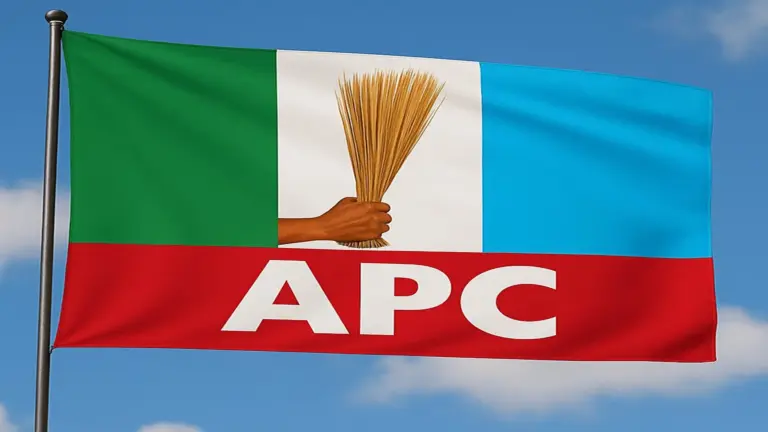
The year 2025 also witnessed the exit of top PDP leaders, including governors and National Assembly members, from the opposition party. The PDP started the year with 12 governors. However, by the end of the year, the number has reduced to four, as eight of the governors elected on the platform of the opposition party have defected to the ruling All Progressives Congress (APC) and Accord Party respectively.
The governors that defected to the APC were Sherif Oborevbori, Delta; Umo Eno, Akwa Ibom; Diri Douye,Bayelsa; Peter Mbah, Enugu; Siminalaiyi Fubara, Rivers; Kefas Agbu, Taraba and Caleb Muftwang, Plateau. While Ademola Adeleke of Osun State berthed in Accord Party. Apart from the governors, no fewer than 50 members of the National Assembly, both in the Senate and House of Representatives, dumped the PDP for the APC in the course of the year. Also, some leaders of the PDP, including former Vice President Atiku Abubakar, former Senate President, David Mark, among others, have also left the major opposition party for the African Democratic Congress (ADC)
Last line
As the curtain falls on 2025, the year will be remembered as a year that the major opposition party set out to resolve the crisis within its fold and rebuild the party for the 2027 contest, but ended up more fragmented. It was a year characterised by legal battles, intrigues, defections and subterfuge.