Follow Us on Google
By Chinenye Anuforo
Financial inclusion is a key component to the economic success of a country. With access to financial services, individuals can feel empowered to make decisions that improve their quality of life. However, financial education remains a challenge around the world. According to the S&P Global Financially Literacy Survey, 77 per cent of the global adult population—roughly 3.5 billion people—lack an understanding of basic financial concepts. And for women of developing countries, the problem is far greater.
In Africa, approximately 70 per cent of women are financially excluded. Given the large number of female business owners across the continent, the lack of access to financial education among women limits their ability to maximize their potential. Specifically, in Nigeria and Ghana, the number of female entrepreneurs exceeds that of men. By bridging the financial gap, women can make better decisions that will not only affect their livelihoods, but also that of the overall economy.
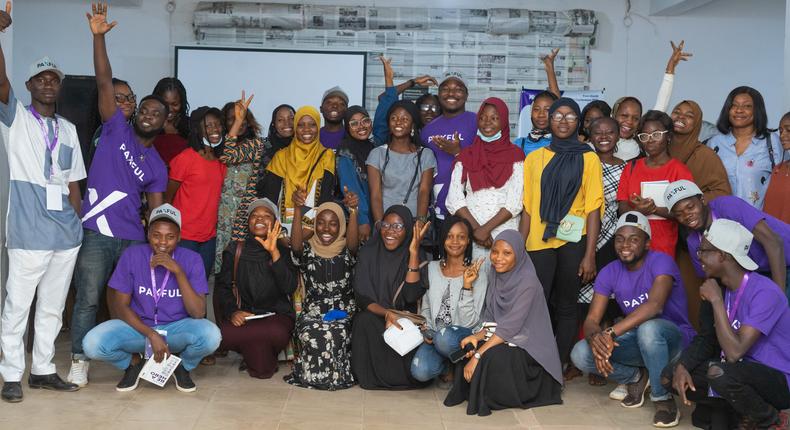
Knowing the positive economic outcomes of driving financial literacy, Paxful, global peer-to-peer fintech platform, has committed to investing in initiatives that support financial inclusion and education. Recently, Paxful hosted a “Women and the Future of Finance” event in Ilorin, Kwara State. For one attendee, the event was an opportunity to take her business selling fabrics and customized cloths to the next level. Eager to learn, Ologbonsaiye said, “Women should be financially independent. I saw it as a privilege to build myself and improve my knowledge and business.”
And Ologbonsaiye wasn’t alone. More than 100 women registered for the event to learn about global trends in the finance space and the technology needed to advance their skills and careers.