Follow Us on Google
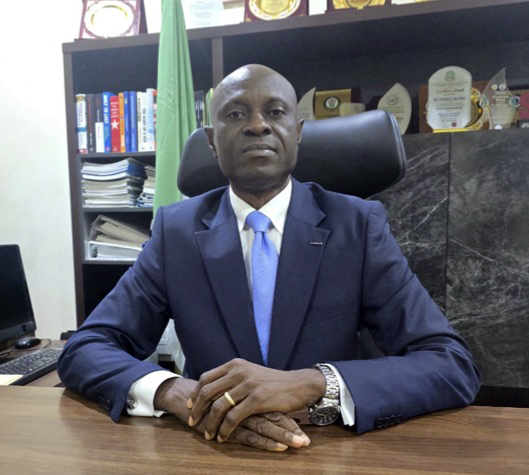
From Fred Ezeh, Abuja
Registrar, Medical Laboratory Science Council of Nigeria (MLSCN), Dr. Donald Ibe-Ofili, said he will strengthen regulation, eliminate quackery, promote quality assurance and align Nigeria’s medical laboratory practice with global standards.
He spoke with Daily Sun. Excerpts:
How do you feel about the support you have received from the profession?
We were honoured to receive members of the Association of Medical Laboratory Scientists of Nigeria (AMLSN), led by the National President, Dr. Casmir Ifeanyi, alongside respected elders of the profession. It was a courtesy visit to congratulate the council following my appointment, and I deeply appreciate the confidence and goodwill they have shown. Their support is encouraging, and I see it as a collective commitment to advancing medical laboratory practice in Nigeria.
What should Nigerians expect from the council under your leadership?
MLSCN is the statutory regulator of medical laboratory science practice and laboratory services in the country. Our responsibility is to ensure that laboratory results generated in Nigeria are accurate, reliable and of the highest quality. Everything we do revolves around one objective, the patient safety. To this end, we will continue to strengthen our regulatory guidelines and ensure that practitioners comply with them because accurate laboratory results are essential for proper diagnosis, treatment and disease control.
How extensive is the council’s regulatory presence in Nigeria?
We currently have 14 state offices, enabling us to monitor laboratory practice effectively. Our database contains more than 4,000 medical laboratories nationwide, and these facilities are regularly inspected by trained and competent officers of the council. Through routine supervisory visits and monitoring, we ensure laboratories comply with regulatory standards, thereby guaranteeing reliable test results for patient care and public health.
The council recently attained global recognition. What does that mean for Nigeria?
It is a significant milestone. The council recently became an Associate Member of the Global Accreditation Cooperation (GLOBAC), a globally recognised body for accreditation organisations. This means we now assess laboratories using internationally accepted standards, particularly ISO 15189:2023, which specifies quality and competence requirements for medical laboratories worldwide. More than 30 medical laboratories in Nigeria have successfully completed the accreditation process. Accreditation is rigorous and involves assessments by highly qualified experts. Laboratories that attain this status gain international recognition for the quality of their services.
How does accreditation differ from routine inspection?
Inspection is carried out to ensure laboratories comply with the regulatory requirements necessary to operate legally in Nigeria. Accreditation is different. It is an internationally recognised quality assurance process that confirms a laboratory has demonstrated technical competence and meets globally accepted standards.
Has the council taken enforcement actions against non-compliant laboratories?
Yes. During a recent statewide inspection in Delta State, we identified several laboratories engaged in unethical practices. Those laboratories were sealed and will remain closed until they comply with regulatory requirements. We will continue to enforce standards without compromise because public safety cannot be negotiated.
Other News
Quackery remains a major concern in healthcare. How is the council tackling it?
There is no room for quackery in Nigeria’s medical laboratory sector. Whenever we discover that a laboratory is operated by unqualified personnel, we immediately seal it. We carry out continuous monitoring across the country, and anyone practising illegally will face the full weight of the law.
What measures are in place to ensure quality of diagnostic kits and laboratory reagents used in Nigeria?
Our enabling Act empowers the council to regulate the production, importation, sale and distribution of in-vitro diagnostic reagents and laboratory chemicals. We operate a public health In-vitro diagnostic control laboratory in Yaba, Lagos, where diagnostic kits manufactured locally or imported into Nigeria undergo validation before approval. Only products that meet our standards receive regulatory clearance and unique identification numbers. We also conduct post-market surveillance by purchasing products already in circulation and revalidating them to ensure they continue to meet quality requirements.
Some people allege that officials of regulatory agencies sometimes collaborate with quacks. What is your response?
These are allegations. Under my leadership, our staff are well trained and understand the ethical responsibilities attached to their duties.
However, if any member of staff is found compromising the integrity of the council or colluding with illegal operators, appropriate disciplinary action will be taken in accordance with our rules.
Medical laboratory science is evolving rapidly. How is the council ensuring that training keeps pace with new technologies?
Undoubtedly, the profession is changing very quickly. Before the COVID-19 pandemic, areas such as genomic sequencing, artificial intelligence, bioinformatics and biosecurity were not as prominent as they are today. To remain globally competitive, we ensure that lecturers undergo continuous professional development so they stay abreast of emerging technologies. Some of these subjects are already offered as electives, while others have been integrated into the existing curriculum. During the next curriculum review, more emerging technologies will be fully incorporated.
Is the current curriculum still relevant to today’s realities?
Yes, it is. The current curriculum remains relevant and up to date. Curriculum development is a continuous process, and we periodically review it to reflect global best practices and technological advancements. Our goal is to ensure Nigerian graduates remain competitive anywhere in the world.
How does the council ensure institutions produce competent medical laboratory professionals?
We regularly accredit universities and colleges of health technology offering medical laboratory science programmes. Our accreditation process evaluates teaching staff, laboratories, equipment, infrastructure and other essential facilities. Institutions that satisfy all requirements receive full accreditation, while those needing improvements are granted provisional accreditation until they meet the required standards. This quality assurance mechanism ensures that graduates entering the profession possess the competence required for safe and effective practice.
What message do you have for Nigerians?
Nigerians should be assured that the Medical Laboratory Science Council of Nigeria remains fully committed to protecting public health. We will continue to strengthen regulation, eliminate quackery, promote international best practices and ensure that laboratory services across the country meet the highest standards. Above all, patient safety is and will remain at the heart of everything we do.