Follow Us on Google
From Fred Ezeh, Abuja
Chief Executive Officers of State Social Health Insurance Agencies (SSHIA), have asked federal and state governments, as well as philanthropists and other corporate organizations considering palliatives for Nigerians to look the way of providing social health insurance services for Nigerians in addition to other palliatives that might be provided.
They believed that quality and affordable health care services would be more beneficial to the masses than food and other social services that might not have long term impact on the lives of the people.
The Chief Executives informed that governments that efficient social health insurance is an indirect increase in workers salary by, at least, 30 per cent, because it will reduce out-of-pocket expenditure for health care services which majority of Nigerians does.
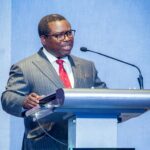
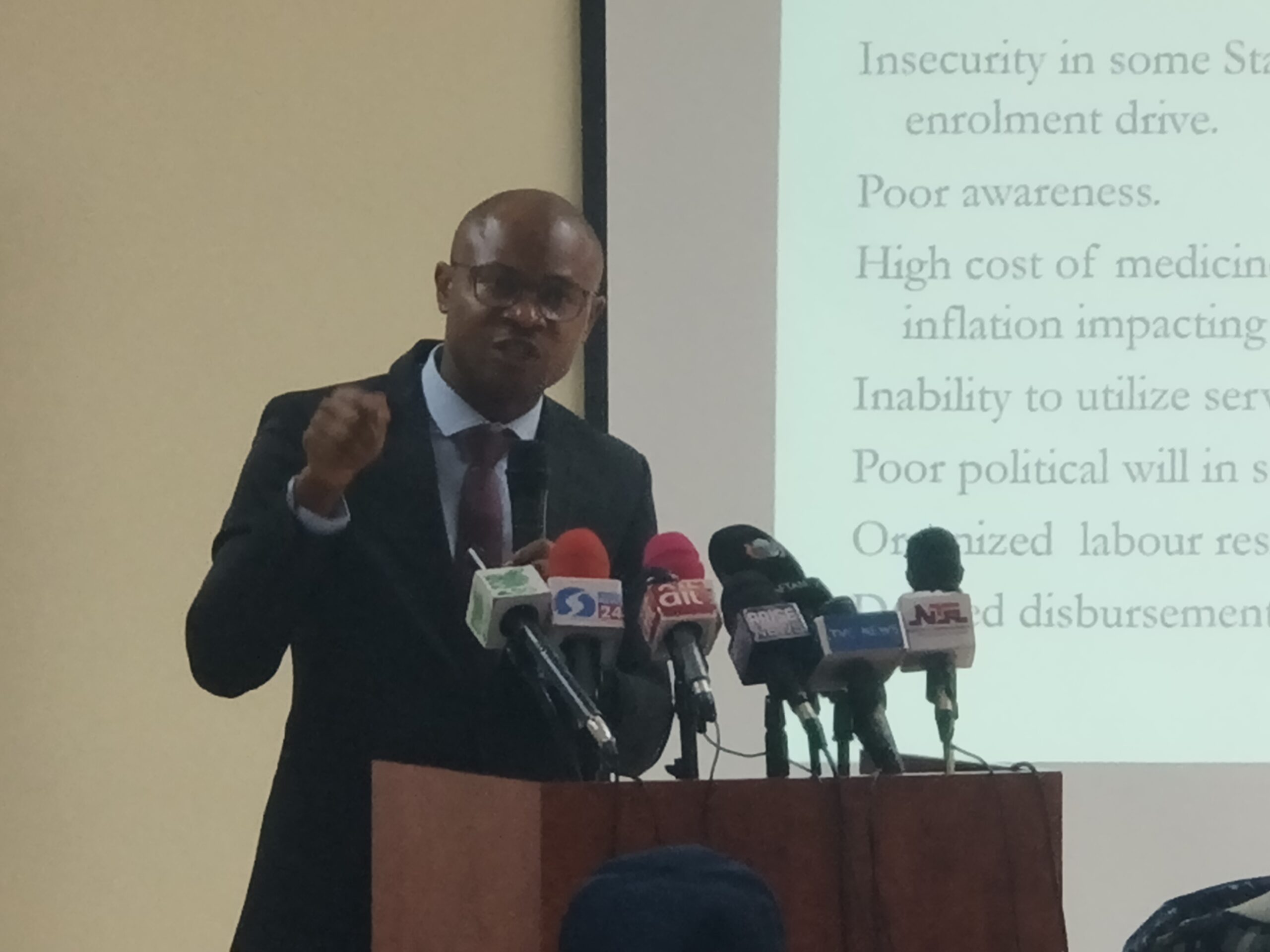
Dr. Simeon Onyemaechi, Chairman of SSHIA Forum, told journalists at first quarter review meeting in Abuja, on Friday, that different states have recorded significant improvement in their social health insurance system, thus resulting in good number of Nigerians being enrolled in the system.
He also told journalists that the essence of the meeting was for members to review activities at different states over the period, and also share idea, knowledge, experience and possible suggestions on how to improve services and engagements with the people.
He said, in addition to that, the meeting was an opportunity to drive the Universal Health Coverage (UHC) agenda from the sub-national level as a unit; peer learning and review geared towards building technical capacity for states; and lead contextualization and domestication of innovative health financing strategies.
In a presentation, he disclosed that total enrolment from all programmes implemented around the states and FCT has risen to 8,107,795 excluding Rivers and Akwa Ibom States.
Sectoral breakdown of the figure indicated that 3,102,419 people representing 38 per cent are from the formal sector; 627, 730 people representing eight per cent from informal sector; 244, 078 people representing three per cent from the Tertiary Institutions Social Health Insurance Programme (TISHIP); 2, 309,600 people representing 28 per cent from Basic Health Care Provision Fund (BHCPF); while 1, 823,968 people representing 23 per cent are from Equity.
Dr. Onyemaechi further explained since the introduction of the State Social Health Insurance Schemes in 2016, over 5.5 million Nigerians have gained healthcare access through diverse programs. “Despite the recorded progress, access to affordable healthcare remains a formidable challenge for many Nigerians, primarily due to widespread poverty and significant reliance on out-of-pocket payments.
“Nationwide health insurance coverage has made modest inroads considering the country’s large population. To ensure the effectiveness and sustainability of state-led health insurance initiatives, adopting various critical measures is imperative.”
He maintained that health insurance stands as a crucial mechanism for offering financial protection against the costs of healthcare services, serving as a cornerstone for universal healthcare.
“Its significance is underscored by research from the World Bank and World Health Organization (WHO), revealing that an annual influx of 100 million people into extreme poverty is attributable to healthcare expenses. While health insurance has been in operation in Nigeria, the uptake has regrettably remained low.”
He highlighted that among other challenges as identified, insecurity in some states is seriously disrupting service delivery and enrolment drive; while poor awareness, high cost of medicines and medical consumables due to inflation impacting on quality, have greatly affected the efforts to improve on the already achieved success.
He, however, announced that measures are being worked out to synchronize services across scheme in different states. “This means that subscribers would be allowed to utilize services in different states. For instance, if a subscriber in Anambra travels to Kaduna, and has a need for health care services, he or she would be able to access quality healthcare without challenges.”
Dr. Onyemaechi, however, recommended an improved demand for health insurance from employers of labour, as well as tax-for-service model for organized informal sector, and operationalization and expansion the National Health Insurance Authority (NHIA) medicine supply initiative.
He further recommended stronger engagement with organized labour to mobilize the Organized Private Sector (OPS), as well as Small and Medium Enterprises (SMEs), to enrol in the services, and as well disburse BHCPF to forestall service disruption across States.
Meanwhile, the NHIA Director General, Dr. Kelechi Ohiri, in his remarks, appreciated the innovations and support received from the Agencies over the years, which, according to him, culminated in an improved enrollment in health insurance services.
He promised more support and collaborations to the Agencies to ensure that they continue to provide quality and affordable health care services for the majority of Nigerians, thus reducing the cases of out-of-pocket expenditure for health care services.