Follow Us on Google
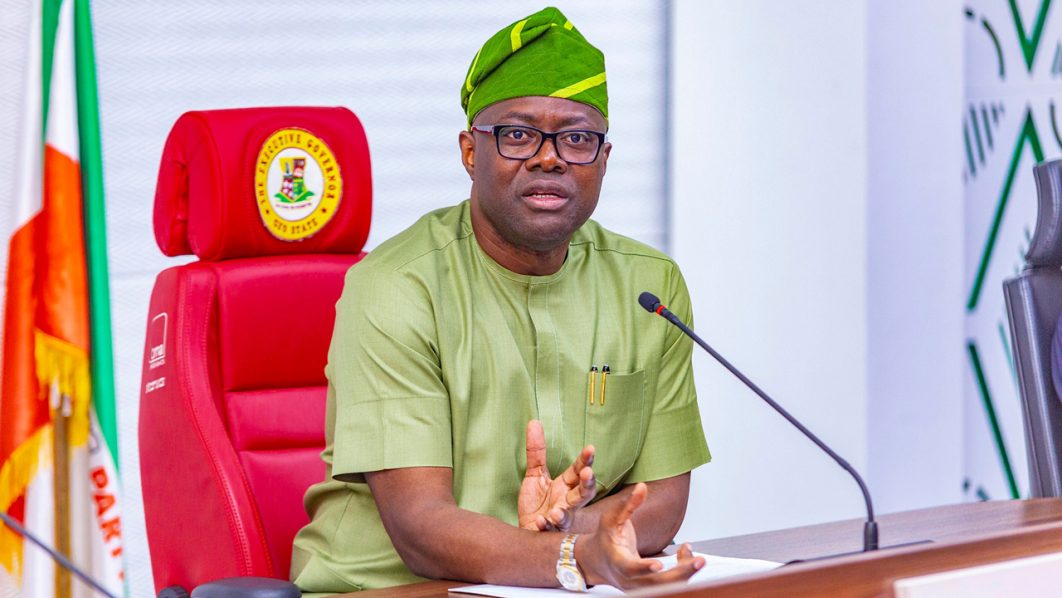
“Some toilets are reserved for teachers, forcing students to fetch water themselves. Others resort to going into the bush, exposing them to dangers, ranging from molestation to attacks by wild animals”
By Oluseye Ojo
Oyo State has allocated more than ₦459 billion to education over the past decade, with the sector receiving funding exceeding 20 per cent of the annual budget in recent years.
Yet many public schools remain short of teachers, inadequate facilities, and inconsistent learning outcomes.
This special report investigates why huge spending has not translated into better learning outcomes for students across the state.
Impressive funding, but…
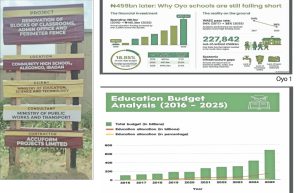
Analysis of budget data from 2016 to 2025 indicates that education received ₦459.35 billion out of a total ₦2.72 trillion, representing about 16.85 per cent of total spending. Annual allocations rose from ₦6.1 billion in 2016 to ₦145.35 billion in 2025. Despite the impressive figures, interviews with stakeholders and a review of available records suggest that increased funding has not consistently translated into improved learning conditions.
Oyo State budget: A decade in review
Examining the annual allocations to education tells a tale of highs and lows. In 2016, the sector received ₦6.1 billion, 5.5 per cent of the total budget. The following two years saw further dips: ₦5.6 billion (4.4 per cent) in 2017 and ₦5.69 billion (4 per cent) in 2018.
By 2019, however, education got a significant boost, ₦18.2 billion, representing 10 per cent of a ₦182 billion budget. The tide truly began to turn in 2020, when the sector received ₦37.4 billion, 20.6 per cent of the ₦181.2 billion total. The upward momentum continued: ₦56.3 billion (21 per cent) in 2021, ₦54.1 billion (18.37 per cent) in 2022, ₦58.21 billion (18.78 per cent) in 2023, and ₦90.6 billion (20.88 per cent) in 2024.
The 2025 budget marked a high point, with ₦145.354 billion, which was 21.44 per cent of the total ₦678.086 billion, allocated to the sector.
It was gathered that while the numbers signal strong commitment on paper, the real measure lies in how the investments translate into learning outcomes for children in classrooms across the state.
High education spending, low academic outcomes
While education spending in Oyo gained momentum after 2019, crossing the 20 per cent benchmark in several years, available records of the West African Senior School Certificate Examinations (WASSCE) performance indicate fluctuating outcomes.
In 2017, Oyo State celebrated its best result in 18 years, with a 54.18 per cent pass rate. Yet by 2025, the pass rate fell to 38.32 per cent. While officials linked the 2025 dip partly to examination hiccups, prompting the West African Examination Council (WAEC) to re-conduct some subjects at selected centres, stakeholders say the deeper issues are systemic.
A teacher, Nike Olalere, said irregularities during the 2025 examinations affected candidates’ performance.
She said: “You cannot really blame the Oyo State Government for the low pass rate in the 2025 WAEC results. The way the examination was conducted was an issue too.”
A parent, Dayo Adeniran, who said her son attended a public secondary school at Oluana, Idi-Ose in Akinyele Local Government, identified systemic issues like underfunding, poor teacher welfare, lack of running cost for some schools, buying of chalks and other materials by teachers themselves, and poor infrastructure in some schools as some of the factors contributing to low pass rate in qualifying examinations.
Beyond classrooms and exams, the human toll of educational deficits has also been described as stark.
The 2021 Multiple Indicator Cluster Survey (MICS6), conducted by the National Bureau of Statistics (NBS) and released in August 2022, revealed that Oyo State has the highest number of out-of-school children in the South West region, totalling approximately 227,842.
Missing links in spending
While Oyo State’s decade-long investments in education are substantial, transparency around how the funds are spent remains limited. Efforts to obtain detailed budget performance data from 2016 to 2025, including actual releases and expenditure breakdowns, were unsuccessful, as officials declined to provide the information.
Without this, it is difficult to determine how much of the ₦459 billion was released, how it was utilised, and what outcomes it achieved.
A subsequent request to the Ministry of Budget and Economic Planning produced data for the period, but discrepancies emerged when compared with publicly available records. Attempts to obtain clarification were unsuccessful.
Other News
Visits to schools
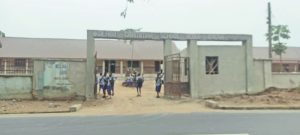
At St. Stephen Anglican Primary School, a signpost lists projects funded under a World Bank-supported programme: renovation of a block of four classrooms, provision of school furniture, and drilling of a unit motorised borehole.
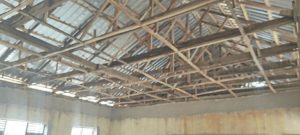
Within the same compound sit two schools with the same name—School One and School Two. School One appears relatively functional. In School Two, a block of classrooms stands dilapidated and unused.
A teacher directed the reporter to the head teacher, who declined to comment and referred all enquiries to the Ministry of Education.
“We cannot give you any information concerning this school. Kindly go to the Ministry of Education for any information. Please, don’t take pictures. If you do, you will put us in trouble. After you might have obtained clearance from the ministry, you can then come back,” one of the head teachers said.
A parent, who pleaded anonymity said, “I have two children in the school and I know the school very well. The government is trying but we still have a long way to go. A set of furniture was approved for this school in 2018. Can you imagine that the furniture were delivered to this school in February 2026?
“The school has a toilet, but it has gone bad. Then, there is no water. There is no borehole in the school. Whenever my children want to defecate, they come home,” she added.
One of her children, who did not go to school on that day, also told this reporter: “We can only come home to defecate during break time. If it is not break time, we usually lay papers or nylon on the ground and defecate into it. After that, we would carry the faeces and throw it into the latrine. We do this because the toilet is bad.”
A short distance away, at Community High School, Alegongo, Ibadan, renovation works were on-going across several classroom blocks, including new roofing and the installation of iron doors and windows. The administrative office was also being renovated, while construction of the perimeter fence continued.
Though the school principal and teachers did not agree to give any information, some of the students said the school has a well, from where they fetch water under close supervision of teachers. They added that they fetch the water into buckets for use in the toilets.
At Ikolaba Grammar School, near the Government House Quarters in Ibadan, renovation work was also in progress.
The school has separate toilet facilities for male and female students, supported by a borehole and a big overhead aluminium-like tank, which serves as the water reservoir.
Yet, as in other schools visited, the principal declined formal interviews and directed enquiries to the Ministry of Education.
Hidden barriers in classrooms
Executive Director, Mentoring Assistance for Youths and Entrepreneurs Initiative (MAYEIN), Ewa Orowale, said inadequate water and sanitation facilities disproportionately affect girls’ education.
“In schools lacking functional toilets and running water, a girl can miss up to 15 days in a term due to menstruation.
“Some toilets are reserved for teachers, forcing students to fetch water themselves. Others resort to going into the bush, exposing them to dangers, ranging from molestation to attacks by wild animals,” she explained.
She also mentioned insufficient classrooms, perimeter fencing deficits, outdated curricula, lack of sickbays, bullying, and challenges with teacher quality and attitude as other factors that compound educational inequities, particularly for female students.
Government responds
Executive Chairman, Oyo State Universal Basic Education Board (SUBEB), Dr Nureni Adeniran, said the Seyi Makinde administration has invested in infrastructure, teacher training and recruitment since 2019.
He stated that 13,859 staff have been trained, 289 classroom blocks and 60 model schools constructed, and 229 classrooms renovated, alongside the provision of desks, furniture and boreholes.
“The administration’s vision to drastically reduce the number of out-of-school children is gaining momentum daily,” Adeniran said.
He noted that about 60,000 children have returned to school. He added that 5, 678 teachers and 80 caregivers have been recruited, with on-going UBEC and BESDA projects delivering more facilities.
Meanwhile, the Chairperson, Teaching Service Commission (TESCOM), Olubukola Oladipo, said staff strength in secondary schools increased from 13, 730 in 2019 to 26, 436 after the recruitment of 10, 500 teaching and non-teaching staff.
“The expansion not only improves students’ academic performance but also provides employment opportunities with multiplier effects on households,” Mrs Oladipo said
She added that the state now operates 10 educational zones to improve service delivery.
Also, the Special Adviser to the Governor on Education Intervention, Suraj Tiamy, said 36 public schools are currently being renovated, with plans to reach about 100 in 2026.
“In each of the schools, we have four cubicle toilets. Additionally, there is also a borehole with solar light for clean water,”
Tiamy added that schools without boreholes would be covered before project completion. He noted that ₦10 billion was allocated in 2025 for renovations, covering classrooms, fencing, water supply and sanitation facilities.
• This report was facilitated by DevReporting in partnership with Education As a Vaccine (EVA) and supported by the Malala Fund.