Follow Us on Google

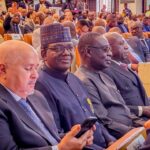
Considering the lapses of the 2019 general election, it has become imperative to urgently overhaul the nation’s electoral process. That is why key stakeholders often meet after elections to review them and chart the way forward for future elections. It is based on this premise, and ahead of the forthcoming rerun polls in some states slated for January 25, that major stakeholders in the electoral process met recently in Abuja under the aegis of the Inter-Agency Consultative Committee on Election Security (ICCES).
What was perhaps surprising at the parley was the trading of blames between the Independent National Electoral Commission (INEC) and the Police authorities. The Chairman of INEC, Prof. Mahmood Yakubu, asserted that the negligence of the police and other security agencies fuelled thuggery and other electoral infractions during the exercise. He also lamented that the deployment of security during the elections left much to be desired.
The INEC Chairman also reminded security agencies that the purpose of security deployment during elections was to ensure protection of the entire election process. According to him, “no thugs and hoodlums can be more powerful than the Nigeria Police and other security agencies. It is the failure to act decisively and collaboratively that encourages thuggery and serves as an incentive for bad behaviour.” “There is emphasis on the number of security personnel but less on synergy, coordination and collaboration among the various security agencies in line with the Inter-Agency Consultative Committee on election Security was established in the first place,” he said. He therefore called for a different approach ahead of the next election. Similarly, the Inspector General of Police, Mohammed Adamu refuted the INEC boss’ allegations, and insisted that some of the commission’s officials colluded with politicians to compromise the elections.
Undoubtedly, conducting an election is a collaborative effort. Failure persists because, very often, stiff punishment has not been given to those who compromised their electoral duties. There must be consequences for bad behaviour not only in relation to thugs, criminal outlaws and elements who want to corrupt the democratic process. These offences have become pervasive because our politicians have resorted to a new level of contrived obstruction of the wheel of the electoral process by colluding with some INEC officials and security personnel to forge election results.
The truth is that most Nigerians no longer trust the electoral officials and security agencies deployed during elections to deliver a seamless process where all votes would count, and the outcome would be a true representation of the ballots. Beyond the blame game, anyone who contravenes the laws must be dealt with. We agree with the position of the National Security Adviser, Maj. Gen. Babagana Mungono (retd) that until those who run foul of the electoral process are severely punished, future elections will continue to be compromised. Therefore, those entrusted with the elections should endeavour to safeguard the integrity of the electoral process. Going forward, we expect the lessons of the last elections to begin to reflect on the January 25 rerun polls.
We also believe that beyond INEC and security agencies, the success of elections in the country will depend, to a large extent, on adherence to electoral laws. Reforming the nation’s electoral process has remained a recurring issue since the present democratic dispensation began in 1999. At the end of the 2007 general election, the Federal Government established a 22-member Electoral Reform Committee, headed by former Chief Justice of Nigeria, Justice Mohammed Lawal Uwais. The committee was charged with examining “the entire electoral process with a view to ensuring that we raise the quality and standard of our elections, thereby deepening our democracy.”
The Electoral Act 2010 was the outcome of the Uwais Report. Some amendments to the 1999 Constitution were derived from the Report. It is hoped that the adopted portions would enhance our electoral process. It appears successive administrations have not been keen on faithful implementation of the report. We believe that electronic voting and transmission of election results will significantly improve the integrity of the electoral process. It is time to sign the Electoral Act Amendment Bill 2018 into Law so that the country can begin electronic voting ahead of 2023 elections.
Nigeria cannot continue with this ex-post facto indictment of one institution of government against the other. That, in our view, is an exercise in futility. What is required now is to holistically sanitise the electoral process. On no account should future elections be militarised. All security agencies deployed during elections should know their duties and discharge them professionally. All hands should be on deck to ensure the integrity of the democratic process.