Follow Us on Google
By Bimbola Oyesola
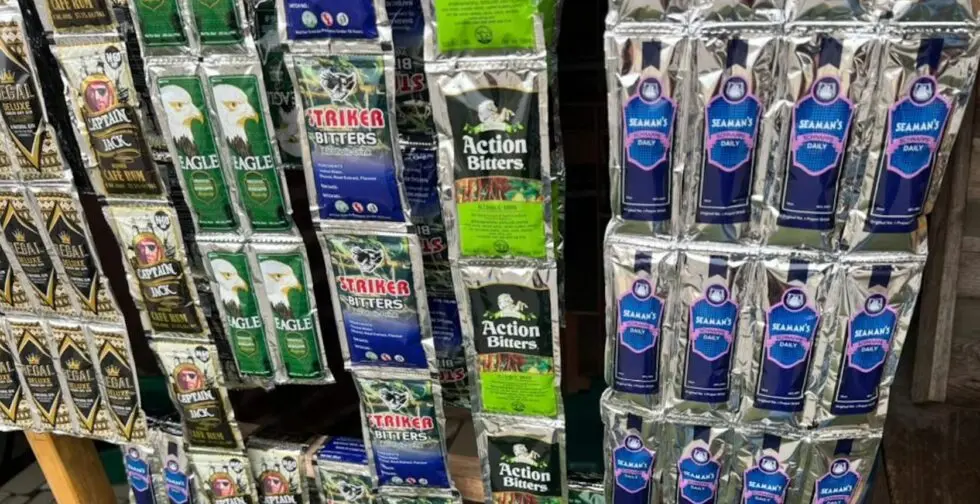
The Food, Beverage and Tobacco Senior Staff Association (FOBTOB) has raised economic alarm, warning that more than 500,000 direct workers and about five million indirect workers could lose their livelihoods if the Senate’s directive to ban sachet alcoholic beverages by December 2025 is allowed to stand.
President of the union, Jimoh Oyibo, described the directive as a looming economic catastrophe with the potential to wipe out millions of jobs and destabilise the national economy.
Oyibo condemned the Senate’s action, stressing that it was taken without consultation, public hearing or engagement with the affected stakeholders.
“The Senate appears to have listened to only one side,” he said. “This clearly violates the principles of fair hearing. Stakeholders, whose livelihoods are on the line, were not given the opportunity to speak.”
He reminded the press that NAFDAC had attempted a similar ban in 2024, a move that sparked mass protests led by FOBTOB and supported by the Trade Union Congress (TUC).
“Our collective resistance forced the House of Representatives to step in,” Oyibo recalled. “They held a proper public hearing, reviewed NAFDAC’s claims alongside industry submissions and ultimately directed the agency to reverse the ban.”
Following that intervention, the Ministry of Health approved a one-year extension to allow stakeholders to develop a comprehensive National Alcohol Policy. The policy, which was validated in October 2025, outlined a balanced, regulated approach to addressing alcohol consumption without destroying livelihoods.
“It is, therefore, shocking that NAFDAC, after actively participating in that process, suddenly ran back to the Senate to push for a ban,” Oyibo said. “This U-turn raises serious questions about transparency, sincerity and motive.”
The validated National Alcohol Policy, he explained, includes major regulatory tools, such as licensed liquor outlets, stricter enforcement systems, expanded oversight for local governments and nationwide awareness campaigns targeting underage drinking.
“A structured framework already exists,” Oyibo emphasised. “So, why abandon a multi-sectoral solution for a blanket ban that will cost millions of jobs?”
He dismissed claims that sachet alcoholic beverages are the primary drivers of underage alcohol abuse, noting that government-backed research contradicts such assertions. “Independent studies do not support these allegations,” he stated. “Yet, in spite of this, the industry has spent over N1 billion on responsible drinking campaigns that have shown measurable impact.”
Other News
Turning to the economic fallout, Oyibo warned that the consequences would be staggering. He said the ban would lead to the loss of over N2 trillion in machinery, packaging lines and raw materials already produced or in transit. “And beyond the physical losses, we face the devastating reality that over 500,000 direct jobs and about five million indirect jobs could disappear,” he said. “These are real people, families, breadwinners and young workers, whose futures are at stake.”
He added that the directive would erode capacity utilisation in factories, weaken investors’ confidence and accelerate the collapse of local manufacturers. “Indigenous businesses are already under strain,” he explained. “This ban will push many of them into irreversible decline.”
Oyibo further cautioned that prohibition would drive the trade underground and fuel a black market dominated by smuggled and adulterated alcoholic products.
“We know the reality in Nigeria. A ban will not stop consumption, it will only make it dangerous, strengthening smugglers and exposing citizens to toxic, unregulated drinks,” he said.
The FOBTOB’s president appealed to the Senate to reconsider the directive and instead adopt evidence-based public health measures. “Rescind this order, convene a proper public hearing and implement the validated National Alcohol Policy that was developed with expert input,” he urged the senate.
He stressed that the ban threatens the entire value chain, comprising farmers, transporters, distributors, marketers, packaging workers, raw-material suppliers and informal-sector earners.
“The ripple effect will be devastating,” Oyibo warned. “The Senate must reflect on how many millions of Nigerians depend on this sector.”
He encouraged senators to visit manufacturing facilities to see firsthand the scale of investment at risk. “A simple visit will show them the magnitude of infrastructure that stands to be lost. It is an eye-opener they cannot ignore,” Oyibo said.
Reiterating FOBTOB’s commitment to high production and safety standards, he warned that the ban would deprive the government of billions in annual tax revenues, while plunging millions into poverty. “The children we claim to protect will bear the worst consequences. Parents without jobs cannot provide education, security or stability.
“Just as a mother hen must survive to raise its chicks, our industries must be allowed to function to support families. Destroy the industry, and you destroy the survival chain,” he stated.
Expressing optimism, he said FOBTOB remains hopeful that reason would prevail. “We trust that the Senate will reconsider and avert this looming human and economic disaster. There is still time to stop the jobs bloodbath before it begins,” he warned.
With uncertainty growing across the beverage sector, FOBTOB has vowed to intensify advocacy to protect jobs, businesses and livelihoods from what it calls “an avoidable national crisis.”