Follow Us on Google
From Juliana Taiwo-Obalonye, Abuja
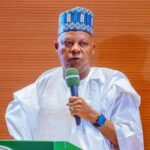
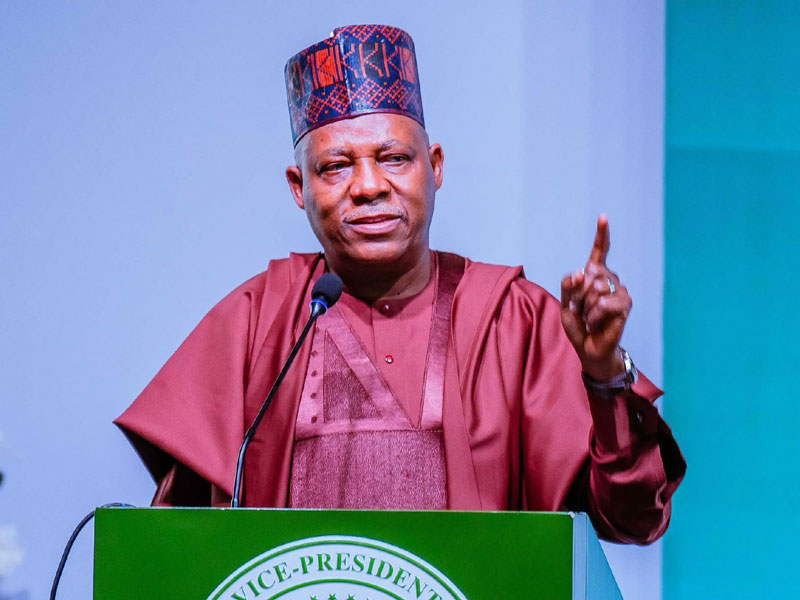
Vice President Kashim Shettima has emphasised that the Bola Tinubu administration’s main goal is to achieve food sovereignty for Nigeria, stressing that true national independence cannot be realized without control over food systems.
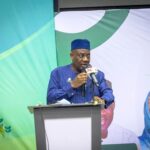
Speaking on Tuesday at the UN Food Systems Summit +4 in Addis Ababa, Ethiopia, according to a statement signed by his media aide, Stanley Nkwocha, he urged global partners to collaborate in developing sustainable and inclusive agricultural systems across Africa.
Shettima highlighted President Tinubu’s comprehensive strategy to tackle the country’s food security challenges, especially in vulnerable and conflict-affected areas such as the North East. Since taking office in 2023, President Tinubu declared a state of emergency on food security to address the fragile food system undermined by insecurity, climate change, and inflation.
“Our target is to attain food sovereignty. As long as a nation is not independent in food sovereignty, it remains non-sovereign,” Shettima said. He explained that the government has initiated systemic reforms aimed at transforming agriculture into a resilient and youth-driven engine of economic growth. These include setting up the Presidential Food Systems Coordinating Unit (PFSCU) to harmonize all food security interventions and launching food support programs in displaced persons’ camps that encourage food production for dignity and resilience.
The Vice President also stressed the importance of market-driven agricultural transformation, powered by entrepreneurship, innovation, and improved technology. The administration is investing in climate-resilient seeds, extension services, and mechanization to support farmers in coping with changing rainfall patterns and other climate challenges.
Other News
On the sidelines of the summit, Shettima held important meetings with leaders of global food organizations – the FAO, IFAD, and WFP – seeking partnerships for projects including the revival of the Lake Chad region, expansion of year-round farming, and supporting Nigeria’s Green Revolution initiative. He highlighted the need for multi-faceted approaches to tackle environmental degradation, climate change, humanitarian crises, and conflict in Lake Chad.
The FAO Director-General praised Nigeria’s political will under the Tinubu administration, pledging technical support. IFAD’s President commended efforts to empower smallholder farmers with finance and modern inputs, while the WFP Executive Director reiterated her organization’s commitment to collaborate on school feeding, nutrition, and support for displaced communities.