Follow Us on Google
By Chinelo Obogo
When Danjuma Ismaila assumed office as Rector of the Nigerian College of Aviation Technology a year ago, he stepped into leadership of an institution with a long-standing reputation as Nigeria’s premier aviation training school. The college also holds the prestigious Regional Centre of Excellence status awarded by the International Civil Aviation Organization, with platinum certification, a distinction no other training institution in the country has attained.
But despite this, the college has perennially struggled with underfunding, poor staff welfare, ageing infrastructure and inadequate training facilities.
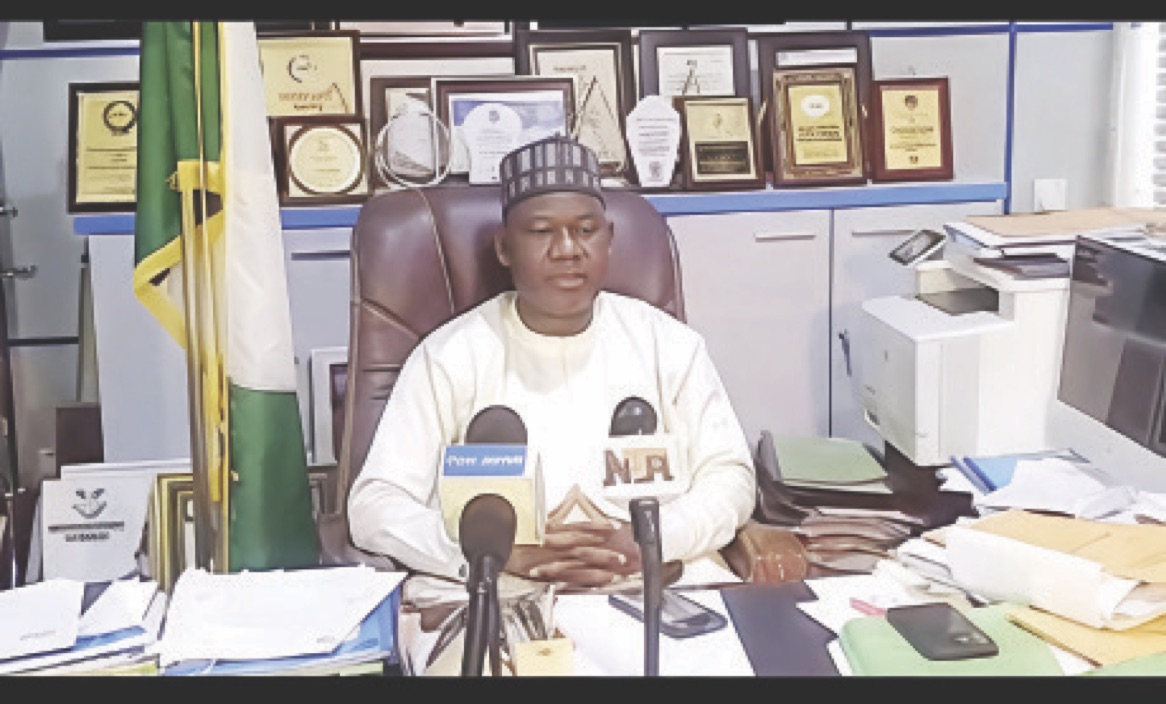
One year after assuming leadership, Ismaila opened up to aviation journalists recently on the institution’s reforms, challenges and future direction.
Could you tell why was NCAT established? And looking at the past 12 months specifically, what would you say are the landmark achievements of your administration?
The college was established as far back as 1964, with the mandate of providing training and manpower development for the aviation industry. The college trains pilots, air traffic controllers, aircraft engineers, aircraft maintenance engineers, aero-telecommunication engineers, and other aviation professionals. The college is divided into six schools: the Flight School, the Air Traffic Control and Air Traffic Service Navigation School, the Aero-Telecommunication Engineering School, the Airport Emergency and Aerodrome Safety Engineering School, the Aviation Management School, and the Instructional System Design Unit (ISDU).
The ISDU is responsible for organising and conducting International Civil Aviation Organisation (ICAO) courses. These are not exclusive to us; they are internationally recognised courses that can be attended anywhere in the world, provided the institution is affiliated with ICAO. The college is one of the regional centres for ICAO training, and we hold platinum status which is a distinction no other institution in Nigeria has achieved. This makes us a Regional Centre of Excellence, and it is based on the broad range of programmes we run. We have over 200 courses covering various aviation professions, some of which are initial training programmes and others are continuous professional development programmes.
Regarding my achievements over the past year, when I assumed office, I found that most of the equipment needed to be upgraded to international standards, and several facilities were either inadequate or obsolete. Our major challenge, like that of many government agencies in the country, is funding. So I took a two-pronged approach: how do we secure intervention funds to supplement government funding, and how do we improve our Internally Generated Revenue (IGR) to complement our overall funding?
My first task was improving our funding capacity. We explored the possibility of running programmes for the international community, since our curriculum has already been certified by both the Nigerian Civil Aviation Authority (NCAA) and ICAO and meets international standards. This means that participants from anywhere in the world can enroll in our programmes. So we embarked on a sensitisation and marketing drive, and it yielded results. We are now receiving participants from South Africa, Niger, and French-speaking ECOWAS countries, some of whom are currently attending programmes here in Abuja. We have also trained participants from Egypt and signed a Memorandum of Understanding (MOU) with South Sudan. This year, we intend to concentrate more on international outreach and grow that revenue stream further.
Locally, we successfully applied for intervention funding through the Tertiary Education Trust Fund (TETFund). From February this year, we have been enlisted and have received intervention support, and we are currently in the procurement process to utilise those funds. We have also approached the Federal Government’s Renewed Hope Agenda, and our request is under consideration.
We have also achieved significant progress in stakeholder engagement with the NCAA, Nigerian Airspace Management Agency (NAMA), and others. Some of them rely on us as their primary training provider but there were bottlenecks in our working relationships. We then sat down, resolved those contentious issues, and signed MOUs with several of them. We have similarly signed MOUs with the Nigerian Air Force, the Presidential Enabling Business Environment Council, and several universities.
In terms of infrastructure, we upgraded our air traffic control simulator, which now has a greater capacity to accommodate more students. This addresses a longstanding complaint from NAMA that we were not meeting their training needs. We are also renovating one of our hostels, which was built in the 1960s, to give it a modern look and feel. Additionally, we have awarded a contract to complete the perimeter fencing of the college. For an institution of this age, only about 50 percent of the perimeter was previously fenced, leaving us vulnerable to encroachment from neighbouring communities. Contractors have been mobilised and work is underway.
We are also working toward awarding a contract for runway renovation, and we have ensured that all staff have received adequate training and that those who needed to renew their licenses have done so through our capacity-building programme. NCAT is the largest approved training organisation in Africa, based on the number and range of courses it offers, and we are positioning the college for global competitiveness.
Lawmakers have often noted that NCAT is underfunded. Are there specific areas where you would welcome legislative intervention? And what are your projections for the next two to three years?
I must be honest, we are supposed to be the leading aviation training institution in Africa, but we are not quite there yet. For instance, Ethiopia’s Aviation University has surpassed us in terms of programmes and capacity, largely because the Ethiopian government has provided robust support. Aviation is a major contributor to Ethiopia’s economy, and they treat it as such. They have over 30 trainer aircraft, while we currently have only nine. Clearly, we cannot measure ourselves against them on those terms.
That said, we are working towards increasing our capacity. If we can secure funding from the National Assembly or the Federal Government to acquire additional trainer aircraft, we will significantly expand what we can offer. Right now, the college is overwhelmed with demand for pilot training.We are the only institution currently providing commercial pilot training in Nigeria. We can receive over 100 applicants per intake, but our approval from the NCAA limits us to admitting only 25 per class. And the demand is strong, because the cost here is far more competitive than abroad. The same Commercial Pilot Licence (CPL) programme which we deliver over 18 months costs approximately $75,000 at Ethiopia’s Aviation University, which is nearly N90 million at the current exchange rate. We are charging N33 million here, having just increased from N23 million. That explains the high demand.
On our 737-NG simulator has been on the ground for years, but we are making progress. We have been working with the Original Equipment Manufacturer (OEM), and our engineers, in collaboration with the OEM via virtual maintenance sessions, have resolved about 80 percent of the technical issues. The remaining 20 percent requires physical on-site attention, but the OEM’s engineers have expressed security concerns about travelling to Nigeria, based on advisories from their embassy. We are working to address their requirements, and we hope to have them here next month.
This is frustrating, particularly because we have had engineers from the UK visit and service our fire simulator without any issue. Their OEM comes twice a year and has done so without problems. But the Canadian manufacturer is more hesitant. We have explored alternatives, including engaging a licensed engineer in Lagos who previously worked for the same company in Canada, but the OEM has not authorised that arrangement. We are also considering reaching out to Ethiopia’s Aviation University, which has a similar machine. But the challenge is that the OEM controls the simulator remotely and can block its operation if their protocols are not followed, so we have to proceed carefully.
Other News
What about the pending trainer aircraft deliveries? We understand the government had plans to procure more aircraft, including the Diamond 42. What is delaying delivery?
The delay is simply a lack of funding. A contract was awarded to supply 20 aircraft, but funds were not released to the contractor in full, so only nine have been delivered to date. We do have three TB-9 aircraft that are technically airworthy, but we have not been using them because they run on AVGAS, which is also known as aviation gasoline and is not readily available in Nigeria because it has to be imported. The cost of operating those aircraft would exceed what we currently charge students. That said, if the pressure on our fleet becomes critical, we may have no choice but to reintroduce them and adjust our fees accordingly.
For our Diamond 40 and Diamond 42 aircraft, they run on Jet A-1 fuel, which is the standard aviation fuel and is available nationwide, in Kaduna, Kano, and elsewhere. We currently have a supply agreement with TotalEnergies, though our fuel dump on-site is not yet serviceable. We are working to bring it back online after the runway renovation, so we no longer have to travel to Kano to refuel.
To what extent have the gains recorded in the college’s Internally Generated Revenue improved the conditions of service and overall welfare of your staff?
Staff welfare is a complex matter, as salary structures fall under the purview of the Salaries and Wages Commission, which is beyond my authority. However, I will say that the disparity between our instructors’ earnings and those of their counterparts at NAMA has been a problem. Some of our air traffic controller instructors earn less than N500,000 per month, while NAMA pays its controllers in millions. This has led to a significant brain drain as many of our best instructors have left for NAMA. However, the Ministry has recently moved to restrict this inter-agency attrition, which should help.
Toward the end of last year, we completed a comprehensive review of our conditions of service, with recommendations to significantly improve staff welfare. This has been forwarded to the Head of Service for approval. These recommendations are anchored in our improved IGR and the projected additional revenue from the 50 percent increase in school fees that the government has approved. Our IGR has grown by approximately 25 to 30 percent since I assumed office, and we expect this to continue growing as we deepen our international marketing and increase enrolment.
For instance, pilot training, which we previously charged N23 million for, is now N34 million per student. That should generate additional revenue from that end.
We will also maintain our intensive international marketing outreach, participating in global forums to increase our visibility, which will in turn earn us foreign exchange. If we can properly harness our opportunities, I can tell you that this college has the potential to generate significant hard currency for the Nigerian government. Many neighbouring countries in West and Central Africa currently send their people to Europe for courses that we are fully capable of running here. If the government provides us with the right facilities, this college will be a cash cow, generating dollar revenue that will not only arrest capital flight but also bring additional funds into the government’s coffers.
Nigeria’s aviation sector has a manpower problem and we want to know what is driving it and how these problems can be fixed. Also, NCAT has students who are trying to enroll but it can only admit a fraction of them. What needs to happen for that capacity to grow?
To accommodate more students, we would need additional capacity. The NCAA’s limit is based on international standards because a standard pilot training class should not exceed 25 students. A smaller class size ensures better learning but with a larger class, it becomes difficult to manage effectively. However, if demand exceeds 25, you can simply open an additional class provided you have the facilities to support it. Pilot training is not just classroom instruction; it involves simulator training and live aircraft training as well. The regulator approves your intake based on the availability of your equipment. If your equipment can support 100 students, they will approve 100. That is why we are saying that if the government provides funding to acquire more aircraft, we will be able to increase our capacity and absorb more students.
How can the manpower development gap in the aviation sector be addressed generally, beyond NCAT specifically?
One of the challenges you may not be fully aware of is that there are many graduates of this college who are currently unemployed. The figures vary, but it is estimated that the number of Commercial Pilot Licence (CPL) holders without jobs are between 2,000 and 3,000. The root cause of this is the shortage of commercial aircraft in the country. Most of the commercial aircraft operating in Nigeria are on wet lease, meaning the aircraft are not Nigerian-owned assets but are owned by foreign companies. Because those companies do not fully trust local operations, they sometimes bring in their own pilots and crew and at the end of the day, our trained pilots are still left without jobs. There are opportunities abroad, but accessing them requires a minimum number of flying hours, which many of our graduates struggle to accumulate.
What the college has identified, however, is a promising way out. We are currently working with an international partner through the European Aviation Licensing Authority (EALA) to explore whether our graduates can earn a European Union Aviation Safety Agency (EASA) certificate. At present, upon graduation, our students only receive NCAA certification, which means their competency is recognised solely by Nigerian airlines and a handful of other African carriers. But if they also earn an EASA certificate which is the standard recognised across all European countries, the picture changes entirely and they stand a better chance of getting jobs in Europe upon graduation
Once we affiliate with an EASA-certified Approved Training Organisation (ATO) in Europe and meet their requirements, our graduates will leave here with two certifications and two licenses, the EASA certificate and the NCAA certificate. That would open the door to employment in Europe, where there are far more opportunities. For instance, we were informed last November that Ryan Air was actively recruiting pilots from Nigeria and other English-speaking countries, with an EASA license as the primary requirement.
Currently, if you hold a Nigerian CPL and present it in Europe, it is downgraded to a Private Pilot License (PPL), meaning you would have to undergo additional training before being issued a European CPL. But once we complete this affiliation, our graduates will finish their training here with a CPL that is both NCAA and EASA certified, giving them equal standing to compete for jobs in Europe. The Middle East also recognises EASA certification, so opportunities would extend across Europe, Africa, the Middle East, and any other region that accepts EASA standards.
We are still in the negotiation phase and have not yet completed the process, but we believe we could finalise it within six months if everything falls into place. This does not require legislative backing, it only needs ministerial support, which we are already receiving from the Ministry.
Give us an insight into your background
Before my appointment as Rector, I worked in the Nigerian aviation sector as a transport specialist. My first degree is in Physics from ABU Zaria, I have a PhD in Aviation Management from the University of Huddersfield in the UK, and training at the Singapore Aviation Academy. I have also lectured at the University of Daura and served as a part-time instructor here at NCAT itself.
Your appointment process was highly competitive, with many candidates, including strong contenders from within the college community. How have you managed the different interests and expectations that come with leading an institution like this?
Leadership is about managing people and that is undoubtedly the most complex aspect of any leadership role. Unlike machines, which behave exactly as you operate them, human beings are far more nuanced. You are managing a diverse community with different personalities, motivations, and attitudes to work. The key is to have a clear principle which is to carry everyone along, understand how people work, and operate in a way that brings out the best in them.
Most importantly, I always try to remind everyone and myself that we are working for the institution, not for any individual interest, including mine. The focus must always be on the organisation. I tell my colleagues: do not look at me, look at the organisation. It is about convincing everyone that we serve the system, not any one person. That philosophy has been the foundation of how I have led, and I believe it is why we have been able to move forward together as a team.