Follow Us on Google
From Olanrewaju Lawal, Birnin Kebbi
There are many types of inheritance. Some inherit riches such as big houses and beautiful cars, but others inherit gifts of nature and deep knowledge of herbs from their foregone generations.
Dahiru Mai Kada, 43, is a familiar name in Kebbi State. He is a specialist in herbal medicine and inherited his skills and knowledge from his great grand- parents.
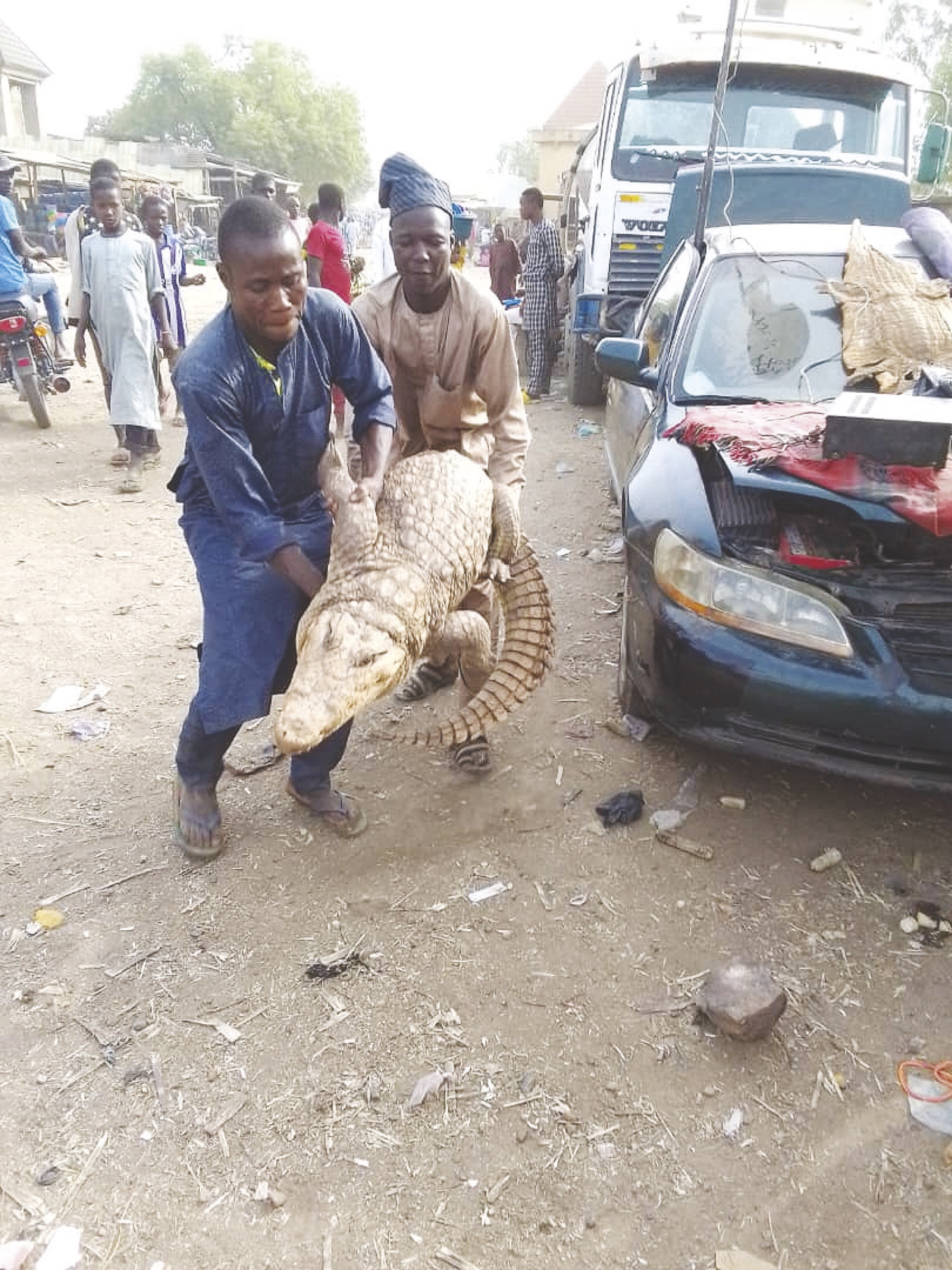
What makes his medicine and marketing unique is the fact that he travels with and displays live crocodiles to attract public attention to his products in markets, towns and cities.
Dahiru, his brother, Abu and son Aminu, have been moving from one market in the state to another, displaying live crocodiles to attract attention to their herbal medical products. He told Daily Sun during a brief encounter at Rigata Cultural Festival that he had powers to call out hippopotamus, crocodiles and manatees (Ayu) from their hideouts, a gift he said was passed on to him from generations of his parents.
His great-grandfather was a Kanuri man, who migrated from Borno to Gwandu, in present day Kebbi State. He migrated to join Sheik Abdullahi Fodio during the Islamic Jihad with the intention to acquire knowledge.
His great-grandfather, according to oral historians, was known to rear crocodiles and produce local herbs used to cure different sicknesses in Gwandu town. Dairu: “Before he died, he made sure his knowledge of herbal medicine was transferred to his children especially his sons, who thereafter, passed it on to the next generation.” Just like other pets living alonside human beings, their crocodiles were given names such as Kariki Kada, Karan Kada and Bakin Kada:
“I grew up with crocodiles in our house just like the way people live today with chickens, goats, sheep in their houses. But with the modern day society, we have no option but to arrange a special area for the crocodiles to live side by side with human beings.
“We designated a place for them in our residential houses whereby these animals enjoy their lives because they need water to live in. But before now, sincerely speaking they mingled with people.
“In those days, the crocodiles moved freely, it wasn’t a surprise thing for a crocodile to move into the garment of a woman in the night while she was asleep. Sometimes, you woke up sometimes to see a crocodile sleeping with you in a room. That was the scenario during our father’s period.”
On herbal medicine, Dahiru inherited it from his grandfather who in those days, offered free herbal medical services to the people, until when people collecting his medicine multiplied in number: “Then some people advised him to start collecting a little fee for the medicine which he succumbed to. He then started charging a token from those coming to his house for herbal cure.”
Dahiru said his great- grandfather was later advised him to go round nearby villages to sell his medicine considering its importance to human health. He listed some of the ailments he had treated to include body cold, hernia, rheumatism pile including women experiencing difficulties during menstrual period.
He also said he had cured male people suffering shrink of mil organs due to diseases, adding that they became normal and well – functioning after his cure. He, however:
“This particular medicine is only applicable to those who contracted the disease, not for those who were born with it. We also provide medicine to people experiencing rashes on their private parts.”
Apart from supporting the sick, Dahiru said he was also into fishing business: “I am a fisherman, if I go back home today, I will venture into fishing. I have the power to catch manatees (Ayu) and play with it the way I like. I have been doing so for a long time.
“I have no regret doing this business. I was able to mobilise resources and got married from doing this business. I also built my own house and procured about four vehicles, apart from motorcycles from the proceeds of this business.”
He appealed to government to assist in sanitising the business so that quacks could be eliminated: “We are also urging our government to organise more of this annual festival to give opportunities to traditional herbalists to showcase their talents.”
His brother, Abu, 45, added: “Our great grandfather, grandfather taught our fathers and we too are teaching our own children. So, it has been like that from one generation to the other. This is what we knew best and it is the business from where we earn our livelihood.”
Dahiru explained that feeding the crocodiles consumes a lot of money: “During the hot period, they consume more food than during the cold harmattan season. During the cold season, they might not eat for two to three days. But in the hot season, they usually eat everyday which costs us like N5,000 in a day.
“But during a cold period, they don’t eat everyday. We feed them with meats, fishes and chickens. The meal they eat is on the expensive side.”
Twenty–seven-year-old Aminu, who has been following his father and his brother, said he has learnt a lot from them, pledging to continue the business and hand over to his children too in future.