Follow Us on Google
By Bianca Iboma-Emefu
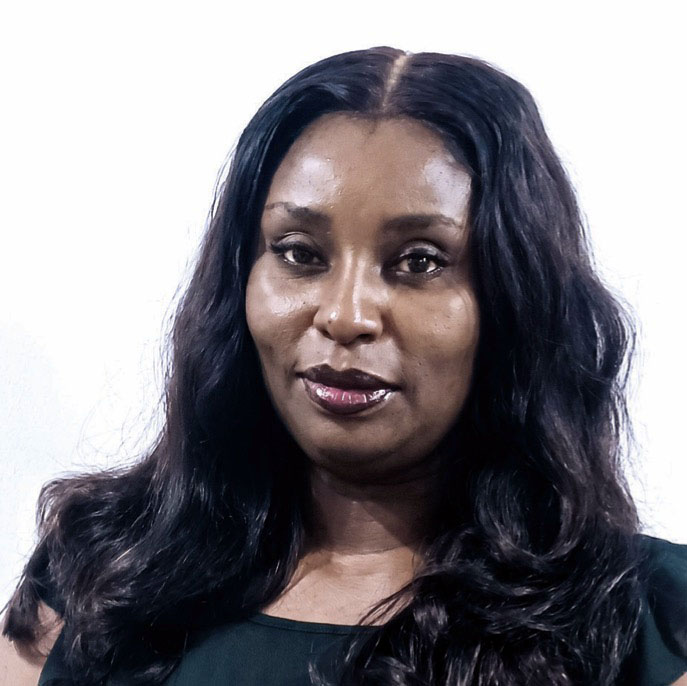
Vivian Uwakwe is a Nigerian children’s book author, illustrator, animator, and founder of Yanga Toons Ltd, a Port Harcourt-based publisher dedicated to bringing African perspective and heritage into world-class picture books. An artist, whose father was a gifted story-teller, Uwakwe holds a BSc in Estate Management from the University of Nigeria, Nsukka, and an MBA from Anglia Ruskin University.
She crossed paths with children story book when she used pictures and text to help a struggling six-year-old learn to read. The results inspired her to pursue publishing. After winning a $1,000 scholarship for a 12-week self-publishing programme in 2022, she released her debut How The Tortoise Broke Its Shell, which reached number one in Amazon’s Children’s African Folk Tales & Myths category, followed by How The Lizard Lost Its Hair and the reimagined Why The Spider Lives In A Web, which topped children’s charts in the US, UK, and Canada.
Uwakwe’s stories blend African tradition with original narratives that meet international standards, featuring animal characters named from Nigerian ethnic groups and paired with companion activity and colouring books. Vivian also illustrates for other authors and organisations, including a seafood jollof rice commission for Service95, Dua Lipa’s magazine.
She is a member of SCBWI and ACAIN, received a US$5,000 Tony Elumelu Foundation grant, and regularly visits schools to inspire young readers. Every project returns to the same purpose: helping children everywhere discover the richness of African stories told to a global standard, while ensuring African children see their own heritage reflected in colour, character, and story.
Vivian Uwakwe recently spoke to Daily Sun:
Your journey into children’s publishing began when you helped a six-year-old who struggled to read while your father, an artist and storyteller discouraged you from pursuing art professionally. How did those early experiences shape your decision to become an author and storyteller?
I grew up in an unconventional home. My father worked from home, so I had more access to him than most children. My mother said that even as a toddler, if I suddenly went quiet she knew where to find me — in his studio. Growing up surrounded by art every day left a deep mark.
However, he warned me plainly that he had never found financial fulfillment in his work and did not want his children to suffer the same fate. So, he discouraged me from pursuing art professionally. I studied the sciences in secondary school, management at university, worked in banking, completed a master’s degree in the UK and even took odd jobs in healthcare to pay fees. I later returned to consulting.
Yet no matter how long I stayed away from pen and paper, the skills never went rusty. When I later signed up on Freelancer.com in 2013, I earned five-star ratings as a writer. My father’s sharp eye for language and storytelling had stayed with me.
In my early 40s, I fostered a six-year-old who could not write the alphabet. The available textbooks were not designed to teach a child of that age the rudiments. I began creating custom materials. After winning a thousand-dollar scholarship and training under established children’s publishers, I realised that those same skills could serve far more children than one. That was the beginning of the professional path.
What challenges have you faced building a globally competitive children’s publishing brand from Nigeria, and how do you ensure that your work preserves African heritage without being confined to the label of “African folktales”?
Standards remain the central challenge. Locally produced children’s books often use poor paper, weak design, and inadequate editing. Books printed in China or India for the global market meets higher benchmarks because they serve international publishers.
In my organization, we refuse to compromise. We print with carefully chosen local partners in Port Harcourt, who know our expectations on paper quality, ink, and finishing. Every title passes through professional editors, including an in-house editor and others based in the UK. We never tell ourselves we are publishing only for Nigerian children; we publish books any child anywhere in the world can pick up and enjoy.
Our stories begin in African heritage but are not limited by the “African folktale” label. How The Tortoise Broke Its Shell retells a familiar tale in contemporary language with strong illustrations. How The Lizard Lost Its Hair is an original narrative written in the structure of an African folktale. Why The Spider Lives in a Web follows the same approach. Future titles move further still into original contemporary stories. The origin is African; the quality and accessibility are universal.
What impact do you hope your work will have on children’s development, creativity and sense of identity, and what legacy do you ultimately want to leave behind?
I want Nigerian children, in particular, to know that they come from a rich heritage they can be proud of. I already see that pride when children clutch the books, ask for the next story, or bond with parents over the pages.
I also want them to understand that they themselves can write and illustrate. In every classroom I visit, children begin writing after they meet a living author and illustrator who look like them and share their cultural background. Some parents have even paid me to review their children’s manuscripts.
Beyond that, I regard this work as a vocation. When I am gone, I want royalties from the books to support vulnerable children. I also hope that other Nigerian authors will look at the standards we insist on and raise their own game so that “Nigerian children’s book” never again implies lower quality.
Other News
Many African children grow up reading books filled with foreign characters, names, settings and cultural references. What impact do you think this has on a child’s sense of identity, and why is it important for children to see themselves and their heritage represented in the books they read?
When the books a child encounters at home and school are dominated by foreign characters and settings, it is easy for that child to begin feeling that their own culture is inadequate. Only a strong home environment that deliberately builds cultural pride can counter that message.
Seeing oneself and one’s heritage in books tells a child: you are important, your story is valuable, you are not second-class. Under-representation is a problem we no longer have any excuse to ignore. The tools to create inclusive, high-quality literature are available. We must use them.
You combine words, colourful illustrations and activity books in your publications. How does this approach help children who may struggle with conventional reading methods, and what have you observed from your interactions with children in schools?
Interactivity turns a book into an experience. Children who struggle with conventional reading often become excited the moment they open one of our titles. The questions, search-and-find elements and accompanying activity books invite them to engage without being forced. Even children with special needs participate eagerly during school visits. Teachers frequently remark on the transformation they witness in class.
How important is storytelling and illustration to a child’s cognitive, emotional and social development, particularly in the early years when children are still forming their understanding of the world?
They are fundamental. In an age of constant digital distraction, focus has become rare. A physical book with strong storytelling and illustration asks a child to slow down, imagine, and stay with a narrative. Reading aloud can begin long before a child knows the alphabet; it builds the habit of attention.
Illustrations inspire children to draw, colour and invent. The activity books that accompany our titles deliberately exercise imagination, fine-motor control and narrative thinking. These experiences shape how children understand their world and express themselves.
Beyond teaching children how to read, what life lessons do you believe well-written children’s stories can teach about values such as empathy, honesty, courage, responsibility and consequences?
A well-written picture book can teach values more effectively than scolding or punishment. Children absorb stories in small, thoughtful bites. They pause, laugh, ponder, and later recognise similar situations in their own lives. A story about a lizard that harms others while protecting his elaborate hairstyle stays with a child. The next time that child is tempted to put personal desire above others, the memory of the story can prompt a second thought. Books place responsibility on the child in a constructive way.
With declining reading culture and the increasing influence of smartphones, social media and other digital distractions, how can children’s authors and illustrators make books sufficiently engaging to compete for a child’s attention?
Nigerian authors and illustrators must ask what quality of visual storytelling children already see on screens, then match or exceed it on the page. A poorly illustrated, poorly edited book on cheap paper stands no chance against the best animated content. The only realistic response is higher standards in writing, illustration, design, and production. Every creator should ask: if this book sat on a shelf beside the best children’s books in the world, would anyone look at it twice? If the answer is no, the work is not finished.
You regularly visit schools to inspire creativity and reading. What are some of the most striking things you have learnt from interacting directly with children, and have those encounters changed the way you write or illustrate your books?
I am continually surprised by how many primary-school children have already written stories of their own. Their capacity is routinely underestimated. Quiet children become animated; they suggest alternative plot lines, identify with characters and ask when the next book is coming. These encounters reinforce the decision to keep language accessible, illustrations vibrant and stories open enough for children to continue them in their own imaginations.
If parents, teachers and policymakers truly understood the role of quality children’s literature in shaping the next generation, what changes would you like to see in the Nigerian education system and publishing industry to give children’s books the priority they deserve?
Parents and teachers should make author visits a regular part of every school term. Organisations such as the Association of Children’s Authors and Illustrators of Nigeria can supply the talent. Schools should also demand higher quality when selecting classroom reading material; a single un-reviewed book can do real harm.
Policy makers need to treat children’s literature as a national asset. Many countries offer grants, prizes and subsidies specifically for children’s authors and illustrators, often broken down by age category. Nigeria still lacks comparable targeted support.
Existing literary prizes rarely distinguish picture books from young-adult fiction. Corporate social-responsibility programmes can help fill the gap by commissioning, purchasing and distributing books by local authors, especially to state-school children who otherwise have little access. Quality children’s literature is not a luxury. It is one of the most practical ways to build identity, imagination and values in the next generation.