Follow Us on Google
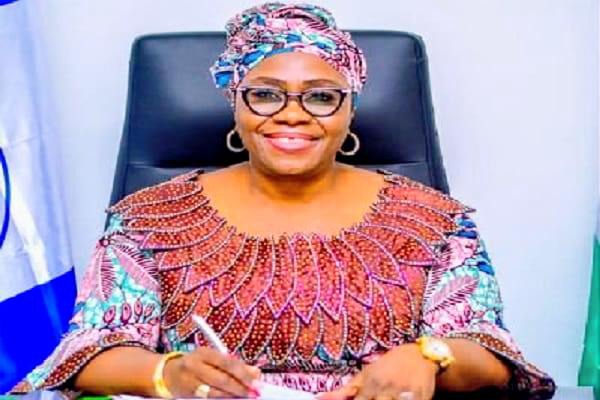
The wife of the Cross River State, Bishop Eyoanwan Otu, has been described as one of the most impactful in the state’s recent history.
The governor’s Chief Press Secretary and Special Adviser on Media and Publicity, Linus Obogo, who paid a tribute to her in a statement on Thursday as she marks her 62nd birthday, said Bishop Otu had distinguished herself not only as a public figure but as a hands-on welfare advocate whose interventions had directly transformed the lives of thousands of residents across Cross River State’s 18 local government areas.
According to Obogo, Bishop Otu spent more than three decades in the federal civil service before her husband’s election as governor, eventually rising to the position of General Manager of Administration at the Nigerian Nuclear Regulatory Authority. He noted that she holds multiple postgraduate degrees and is currently completing a doctorate, and said she had consistently applied her academic background not for personal prestige but in service of the people around her.
It is, however, her work as First Lady that Obogo said defines the core of her public legacy. Obogo spoke of her medical outreach programme under which approximately 700 surgeries have been conducted free of charge for residents who could not afford private healthcare. The surgeries, he said, have been carried out at facilities across the state, with patients drawn from both urban and rural communities.
“It’s only healthy persons that will enjoy the dividends of governance,” Bishop Otu has said on the matter, a line Obogo cited as capturing her philosophy that healthcare is not a secondary concern of government but the most important.
Obogo also highlighted the “Maria Ake Kit,” one of the First Lady’s flagship programmes, which involves the distribution of essential maternal packages to pregnant women and new mothers, particularly those from low-income households. The kits contain supplies critical to safe delivery and early infant care, and have been distributed through hospitals and community health centres across the state.
Bishop Otu has spoken publicly about the origins of the initiative, telling people on several occasions that it grew from direct engagement with vulnerable women. “The inspiration came from my passion for serving women, youth, and children,” she has said. Obogo, in his tribute, noted that the response of beneficiaries has been compelling, recalling the First Lady’s own observation that “some even cry when they share their stories” , a reaction he said reflects the depth of need the programme was addressing and the dignity it sought to restore.
A second major initiative that Obogo spoke of is “Who Deserves a Limb,” a programme through which the First Lady’s office procures and distributes prosthetic limbs to amputees and others living with limb loss. Each prosthetic is fitted by medical personnel during dedicated outreach sessions, and Obogo said the programme had already reached dozens of beneficiaries since its launch. Describing her motivation,
Beyond healthcare, Obogo said the First Lady had run sustained programmes aimed at the economic advancement of women. These have included the distribution of agricultural inputs and farming support, vocational skills training, assistance with business registration and formalisation, and financial inclusion workshops aimed at bringing more women into the formal economy. According to Obogo, each component of the programme is designed with follow-through in mind rather than as a one-off gesture, and is tailored to the specific economic environments of different communities across the state.
On International Women’s Day earlier this year, Bishop Otu used a public address to call on women to take assertive roles in their communities and in national life. “Whatever is worth doing is worth doing well. Time is of the essence,” she told the gathering. Obogo described her as a consistent voice for women’s inclusion in governance, noting that her office had facilitated training sessions to prepare women for leadership roles across politics, business, and civil society.
Obogo also acknowledged the personal dimensions of Bishop Otu’s life, describing a woman who has spoken candidly about the pressures of managing her public responsibilities alongside her roles as a wife, mother, and bishop of a congregation. “I have no life anymore,” she has said in public remarks, a statement Obogo said is a testimony to the extent of her commitments. “I live selflessly, balancing family, church, society, and governance,” she said.
Those who know her, Obogo said, are equally familiar with her lighter side which includes her enjoyment of cooking for her husband, her love of music and dance, and a sense of humour which her friends describe as genuine and disarming. “I am somebody’s wife for crying out loud,” she once said in a public setting, making the audience to laugh and in Obogo’s view, shows her deliberate choice to remain grounded despite the demands of her position.
Her religious convictions, he said, provide the foundation for all of it. He quoted her as having told audiences: “Do not look down on anyone. You don’t know what tomorrow holds”, a statement, Obogo said summarises both her worldview and her approach to public life.
As tributes poured in from people from all works of life, her office confirmed she had spent part of the day visiting beneficiaries of her welfare programmes. Obogo concluded by saying that Bishop Otu’s life is a demonstration that leadership is not measured by accumulation of wealth but by contribution.