Follow Us on Google
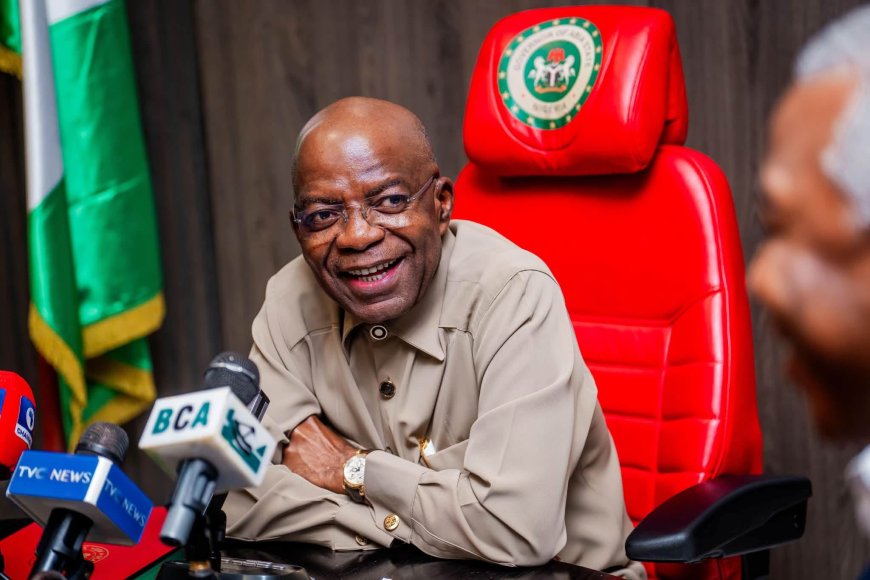
Governor Alex Otti has taken Abia State’s investment drive to Lagos, with the unveiling of an ambitious seven-sector strategy, aimed at attracting fresh capital, accelerating industrialisation, and repositioning the state as a major enterprise destination.
Speaking at the Nigerian-British Chamber of Commerce’s Meet the Governor Series in Lagos, Otti declared Abia open for business and identified agribusiness and agro-processing, trade and markets, creative and digital economy, manufacturing and industrialisation, SME development, inclusive finance, and diaspora investment and innovation as the viable areas for investors.
The governor disclosed his administration’s deliberate reforms in fiscal governance and infrastructure, aimed at creating a more conducive environment for investors. He said the state’s 2026 budget of N1.016 trillion allocates 80 percent to capital expenditure, while its projected internally generated revenue of N223.4 billion is expected to cover recurrent expenditure. Abia was recently ranked fourth in the BudgIT States Fiscal Transparency League in the fourth quarter of 2025.
On infrastructure, Otti said 414 roads had been completed, while 82 others were under construction. He added that more than 10,000 solar-powered streetlights had been installed across Aba, Umuahia and Ohafia.
Other News
The governor said investment opportunities existed across the plantation, processing, manufacturing, and off-take segments, citing livestock ranching, dairy, cashew, cocoa, and rubber in agribusiness. He also identified garment manufacturing, ceramics, and leather works as opportunities in the industrial sector, while tourism opportunities included Enyimba Hotels and Ibom Waterfall.
At a fireside chat, Otti further identified the Azumini-Obeaku Seaport as a potential trade and logistics gateway, alongside plans for an industrial park and a proposed Abia medical city.
The NBCC President, Abimbola Olashore, said Aba’s manufacturing heritage provided a strong foundation for industrial growth, but stressed that investors needed predictable policies, functional institutions, and quality infrastructure before committing capital.
He said the government’s role is to provide an enabling environment, while the private sector is expected to provide capital and expertise.