Follow Us on Google
By Oluseye Ojo
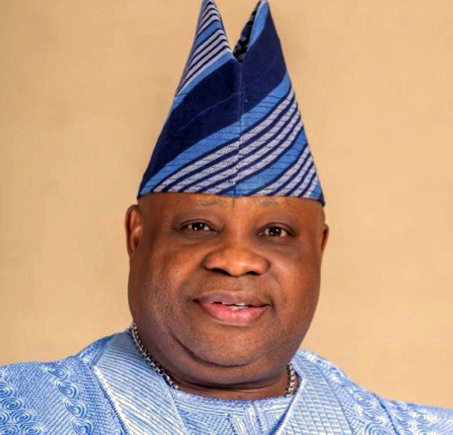
The most intriguing question thrown up by the August 15, 2026 Osun State governorship election is not simply why Ademola Adeleke won, but why the All Progressives Congress (APC) lost.
The political aftermath of the election has continued to generate intense debate regarding party organisation, electoral strategy, and the limits of federal influence.
While Governor Ademola Adeleke secured his re-election bid on the platform of Accord (A), following his exit from the Peoples Democratic Party (PDP), political observers and analysts are evaluating how the APC, despite controlling the federal government, failed to dislodge the incumbent governor.
Reports trailing the election suggested that Adeleke was initially viewed by political strategists as a potential asset for the ruling party at the national level with a view to creating an extraordinary backdrop to his ultimate victory.
Electoral dynamics across Osun State revealed significant shifts in voter alignment and grassroots mobilisation.
Political monitoring reports revealed how the election tested the efficacy of national campaign structures against an established, personalised incumbent brand.
Analysts noted that the outcome reflected not only the personal popularity of the governor, but also the consequences of unresolved internal friction, primary disputes, and local governance crises within the APC in the state
The failed defection and intra-party resistance
A critical element in the narrative surrounding the Osun contest involves the aborted move to recruit Adeleke into the APC prior to the election cycle.
Initial political calculations among the APC figures centred on bringing the Osun governor into the APC fold to consolidate the party’s presence in the South West region.
Adeleke’s political profile, backed by a broad grassroots network, family legacy, and previous competitive runs in 2018 and 2022, offered an attractive profile for national party expansion.
However, internal resistance within the state branch, as gathered, halted the initiative. Party stakeholders reportedly viewed the entry of a sitting governor with his own established political structure as a direct threat to existing influence and local party leadership hierarchies.
Explaining his political trajectory on the campaign trail, Governor Adeleke addressed his transition to the Accord, framing it as a commitment to popular service.
“We opted for Accord because its mission aligns with our passionate focus on citizens’ and workers’ welfare. The primary essence of government is the well-being of the people,” he stated.
The resistance from state party leaders ultimately redirected Adeleke to contest on the platform the Accord. The strategic decision, it was stated, set up a high-stakes election where an individual brand proved capable of rivalling an established national party structure.
The winning margins
In 2026, Adeleke polled 511,067 votes to defeat APC candidate, Bola Oyebamiji, who scored 444,815 votes. His winning margin was 66,252 votes. Adeleke won in 19 of the state’s 30 local government areas and APC won 11.
The first time Adeleke contested for the governorship was 2018. The election was extraordinarily close. After the September 22 poll was declared inconclusive, a supplementary election was held in seven polling units on September 27 in Ife axis, considered to be the stronghold of Omisore.
The supplementary poll was held for Oyetola and Adeleke alone. Then, Omisore reportedly aligned with Oyetola.
The final INEC declaration gave the APC candidate, Gboyega Oyetola 255,505 votes, Ademola Adeleke of the Peoples Democratic Party (PDP) 255,023 votes, Iyiola Omisore of the Social Democratic Party (SDP) 128,053 votes, and Moshood Adeoti of Action Democratic Party (ADP) 49,745 votes Oyetola won the 2018 contest by just 482 votes.
In 2022, Adeleke reversed the result. He defeated the incumbent Oyetola. As declared by INEC then,
The final result was: Ademola Adeleke of PDP polled 403,371, Gboyega Oyetola of APC scored 375,027 votes. Adeleke won by 28,344 votes.
Part of that evolution of the 2026 Osun election has been mentioned to include the extraordinary political capital of the Adeleke family, which straddles conventional politics, business and popular culture.
The governor’s nephew, internationally renowned Afrobeats star, David Adeleke, popularly known as Davido, was also visible in the campaign environment.
He brought his enormous youth following and cultural influence into a contest in which social media, celebrity politics and generational identity increasingly mattered.
As gathered, his involvement did not by itself determine the outcome, but it added another layer to a political brand that already extended far beyond the traditional structures of the PDP or Accord.
Post-election friction and primary controversies
Following the announcement of the election results, internal divisions within the Osun APC escalated publicly.
A group operating under the banner of the Osun APC Stakeholders Forum authored an open petition to national party leadership, attributing the election loss to former governor and Minister of Marine and Blue Economy, Gboyega Oyetola.
The stakeholders alleged that party governance had become excessively centralised, leading to the exclusion of critical party figures and an unequal distribution of federal patronage among local factions.
In their petition to national leaders, the Osun APC Stakeholders Forum asserted:
“The former governor dominated the affairs of the party without allowing wider participation. We call for a stakeholders’ reconciliation summit to unite our ranks, rebuild trust, and return stronger.”
The grievances extended into primary election disputes, notably the candidate selection process for the Osogbo Federal Constituency.
The contentious primary brought rival power centres into direct conflict, involving camps associated with Oyetola, from Iragbiji, and APC National Secretary, Senator Ajibola Basiru, from Osogbo. Oyetola’s candidates reportedly emerged for the constituency, which was said to have not sat down well with Basiru.
Political commentators observe that the unresolved primary conflicts created lasting resentments that hindered effective campaign coordination across the state’s senatorial districts during the governorship election.
The primary that fractured APC
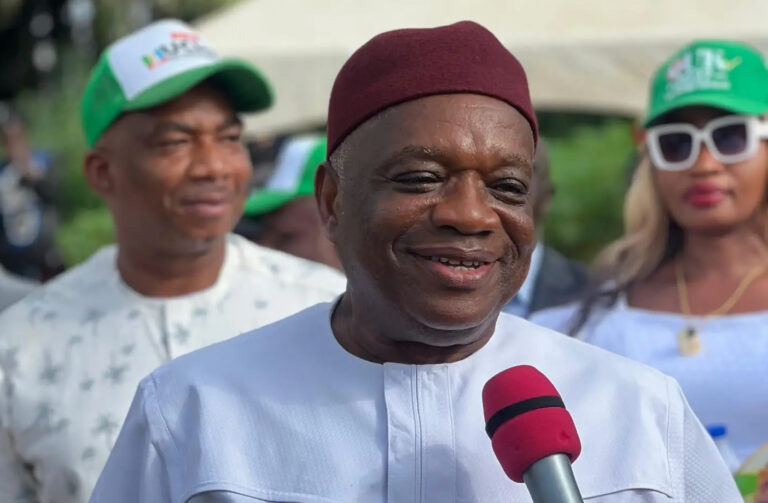
Omisore, a former deputy governor of Osun, former senator and former National Secretary of the APC, entered the 2026 race as an APC governorship aspirant.
He campaigned across the state and was regarded as one of the more politically prominent aspirants.
But on December 5, 2025, the APC Screening Committee disqualified him and six other aspirants from participating in the party’s December 13 governorship primary.
Only Bola Oyebamiji and Mulikat Abiola Jimoh were cleared to contest.
The official reason given by the screening committee was failure to satisfy mandatory nomination requirements. Specifically, the committee said the disqualified aspirants did not provide evidence of sponsorship by at least five fully registered and financially up-to-date APC members from each of Osun’s 30 local government areas.
The committee said the requirement was contained in the APC Constitution and its governorship primary guidelines.
The other six disqualified aspirants were Babajide Omoworare, Benedict Alabi, Kunle Adegoke, Akin Ogunbiyi, Babatunde Oralusi, and Oyedotun Babayemi.
Omisore strongly rejected the screening committee’s decision.
He described the report as the ‘jokest’ report of the year and argued that the party had exceeded its powers in imposing the disqualification criteria. He maintained that he had met the constitutional requirements to contest and questioned the legality of the party using its own nomination requirements to prevent him from participating.
The controversy became more politically explosive because Omisore and the other disqualified aspirants alleged that the exercise was politically motivated and intended to clear the way for a preferred candidate.
Omisore subsequently alleged that the chairman of the APC screening panel told him that Oyetola had pressured him to disqualify him and six other aspirants in order to clear the way for Bola Oyebamiji, whom he described as the former governor’s ‘poster boy’.
Oyetola, however, denied the allegation. He described it as baseless and insisted that he neither participated in, nor interfered with the screening exercise.
Following his disqualification, Omisore instituted a case at the Federal High Court in Osogbo, challenging his exclusion from the APC governorship primary.
In the suit, FHC/OS/CS/261/2025, he asked the court to determine whether APC had the power to impose qualification or disqualification conditions beyond those recognised by the Constitution and Electoral Act.
Among other reliefs, he sought an order setting aside his disqualification and compelling APC to allow him to participate in the governorship primary.
He also asked the court to restrain INEC from recognising the outcome of an APC primary conducted without his participation.
The party proceeded with a primary in which Bola Oyebamiji emerged as the consensus candidate.
However, in March 2026, the Omisore’s campaign organisation announced that he had discontinued the suit. And then APC went into the general election against Adeleke.
Questions were also raises on what happened to the political energy of seven aspirants who were prevented from contesting the primary, and how effectively APC reconciled them with the eventual candidate.
A source within APC in Osun State who preferred to be anonymous said: ‘Did APC unnecessarily weaken itself by removing several prominent aspirants from the contest instead of allowing a competitive primary and subsequently uniting the party behind whoever emerged?
“There is another irony. Senator Omisore later endorsed APC’s Oyebamiji and campaigned for him. But Accord still defeated APC at Omisore’s own polling unit.
‘The result, I can say became politically embarrassing and was widely reported as evidence of the difficulty of translating elite endorsements into actual votes.
‘The massive infrastructural development executed by the administration of Governor Adeleke on Ife axis is another factor that made Ife to support his re-election. Seeing is believing.
‘Do you want to talk about good road networks, complemented by a beautiful flyover? I am not even sure if Omisore could defeat Adeleke if he had got the APC governorship ticket.”
The Accord-APC governance crisis at LGAs
Beyond statewide power struggles, the governance crisis at the local government level played a decisive role in shaping the political terrain. The transition of Adeleke’s network to the Accord platform coincided with intense political and legal disputes over local council leadership, administration, and grassroots structures.
Conflicts between APC loyalists and local council stakeholders that aligned with the governor over its leadership, ward management, and local resource allocation created prolonged tension prior to the election.
Political analysts have also emphasised that local government chairmen and ward-level leaders loyal to Adeleke served as a crucial field operations network.
It was further gathered that when local council structures became contested battlegrounds between APC camps and Accord supporters, Adeleke’s team effectively leveraged grassroots mobilisation to protect their electoral base.
The alleged inability of the APC state leadership to present a unified front at the local council level severely weakened its field strategy, enabling Accord to dominate key council areas.
Federal neutrality and electoral outcomes
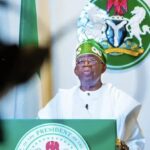
Despite expectations of federal intervention during state-level elections, the presidency maintained a strictly institutional approach throughout the Osun poll.
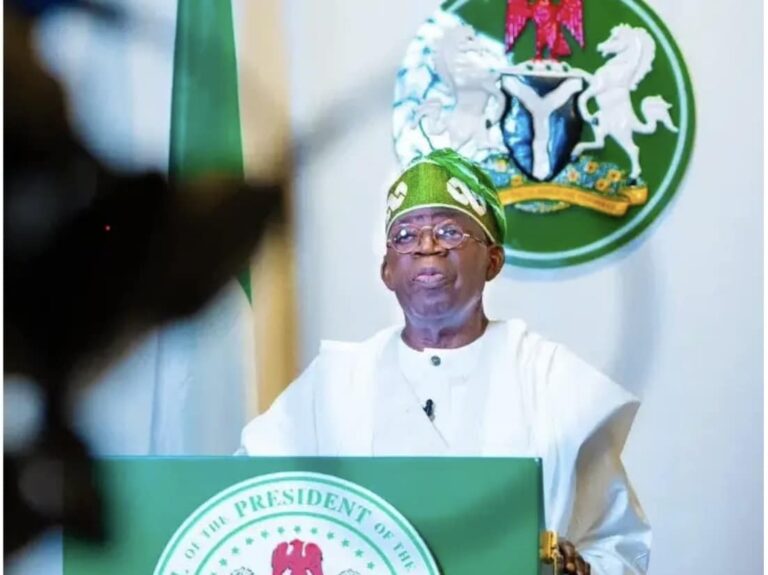
Pre-election directives issued by President Bola Tinubu to INEC and security agencies stressed transparency, peaceful conduct, and the protection of voter rights.
The posture ensured that voter preferences determined the outcome without institutional distortion.
Following his victory, Governor Adeleke travelled to the Presidential Villa in Abuja to present his Certificate of Return to President Bola Tinubu.
Speaking after the meeting, Adeleke acknowledged the non-partisan stance of the presidency.
“I’m here to thank Mr. President… because he allowed free and fair election, and that is the result.”
An election clouded by violence, arrests, suspicion
The road to the Osun election was marked by violence, killings, arrests, inflammatory statements and allegations of political intimidation. The rival camps repeatedly accused each other of creating a climate of fear, with Governor Ademola Adeleke alleging that APC-linked actors were responsible for attacks on his supporters. But the claims were disputed by the APC.
The violence nevertheless became a major campaign issue. Adeleke later identified several people he said were killed during the political confrontation and, after his victory, announced a ₦500million fund for victims of election violence and their dependants.
The Lameco Bridge controversy
Then came the controversy over the newly commissioned Lameco Bridge/Flyover in Osogbo. Less than a month after its July 1 commissioning, sections of the structure developed cracks and caved in, forcing the authorities to restrict its use and commence repairs.
APC seized on the development as evidence of poor workmanship and demanded investigation by relevant professional bodies.
The Adeleke administration and Accord, however, alleged sabotage. Adeleke personally inspected the affected section and accused unnamed politicians of deliberately vandalising public infrastructure to discredit his administration before the election.
He also referred to a similar reported incident at the Lagere Flyover and ordered tighter surveillance of major infrastructure.
The frozen account controversy
Ten days before the election, the Economic and Financial Crimes Commission (EFCC) ordered a Post-No-Debit (PND) restriction on an Osun State Government account.
This triggered another political storm. Adeleke accused the commission of attempting to cripple his administration on the eve of the election, while the EFCC said it was investigating alleged financial irregularities involving about ₦11 billion and that suspicious movement of funds had prompted the restriction.
The timing generated political suspicion. Adeleke’s camp saw it as intimidation; the EFCC insisted it was a legitimate law-enforcement action. The controversy became even more politically sensitive because President Tinubu subsequently intervened, acknowledging the sensitivity of taking such action so close to an election, while maintaining that law-enforcement agencies must remain independent.
Hate speech and political temperature
Statements by politicians on both sides were interpreted as threats, while campaign messages increasingly focused on the character and intentions of opponents rather than competing programmes.
The result was an election in which the political temperature was arguably higher than the policy debate. But the election itself was largely peaceful.
President Tinubu’s publicly stated position was that the election should be free and fair, and Adeleke subsequently travelled to Abuja to thank him for allowing the people of Osun to choose their governor.
Elite endorsements and the path forward
The Osun election also illustrated the diminishing influence of elite political endorsements. Prominent political heavyweights who publicly backed the APC candidate were unable to guarantee victory in their polling units, as results demonstrated that voters prioritised personal performance over elite recommendations.
Following the election, representatives across campaign organisations issued statements calling for calm and unity.
Both Adeleke and Oyebamiji have also sued for peace in the state, after meeting with President Tinubu.
The spokesperson for the Imole Campaign Council, Pelumi Olajengbesi, urged all political stakeholders to work together.
The National Chairman of APC, Prof. Nentawe Yilwatda, has also come out to say the results of Osun election was not a failure for the party.