Follow Us on Google

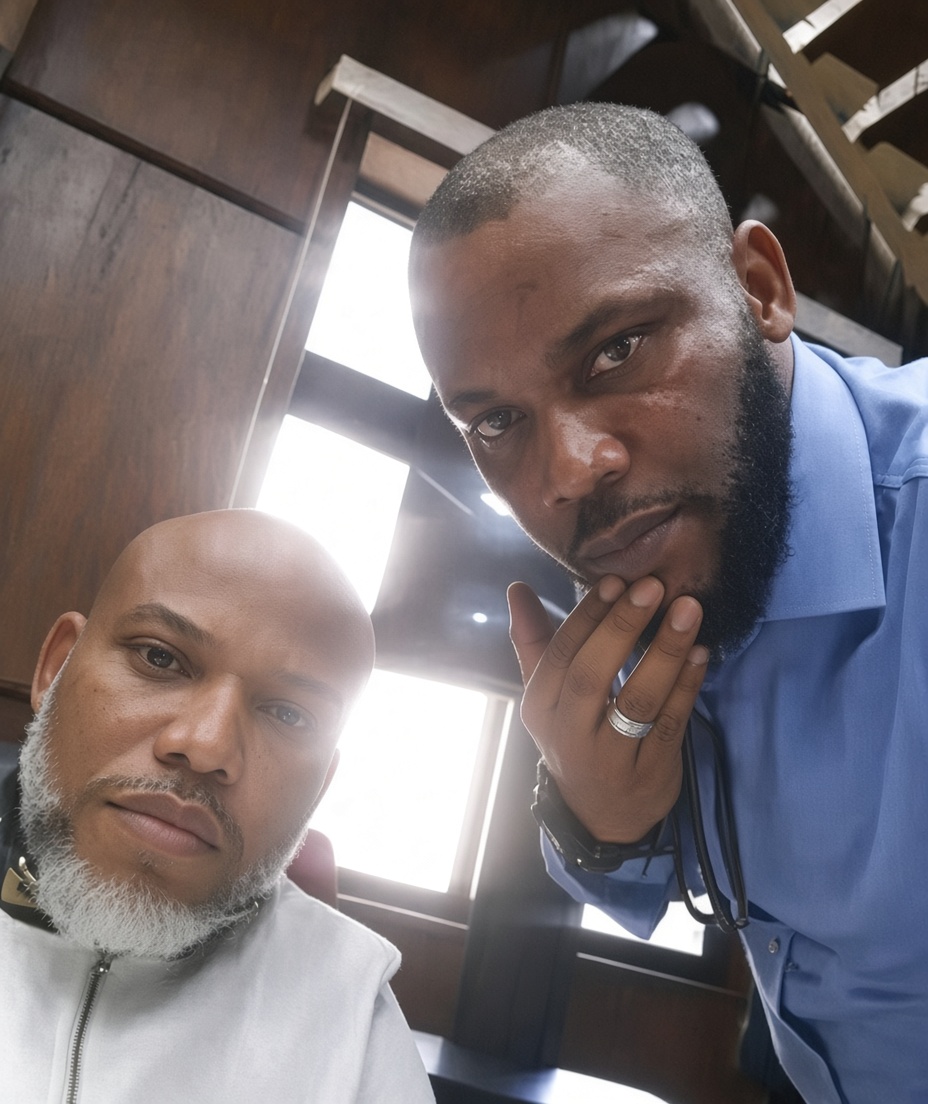
From Godwin Tsa, Abuja
Prince Emmanuel Kanu, the youngest brother of the detained leader of the proscribed Indigenous People of Biafra (IPOB), Mazi Nnamdi Kanu, has said his brother’s continued incarceration has done more damage to the Nigerian government than to Kanu himself, describing it as “a self-inflicted wound”.
In a statement on his Facebook page, Emmanuel Kanu listed six ways the government has paid for keeping the IPOB leader in custody.
He said Nigeria presents itself to the world as a democracy that respects the rule of law, yet the world watched Kanu’s alleged “extraordinary rendition” from Kenya.
He also pointed to the government’s refusal to obey the Court of Appeal after it discharged his brother.
According to him, this has painted Nigeria as a country that disobeys its own courts, a perception he said foreign investors and human rights bodies have noticed.
Emmanuel claimed the South-East was the most peaceful region in the country before his brother’s rendition.
Since then, he said, it has been gripped by Monday sit-at-home orders, killings by “unknown gunmen” and a heavy military presence.
He argued that the government spends billions deploying soldiers to the region, a problem he said dialogue would have solved at lower cost.
He further claimed that five South-East states lose over ₦10 billion every Monday in trade, schooling, banking and market activity.
Over four years of sit-at-home, he said, the region has lost trillions of naira, which he described as Nigerian GDP “destroyed because of one man’s incarceration”.
Emmanuel said the detention proved to millions of Igbo people what his brother had long maintained: that they are not fairly treated in Nigeria.
Other News
Even Igbos who previously did not back IPOB now sympathise with the IPOB leader, he said, adding that the government has lost the trust of a generation of Igbo youths.
He also said jailing a leader who preached a non-violent referendum created a vacuum that more violent splinter groups have filled, some enforcing sit-at-home with guns.
“The government now has a bigger security problem than IPOB,” he said.
Emmanuel said Kanu has become more influential in custody and is now seen as a political prisoner and martyr.
“The government tried to silence a man, but amplified his voice worldwide,” he said.
He concluded that keeping Kanu in detention “has not brought peace, has not brought unity, and has not strengthened Nigeria”, and that it has cost the country its image, its money, its security in the South-East and the trust of its own people.
He ended with the Igbo-language line, “Agbaruo Ngene, e kuru Ngene … We remain visible.”
Kanu was convicted of terrorism by the Federal High Court in Abuja on November 20, 2025, and sentenced to life imprisonment by Justice James Omotosho.
He is held at the Sokoto Correctional Centre. He has filed an appeal against the conviction which, according to reports, had yet to be heard as of October 2026.
The government has maintained that Kanu was lawfully prosecuted for terrorism-related offences.
The court had earlier dismissed his argument that his alleged rendition from Kenya invalidated the trial.