Follow Us on Google
By Omoniyi Salaudeen
Osun State is set to close the off-cycle election calendar on August 15, 2026. This upcoming election will give voters a critical opportunity to choose a new leader and chart the socioeconomic course of the state for the next four years. For decades, power in the state has alternated between two bitter rival parties: the Peoples Democratic Party (PDP) and the All Progressives Congress (APC).
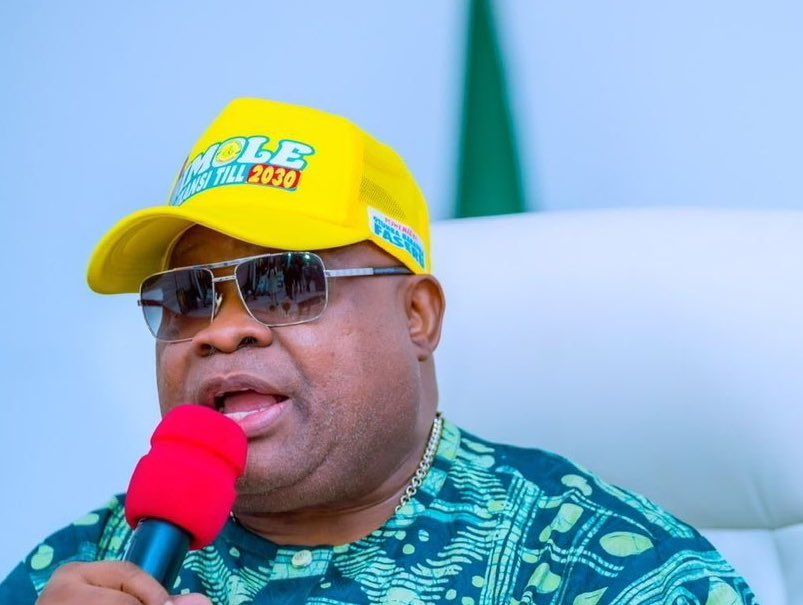
This time, however, the dynamic has shifted dramatically. Incumbent Governor Ademola Adeleke has adopted the Accord Party as his new electoral vehicle, fleeing a lingering leadership crisis and an uncertain future bedevilling the PDP. As the state heads to the polls, the political terrain has transformed from standard policy debates into a fierce, highly personalised realignment.
Opposing the Accord breakout, the APC is mounting an aggressive comeback behind Munirudeen Bola Oyebamiji, popularly called AMBO. A former Commissioner for Finance and ex-Chief Executive of the National Inland Waterways Authority (NIWA), Oyebamiji is running on a seasoned technocratic record and a newly unveiled seven-point “PROSPER” agenda. With campaign rhetoric now boiling over into severe accusations of underperformance and structural corruption, the race has become a direct, uncompromising clash of scorecards, local loyalties, and competing visions of governance.
In Osun’s blunt political parlance, the proof of the pudding is in the eating. Governor Adeleke is campaigning aggressively on delivery and populist welfare, framing his first term as a period of unstoppable progress, grassroots intervention, and aggressive infrastructural renewal. His administration asserts that it has cut the state’s inherited road deficit by over 50 per cent through high-profile urban renewal projects like the Old Garage–Oke Fia–Lameco dual carriageway, the Oke Fia flyover, and the dualisation of the Ilesa road.
Beyond asphalt, Adeleke’s political defence rests heavily on local social services, including the upgrading of over 200 Primary Healthcare Centres, the provision of clean water via hundreds of ward-level boreholes, and the clearance of more than ₦50 billion in inherited pension arrears for senior citizens. By implementing a ₦75,000 minimum wage and enrolling 29,000 retirees in the state health insurance scheme, Adeleke has positioned himself as a compassionate, people-first populist whose leadership is measured by direct human impact.
The Accord Party’s strategy pairs this grassroots record with a sharp, offensive attack on the APC, dismissing their previous 2018–2022 administration as an era of elitism that systematically ignored public safety and basic welfare. Adeleke has heavily criticised the APC’s tactics and leadership—including former Governor Adegboyega Oyetola and current challenger Bola Oyebamiji—framing his migration to Accord as a move to protect people-centred governance from what he terms the opposition’s heavy-handed tactics. Drawing a direct contrast with the APC’s corporate fiscal models, Adeleke stated his rationale for the switch: “The focus on people’s welfare should always be at the heart of public leadership. The primary essence of a government is the welfare and well-being of the people. From infrastructure to social services, Osun has never had it so good in governance and service delivery.”
To reinforce this message, the Accord camp has rallied prominent political allies and defectors. Former Secretary to the State Government, Alhaji Moshood Adeoti, who defected to Accord, publicly explained his decision: “Governor Adeleke is a very lovely man whose administration has demonstrated visible transformation across multiple sectors. Our collective decision to back Governor Adeleke stems from the tangible developmental strides and the impact of governance witnessed in communities state-wide.”
The APC is not conceding this narrative, countering Adeleke’s populist claims with a detailed grievance list compiled by its Campaign Council that alleges deep-seated financial mismanagement, institutional decay, and corruption. The opposition characterises Adeleke’s infrastructure boom as flashy, unsustainable spending, alleging that the administration mismanaged over ₦1 trillion in state revenue. Key accusations include the spending of ₦14 billion on luxury vehicles for politicians and ₦92 billion on administrative luxuries, while vital sectors like agriculture received a paltry ₦7 billion over two years. The governor stands accused of accessing substantial security votes without provisioning operational vehicles for security agencies, leaving significant ecological and federal funds unaccounted for, and allegedly diverting resources meant for agricultural tractors.
Furthermore, the APC points to findings from the state’s own hired consultant, Sally Tibbot Consulting Limited, which reportedly revealed that the administration haemorrhages massive funds annually to ghost workers on the payroll. Public procurement laws have also been routinely bypassed, with lucrative contracts allegedly awarded to unqualified cronies and companies linked directly to state officials, creating severe conflicts of interest. The APC platform aggressively targets what it identifies as the current administration’s critical blind spots regarding human capital and public welfare. The opposition notes that the government stopped the primary school feeding programme and the monthly food support scheme that previously aided 30,000 vulnerable citizens. For civil servants and retirees, car loans were halted, thousands of unbonded contributory pensioners remain unpaid, and a long-standing pledge to clear backlogs of salary arrears remains unfulfilled despite unprecedented state revenues.
In education and health, the administration terminated the employment of numerous teachers and medical professionals hired by the previous government, which forced state universities to hike tuition fees to exorbitant rates while hundreds of Primary Health Centres lie dormant, giving Osun one of the worst records for non-operational clinics in the country. The APC also alleges severe nepotism and regional bias, pointing out that a vast majority of major capital projects are concentrated in Ede, the governor’s hometown. This concentration includes the controversial relocation of the international airport, replacing state polytechnic heads with indigenes of his hometown, and disproportionately hiring favoured natives for lower-cadre roles while qualified host communities are denied employment. Additionally, the administration is accused of destabilising traditional institutions by illegally removing monarchs without court orders, failing to resolve major communal crises, and leaving roads scattered across the state in deplorable conditions with substandard materials that wash away almost immediately after commissioning.
Other News
Against this record of perceived decay, Oyebamiji is offering the “PROSPER” blueprint as a systematic, policy-driven roadmap designed to restore fiscal discipline and economic independence to Osun State. Drawing on his extensive background in the financial sector, the APC candidate is pitching an agenda centred on structural reform, financial discipline, and long-term economic models rather than transient public works. The blueprint focuses on poverty alleviation, prompt salary payments, enterprise support, transparent governance, industrial revival, stronger security, agro-industrial clusters, upgraded schools and health, and equitable infrastructure across all local government areas.
Economically, the agenda proposes to strengthen the Osun State Investment Promotion Agency, revive dormant industrial hubs, and attract local and foreign investment to support SMEs. On security, it promises deeper collaboration with federal agencies and better community-based crisis response. For agriculture, it plans modern farm settlements and agro-industrial clusters backed by finance, technology, and training to position the sector as a primary engine for economic revival. In human capital, it pledges to upgrade schools, expand technical and vocational education, support teachers, and improve healthcare delivery to build sustainable financial frameworks that support public services without crippling the state’s future.
To validate this structured approach, Oyebamiji has promised to consolidate the proven achievements of the previous APC administration led by former Governor Adegboyega Oyetola between 2018 and 2022. The APC Campaign Council credits that administration with driving substantial economic growth, securing $99 million in direct capital investment—ranking third nationally behind Lagos and Abuja according to the National Bureau of Statistics, and recording one of the country’s lowest poverty headcounts. It also cites a ₦97 billion reduction in inherited debt, stronger budget performance, and billions disbursed to MSMEs, artisans, and transport operators.
In agriculture, the legacy includes the free distribution of two million high-yield cocoa seedlings and over 300,000 bundles of cassava cuttings alongside upgraded rice farming technology and animal health infrastructure.
Commercially, it revived the abandoned Abere Free Trade Zone and launched the Dagbolu International Trade Centre, which was projected to create 30,000 jobs. Infrastructure improvements under Oyetola featured the rehabilitation of over 500km of township roads, 311km of rural roads, the construction of 12 fire stations, 500 boreholes, and the delivery of the iconic Olaiya Flyover.
Social sectors received record-breaking budgetary allocations, where education saw the hiring of 2,500 JAMB-tested teachers, the founding of the University of Ilesa, and an enriched O’MEALS programme feeding over 100,000 pupils, while health infrastructure was transformed by revitalizing 332 primary healthcare centres—one per ward—and enrolling 300,000 vulnerable citizens under the state health insurance scheme. Security was reinforced by establishing the Amotekun Corps and creating a crisis Early Warning and Early Response System, while workers’ welfare was prioritised through revived vehicle loans, regular pension payouts, and the monthly Osun Food Support Scheme.
Ultimately, Osun’s election will be decided on which narrative holds the most weight with an increasingly discerning electorate. The Accord Party is selling Adeleke as the ultimate defender of welfare and grassroots community impact, backed by strategic political defections and heavy union endorsements, framing the contest as a battle of direct populism against corporate elitism. Conversely, the APC is selling Oyebamiji as the corrective to fiscal recklessness and institutional decay, backed by a highly structured technocratic plan and the documented Oyetola scorecard.
If the opposition retreats into the easy refuge of political sentiment over the rigorous work of policy formulation, it will remain a mere bystander in Osun’s political evolution, as the election will be won by whoever can convince the electorate that their structural model is the most durable.
Historically, Osun has earned a reputation for its volatile, sophisticated, and unpredictable political culture, with voters who are notoriously unforgiving of perceived underperformance and have repeatedly rejected incumbents seeking to entrench power without delivering tangible progress. On August 15, voters will look past transient campaign rhetoric to weigh Adeleke’s physical and social interventions against Oyebamiji’s promise of robust financial engineering and systematic institutional reform, deciding which model offers the surer and more sustainable path to collective prosperity.
As the countdown to August 15, 2026, enters its final, high-stakes stretch, the electoral battleground in Osun State has transcended standard partisan crossfire to become a definitive litmus test for regional governance. This election is no longer just a choice between individual candidates; it is an epochal referendum on two diametrically opposed political philosophies. Governor Adeleke’s audacious structural pivot to the Accord Party tests whether a heavily personalised brand of populist welfarism can bypass institutional machinery and secure power on grassroots goodwill alone. Conversely, Oyebamiji’s aggressive APC campaign challenges the permanence of that populism, banking on a return to systematic fiscal discipline, institutional architecture, and the technocratic legacy of the Oyetola era.
In a state historically renowned for its analytical, independent-minded, and fiercely unpredictable electorate, there is no safety net for perceived underperformance. When voters finally step into the polling booths, their choice will reverberate far beyond the boundaries of Osogbo, offering a crucial preview of the shifting national alignments ahead of the 2027 general elections. Ultimately, the citizens of Osun will decide whether the immediate, tangible relief of infrastructural populism or the long-term, calculated engineering of institutional reform offers the truest blueprint for sustainable state prosperity.