Follow Us on Google
From Adesuwa Tsan, Abuja
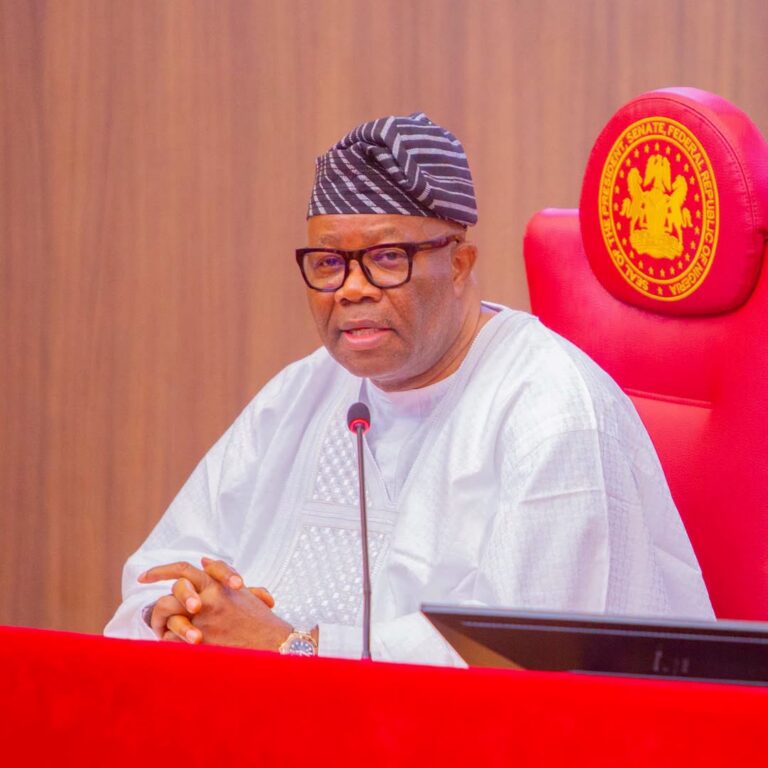
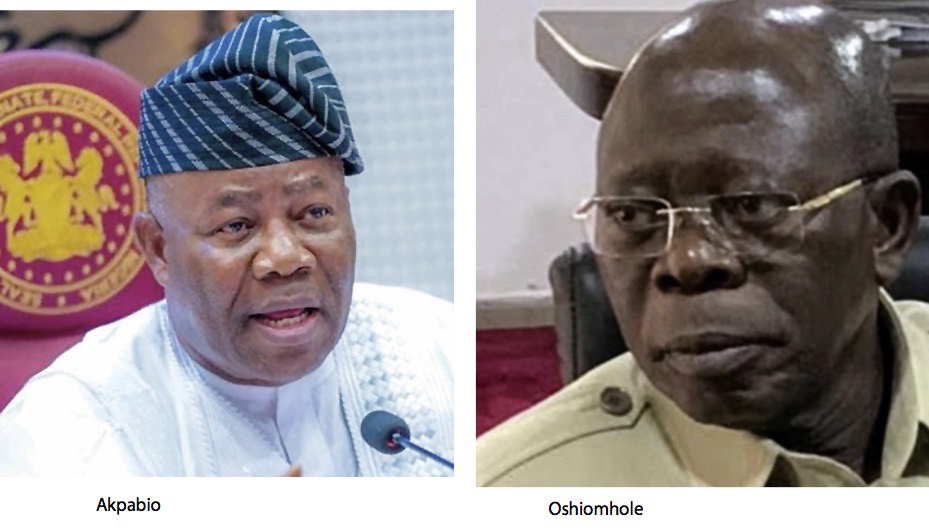
There is an unfolding drama in the Senate. The stage is the same, the pattern familiar, only one of the actors has changed. Anyone who has followed events in the Red Chamber over the last three years can almost predict where the story would end, judging from previous incidents involving lawmakers who publicly challenged the institution or its leadership. The principal dramatis personae this time are Senate President Godswill Akpabio and Senator Adams Oshiomhole.
Signs that all was not well between them began to show when the Senate recently amended its Standing Orders. The review effectively shut out first-term senators who succeed in returning in 2027, as well as incoming lawmakers, from contesting key leadership positions in the 11th Senate.
Under the new arrangement, only lawmakers who would have completed at least two consecutive terms would qualify to vie for offices such as Senate President, Deputy Senate President and other principal positions.
One of those who felt wounded by the amendment was Oshiomhole, and he did not hide his feelings. During plenary, the former Edo State governor repeatedly sought to raise a point of order after the amendment was adopted, insisting that the Senate had departed from understandings reached during a closed-door session. Akpabio declined to recognise him, setting the stage for what has gradually evolved into an open confrontation between both men.
Outside the chamber, Oshiomhole intensified his opposition. In an interview with journalists, he argued that Akpabio lacked the moral authority to champion such a rule because the Senate President himself rose through the ranks of the National Assembly under far less restrictive conditions.
According to him, Akpabio became a principal officer during his first term and eventually rose to become Senate President without the eligibility requirements now being imposed on future aspirants. For Oshiomhole, the amendment was not merely about parliamentary procedure but what he perceived as a deliberate attempt to shape the future leadership contest in advance.
What began as a disagreement over Senate rules soon spilled into other areas. The next flashpoint came during the Senate Committee on Public Accounts’ scrutiny of Nigerian National Petroleum Company Limited audit reports submitted by the Auditor-General’s office. The committee alleged that about N210 trillion was unaccounted for and summoned serving and former top management staff who served during the period under review, 2017 to 2023, to explain the whereabouts of the funds.
Following repeated failure by some invitees to appear, Oshiomhole openly supported moves by the committee to compel former NNPCL Group Chief Executive Officer Mele Kyari to appear before them. During one session, Oshiomhole and a former Chief Financial Officer of NNPCL, Umar Ajiya, engaged in a heated exchange, with the senator describing the corporation in harsh terms over the allegations under review.
The session ended with a decision to issue a warrant of arrest to compel Kyari’s appearance. The move drew strong reaction within Senate leadership, which distanced itself from the tone and outcome of the proceedings. Oshiomhole was reprimanded for his utterances but he defended his position, insisting he was acting in defence of institutional integrity.
Though the matter was not directly linked to Akpabio, it reinforced a growing perception within political circles that Oshiomhole was increasingly unwilling to align automatically with Senate leadership preferences.
Then came the interview that pushed the feud fully into the open. Speaking on a podcast with Seun Okinbaloye, the former Edo governor launched what was arguably his strongest attack yet on the Senate President. “He is paranoid about everything that has to do with me,” Oshiomhole said.
“Everybody in the Senate knows that if Senator Akpabio has his way, he would lock me out of the Senate.” He also claimed that many senators were privately unhappy with Akpabio’s leadership style and suggested the next Senate would be markedly different from the current one.
Other News
Perhaps the most revealing part of the interview was Oshiomhole’s account of an alleged conversation involving Senator Abdulaziz Yari. According to him, Yari had approached Akpabio seeking appointment as vice chairman of the Senate Committee on Interior, which Oshiomhole currently chairs.
The Senate President allegedly responded by asking whether Yari wanted to join Oshiomhole in plotting his removal. Whether accurate or not, the account painted a picture of a Senate President who allegedly views Oshiomhole as a political threat, and a senator who believes he is being deliberately targeted.
For those who have followed the 10th Senate closely, there is something familiar about all of this. The names are different. The issues are different. But the script appears strikingly similar. The first obvious comparison is Senator Natasha Akpoti-Uduaghan.
Following her dispute with Akpabio, she took her grievances beyond the Senate chamber, granting interviews, making public allegations and engaging various local and international platforms. Senate leaders repeatedly argued that disputes involving lawmakers ought to be channelled through established parliamentary mechanisms, particularly the Committee on Ethics, Privileges and Public Petitions, rather than fought through the media.
When disciplinary proceedings were eventually initiated, the chamber maintained that the issue was not the substance of Natasha’s allegations but her conduct and alleged violations of Senate rules. The Senate argued that her actions brought the institution into disrepute. She was subsequently suspended for six months.
Senator Abdul Ningi met a similar fate. In March 2024, he was suspended after a BBC Hausa interview in which he alleged that the Federal Government was implementing a budget different from the one approved by the National Assembly and that trillions of naira could not be traced to specific projects. The Senate argued that his statements damaged public confidence in the legislature and should have been addressed through internal procedures rather than public platforms.
Then came Senator Ali Ndume. Although he was not suspended, he lost his position as Senate Chief Whip after repeatedly criticising President Bola Tinubu’s administration in public interviews. Party leaders maintained that his concerns should have been handled internally rather than through media commentary.
Viewed together, the Natasha, Ningi and Ndume episodes reveal a pattern that is difficult to ignore. The issue was never solely what they said but where they said it. In each case, public criticism preceded internal resolution.
In each case, leadership insisted that internal mechanisms already existed. In each case, the conduct was framed as damaging to institutional credibility and consequences followed.
This is what makes Oshiomhole’s current confrontation with Akpabio particularly intriguing. Like Natasha, he has publicly accused Senate leadership of bias and unfair treatment and taken a Senate-related dispute into the media space. Like Ndume, he has openly challenged powerful figures within the ruling establishment. More importantly, his allegations were not discussed quietly within the Red Chamber or first subjected to the Ethics and Privileges Committee. They were made before a national audience.
But Oshiomhole is not Natasha, nor is he Ningi or Ndume. He is a former labour leader whose political identity was forged through confrontation, a former governor, a former national chairman of the ruling party, and one of the most recognisable figures within the APC. Those credentials make him a far more complex political actor to discipline.
For now, there is no indication that disciplinary proceedings are being contemplated. The Senate is on recess and no petition has been formally raised or referred to the Committee on Ethics, Privileges and Public Petitions regarding his comments. But his disagreement with Akpabio is now fully in the public domain. Whether it progresses further remains uncertain.
What is clear, however, is that recent Senate history offers enough precedent to make the question unavoidable: will the Senate apply the same standards to Oshiomhole as it did to those who walked this path before him?