Follow Us on Google

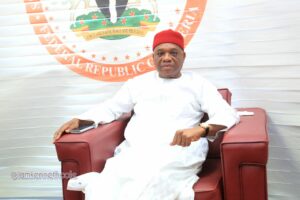
As Nigeria savours her 64th independence anniversary, it is imperative to take stock of her journey towards economic development. Sadly, Nigeria has lagged behind in many developmental fronts. One of such areas is the steel sector where the nation imports 70% of steel valued at almost US$4 billion annually. Thus, after their oversight tours to the steel rolling mills across Nigeria, the Chairman, Senate Committee on Privatization and Commercialization of Public Enterprises, Senator Orji Uzor Kalu, had from a benefit of hindsight as an industrialist, opined that the country must prioritize revamping of steel industries if the nation’s technological advancement would be jumpstarted. He summarized the policy advice thus, “If we don’t revamp the steel industry in Ajaokuta, Katsina, Aladja, Jos and Aluminum in Akwa Ibom, there’s no way we can talk of industrialization in Nigeria. Aba and Nnewi have the human resources to engage in any form of manufacturing but steel is not available. There is nothing that can stop Nigeria from dedicating a one-year budget to rebuild our steel industries…”
The report of World Steel Association indicates that between August 2023 and August 2024, there was a 6.5% decrease in global crude steel production from the seventy one (71) leading steel-producing countries. Nonetheless, they cumulatively produced 144.8 million tonnes (Mt), of which Africa had a negligible fraction of 1.9 metric tonnes. A regional analysis shows that “Africa produced 1.9 Mt,…Asia and Oceania produced 107.1 Mt,…The EU (27) produced 9.1 Mt,… Europe, other produced 3.7 Mt,…The Middle East produced 3.4 Mt,…North America produced 9.0 Mt,…Russia & other CIS + Ukraine produced 7.0 Mt,… South America produced 3.6 Mt,…” From the foreging, the six African top producers of steel that made the list include: Algeria, Egypt, Libya, Morocco, South Africa, and Tunisia.
Understandably, Nigeria is not on the list despite the fact that the idea of Nigerian-owned steel industry was conceptualized as far back as 1958. The technical/economic agreement between the governments of Nigeria and the defunct Union of Soviet Socialist Republics (USSR) brought about the visit of Soviet experts to Nigeria in 1967 to conduct a feasibility study on the viability of establishing a steel plant in the country. The team observed that the obvious iron deposits were of a poor quality and recommended further geological surveys, and in 1968, a new geological report revealed that there were signs of huge deposits of iron ore and coal in the country. Consequently, in 1970, Nigeria signed a contract with Technoexport of former USSR for accurate discovery of right quantities of iron and coal that would service the proposed steel plant. Hence, a huge deposit of iron ore was discovered at Itakpe, now in Kogi State. This led to the establishment of Nigeria Steel Development Agency (NSDA) in 1971 with a mandate of “planning, construction and operations of steel plants in the country. It was in addition tasked with carrying out investigations related to geological surveys, market studies and metallurgical research.”
The contract for the construction of Ajaokuta Steel Plant was signed between Nigeria and Tyazhpromexport (TPE) of USSR on July 13, 1979. The promulgation of the Nigeria Steel Council Decree No.60 in September 1979 dissolved NSDA and birthed Ajaokuta Steel Plant and other sister plants: Delta Steel Company Ltd., Aladja; the Jos Steel Rolling Mill; the Oshogbo Steel Rolling Mill; the Katsina Steel Rolling Mill; as well as the National Iron Ore Mining Company (NIOMCO), Itakpe. The steel billets produced in Aladja was planned to feed the rolling mills. Also, the arrangement was that NIOMCO would “supply 2.2 million tonnes of super concentrates every year to Ajaokuta Steel Ltd.”
As an integrated steel plant with a blast furnace process, Ajaokuta Steel Plant has principal units like “the iron making plant, the steel making plant, the rolling mills, repair facilities, auxiliary facilities and electric bpower supply system.” And to boost local manpower capacity, members of staff of the steel plant were sent on preliminary, short-term and long-term trainings in steel designs and operations of iron and steel industry, in far-flung industrialized countries. Be that as it may, Professor Osita Agbu notes that “the poor capacity utilization of Delta Steel Company and the very long gestation period of the Ajaokuta project meant that the rolling mills had problems of inadequate supply or lack of billets to operate optimally.”
Analysing the potentials of the steel plant, Nosa Igbinadolor notes that it was “Designed to be the biggest industrial project in sub-Saharan Africa in the 1970s, Ajaokuta would have produced 2.6 million tonnes of steel within the first year, half as plates and the others into structural steel, rods and wires.” Unfortunately, it has not been so. Corruption and policy failures are at the root of its crisis.
The late novelist, Chinua Achebe, described it as a “poster child of corruption and white elephant projects in Africa.” The cost of building the steel plant had been reviewed upwards several times. The World Bank put it at US$7 billion (without adjusting it to the prevailing exchange rate). Another account said that over US$10 billion was spent in 34 years with 98% completion in 1994, and that the remaining two percent would gulp another US$2 billion.
Attempts to get the place working under Obasanjo presidency led to concession agreements with Solgas Energy of USA and Global Infrastrucrure Nigeria Limited owned by India, but they yielded no positive result. Yet, investigation reveals that “Ajaokuta workers got N38.9 billion salaries in 10 years.” Now that Nigeria government has signed MOU with Russian consortium led by the original builders of the steel,plant, Messrs, Tyazhpromexport (TPE), government should listen to Senator Orji Kalu’s clarion call when the report of the comprehensive audit comes out.
The country should for one-year stop funding most projects that can wait and prioritise rebuilding of Ajaokuta in 2025. It is a monumantal shame that South Africa and Egypt that are dragging African slot with Nigeria in the UN Security Council are already ahead in industrialization. Nigeria should get understanding!