Follow Us on Google
By Chukwudi Nweje
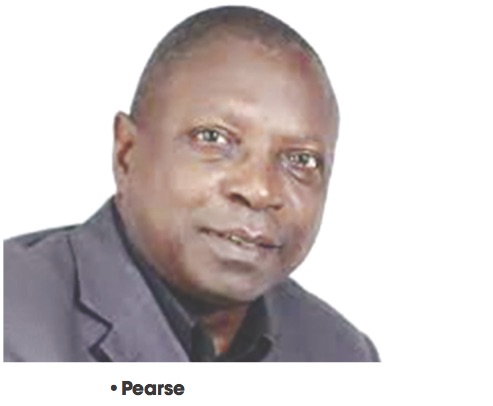
A public affairs analyst, and member of the Peoples Democratic Party (PDP) Presidential Campaign Council (2023), Dr. Adetokunbo Pearse, has said that the controversy surrounding the issue of scoring 25 percent votes in the Federal Capital Territory (FCT), Abuja, prerequisite for winning presidential election could only be resolved through a constitution review.
In this interview, Pearse, who is also the convener of Reset Lagos PDP took a panoramic view of the recent judgement of the Presidential Election Petition Court (PEPC), and the controversial issue of whether a presidential candidate must secure 25 per cent votes in the FCT Abuja to be elected as well as the 100 days of the President Bola Tinubu-led administration, among other issues.
The September 6 judgment of the PEPC, which affirmed President Bola Tinubu’s victory at the February 25 presidential elections, is still creating controversy in many quarters; how do you react to the court’s rejection of all the prayers presented by Alhaji Atiku Abubakar and the PDP?
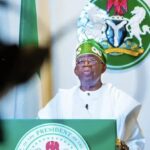
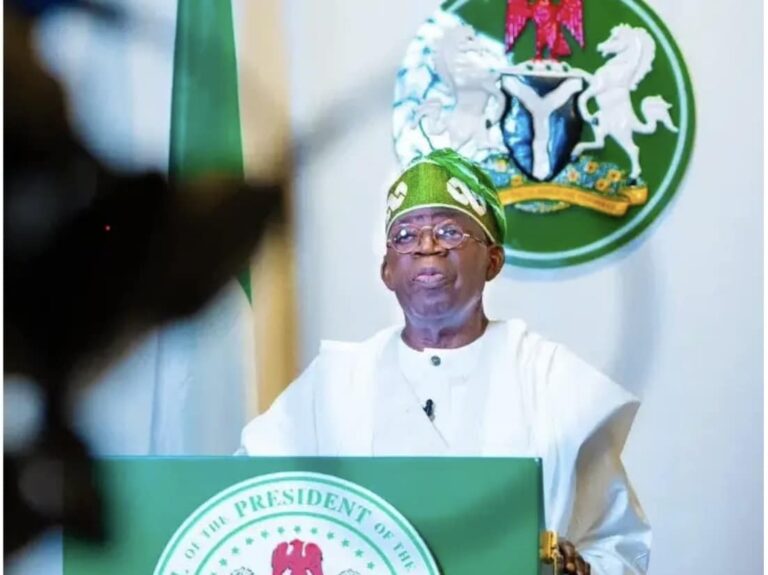
The judgment of the Presidential Election Petition Court which rejected the petition of Atiku Abubakar of the PDP and that of Peter Obi of the Labour Party (LP) to set aside the Presidential victory of Tinubu did nothing to promote the image of Nigeria’s judiciary. Before the tribunal’s announcement of September 6, many Nigerians believed that judges were corrupt. There were rumours that the Chief Justice of the Federation was Tinubu’s personal friend and that the two men had met at a private location in England to seal the deal in Tinubu’s favour.
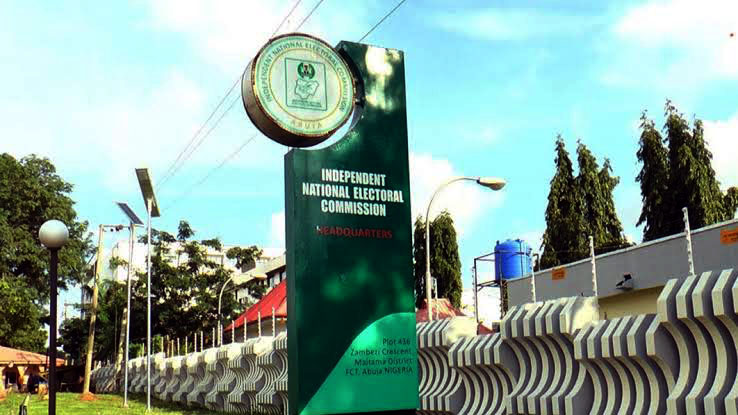
The fact that the tribunal couldn’t find anything wrong with the performance of the Independent National Electoral Commission (INEC) at the 2023 general elections was unbelievable. The fact that the electoral body was not sanctioned for announcing Tinubu as winner when only 31 percent of the votes was in his favour is outrageous to say the least.
Did the outcome of the PEPC come as a surprise to you, and if it did, why?
The decision of the tribunal not to disqualify Tinubu did not surprise me for a number of reasons. Firstly, the tribunal’s decision to overlook the double nomination case of Senator Godswill Akpabio and Senator Ahmed Lawan on the issue of both men being nominated for senatorial and presidential race simultaneously was a signal that a similar case against Kashim Shettima was unlikely to sail through. The precedent was set. The court cannot give one judgement for Lawan and Akpabio, and a different one for Shettima and Tinubu. The court must be consistent with its farce. That is the tradition of the judiciary.
Additionally, Justice Mary Odili’s comments to the effect that Atiku and Obi had no case, gave discerning observers the impression that the ‘powers that be’ were not about to challenge the status quo.
The decision for a live broadcast of the judgement was in sharp contrast to the earlier opposition against live telecast of the proceedings of the PEPC, what do you think happened?
Many senior lawyers objected to the idea of televising the proceedings of the tribunal because it would have exposed the court’s activities. The judges knew they were dealing with a very sensitive case. Most likely, things that threatened national security were involved. For example, I personally suspected that one or more of the presidential candidates had hacked INEC’s server, using the highly sophisticated Artificial Intelligence (AI) system. In such a situation, INEC would be too embarrassed to confess that it had lost control of the election. This is probably why it hurriedly announced the results with just 31 percent of results in. Televising a reading of the final judgement would not allow for the scrutiny which televising the proceedings would have afforded the public.
The verdict of the court is seen as enthroning technicalities over justice, what do you have to say?
There is a popular saying that the Law is made for the benefit of man, not man for the benefit of the law. If for instance, a person commits murder and is arrested with a smoking gun in his hand, but his lawyer pleads insanity; the culprit could be pardoned on grounds of technicality. Justice is what the judges deem to be justice. This is why only a person with the highest level of integrity should be a judge. Unfortunately for society, judges are also human.
Are you satisfied with the PEPC’s position that a presidential candidate does not need to get 25 percent of votes cast in the FCT if he has won majority votes in two-thirds of the federation?
It is difficult to fault the tribunal’s pronouncement that it is not mandatory to score at least 25 percent in Abuja, as long as a candidate has won the highest figure in the overall votes cast, and has succeeded in scoring the minimum 25 percent in two-thirds of the 36 states of the federation because of the vague nature of the clause in the constitution.
This question of the need to win at least 25 percent of votes cast in the FCT has plagued all presidential elections since 1999. Until it is reworded, and the ambiguity cleared, no interpretation will be universally acceptable.
Notice that Atiku, who did not score 25 percent in Abuja, had no reason to bring up the matter, while Obi who won in Abuja felt that it was a strong case for appeal. This vexing question of 25 percent or no 25 percent in the FCT is another good reason for an urgent review of the 1999 Constitution.
President Tinubu has just marked 100 days in office, how do you assess the administration so far?
Tinubu’s first 100 days in office have been virtually a living hell for Nigerians. With his brazen announcement of petrol subsidy removal at his inauguration on May 29, he plunged the country into an economic turmoil. The pump price of petrol jumped from N185 per litre to N500. Today the price has increased further to N616.
Since petrol drives transportation, and provides energy to power production, the astronomical increase in the cost of petrol has had a devastating effect on both the private and public sectors of the economy.
The public has felt the negative impact of the high cost of living. Since Tinubu became president, people have been paying two or three times more for transportation, housing, health, and everyday necessities, such as clothing and soap. Many Nigerians can hardly afford to feed themselves and their families.
The cost of living is at an all-time high. Inflation is around 24 percent. Tuition in the federal government schools and universities has been increased and parents and guardians are finding it increasingly difficult to send their children to school. With about 80 percent of Nigerians earning less than N150,000 monthly, and with over 60 percent of Nigerians earning the official minimum wage of N30,000 per month, it may be an understatement to say that Nigerians are suffering.
Tinubu’s economic policies have also been bad for the private sector. The cost of production has become virtually prohibitive because of the skyrocketing price of petroleum products, diesel, and electricity, as well as raw materials. Consequent to the problems with production, companies are folding up or scaling down on employment.
Evidence of the dire economic climate can be found clearly in the increasing weakness of the country’s currency. When Tinubu became president on May 29, the Naira to the US dollar at bank rate was 450/1. The open market rate was 750/1. Today, 100 days into his administration, the value of the Naira has declined to 740/1 at bank rate, and 900/1 at the open market.
Not only has Tinubu’s economic policies undermined the quality of life in Nigeria; his foreign policy has been a threat to Nigerian lives. Barely 60 days into his administration, the first move he made as the newly elected ECOWAS chairman was to threaten to go to war against the Niger Republic.
Tinubu’s recent trips to India and Dubai have been touted by the administration as a positive effort to attract foreign investments. It is, however, difficult to see how foreign investors will find Nigeria attractive given the high level of insecurity, and the continuing challenge to the legitimacy of the administration, especially by labour unions.
Military coups are suddenly sweeping across West and Central Africa sub regions. In the last three years, we have seen it in Mali, Guinea, Sudan, Burkina Faso, Niger Republic, and Gabon; what do you think is responsible?
Since 2020, military coups d’état ousting democratically elected presidents have taken place in Mali, Guinea, Burkina Faso, Niger, and Gabon. The reasons given by the coup plotters appear to have a great deal of similarities – poor governance, poverty and insecurity. These countries going through this political transition so far are the former French colonies. The military junta, now in charge, accused their leaders of not doing enough to liberate their country from the economic and political stranglehold of France.
History informs us that the French colonial system of ‘Assimilation’ as opposed to the British system of ‘Indirect Rule’ tied the former colonies very tightly to the colonial masters. By the philosophy of ‘Assimilation’, the economic resources of a colony belonged to both the colonized and the colonizer. The political connection was no less interwoven. For example, the President of a French colony had a seat in the French parliament sitting in France. Unfortunately, the relationship has been in favour of France. For example, while the President of a French colony could sit in the French parliament, he had no vote. On the other hand, the French government could send troops and advisors to the former colonies at will.
Arguably, the most vexing issue for the former colonies is their economic relationship with France. In exchange for granting them independence, France compelled the colonies to sign an agreement which gave France control of the mineral resources of the colonies. The contract also stipulated that France must have the offer of first refusal on the sale of any export coming from the former colonies. Additionally, all foreign earnings of the former colonies must be held in French banks.
It is this exploitative relationship which has enabled France to purchase Niger’s uranium at 80 Euros per tonne, while the ongoing market rate is 200 Euros per tonne. Keep in mind that while France is using cheap Nigerien uranium to power electricity in France, most Nigeriens are living in darkness.
In all the former French colonies in which coups have taken place so far, the coup plotters appeared to be enjoying popular support. The citizens have expressed disdain for France, and are reaching out to Russia and China for international alliances.
Former French colonies are yearning to become a part of the New World Order, probably with the BRICS (Brazil, Russia, India, China, and South Africa) Union; which does not have a bitter history of colonization with them. The military take over happening in former French colonies are probably designed to finally get rid of the shackles of colonialism, and leaders who are perceived to be stooges of foreign powers. These African countries are looking forward to a cordial relationship with international powers that are interested in working with them as trading partners and not as political overlords.
What is your take on former President Olusegun Obasanjo’s recent suggestion for African countries to rethink democracy, and rather go with systems and forms of government that suit their peculiarities?
Former President Obasanjo is wrong to cast aspersions on our system of democracy. Obasanjo’s impatience with the system is not surprising because he has the unenviable image of being a self-centered demagogue throughout his public life.
Years ago, Sir Winston Churchill, a former Prime Minister of the United Kingdom was confronted with a similar question of the limitations of the democratic system and he posited that in spite of its imperfections, democracy has proven, with time, to be the best political system society has ever had.
Every country, which has adopted democracy as its form of government, has to find its own way to make it work. The system must be adapted to suit local realities. Democratic practice in the United Kingdom (UK) is not the same as in the United States of America (USA), France, Spain or Kenya.