Follow Us on Google

From Juliana Taiwo-Obalonye, Abuja
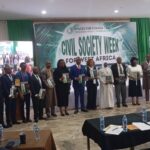
A coalition of women-led movements and civil society organisations has warned that the 2027 National Assembly could see more decline in female representation than 2023, after an audit of 2026 party primaries across 22 political parties found widespread exclusionary practices that led to only three women winning senatorial primaries The audit presented at a national press conference and roundtable in Abuja revealed forced withdrawals, opaque consensus arrangements and last‑minute candidate substitutions that disproportionately shut women out of contests.
The audit noted that only three out of the 22 parties recorded female aspirants’ participation above 20 percent. The parties are the Peoples Democratic Party (PDP) at 28.2 percent, the Young Progressives Party (YPP) at 22.2 percent and Young Party (YP) at 20 percent. At the bottom were the New Nigeria Peoples Party (NNPP) at 0.0 percent, the All Progressives Congress (APC) at 10.4 percent and the NRM at 11.8 percent. The Executive Director of Invictus Africa, Bukky Shonibare, who presented the audit, said female aspirants’ participation remains critically low. “Only three women won the primaries for the Senate. At that rate, women may occupy just 2.7 percent of Senate seats after the 2027 elections.”
Campaigners said the problems are structural and not a matter of capacity or talent. “Exclusion of women as shown in the primaries across political parties is a structural, institutional and political challenge,” said Adaora Sydney Jack of Gender Strategy Advancement International. “If countries with fewer economic resources can achieve significantly greater levels of inclusion, then Nigeria’s challenge cannot be explained by capacity.”
Co‑founder and Executive Director of Voice of Women Empowerment Foundation, Toun Okewale Sonaiya, described the process of the primaries as “gatekeeping institutionalised,” and urged immediate reforms. “If unchecked, 2027 will deliver worse representation for women than 2023,” she warned, calling on President Bola Tinubu to influence passage of corrective legislation. The coalition urged swift legal and institutional action, including passage of a Special Seats Bill, as the most practical pathway to close the gap. “Progress requires legal reform, not just training or advocacy,” said Austin Aigbe, insisting that parties should use the substitution window to correct gender imbalances.
Cynthia Mbamalu of Yiaga Africa urged the Independent National Electoral Commission (INEC) to publish comprehensive, gender‑disaggregated audit reports to expose exclusion and strengthen accountability. “INEC must be accountable and strengthen oversight to ensure constitutional fairness and non‑discrimination,” she said.
Other News
Other demands included making inclusion policies binding within parties, ending the use of consensus to sideline women and requiring male gubernatorial candidates to nominate female deputy governorship candidates.
National President of the Women In Politics Forum, Ebere Ifendu, called on parties to enforce their constitutions and sanction violence, intimidation and discrimination against women aspirants.
The coalition’s charter of demands, directed at governors, party chairmen, INEC and the presidency, asked parties to publish gender‑disaggregated data on who bought nomination forms, who was screened, pressured to withdraw or denied tickets and to stop backdoor exclusions during substitutions. It also demanded that every male gubernatorial candidate presents a female running mate.
Abosede George-Ogan of WILAN emphasised building long‑term political power, saying, “We must build women’s political, economic, institutional and narrative power through technology, leadership development, sustainable funding and grassroots mobilisation.”
The coalition, which includes Voice of Women Empowerment Foundation, Women In Politics Forum and EneObi Centre for Development and Gender Strategy Advancement International, pledged continued monitoring of the 2027 electoral process, documenting exclusion, publishing findings and holding political actors accountable.