Follow Us on Google

•Laments funding crunch, infrastructure gaps
By Chinelo Obogo
Despite its vast population and growing economy, Nigeria’s air travel market remains largely underdeveloped, with only about 17 million passengers recorded annually across 28 airports out of over 220 million people.
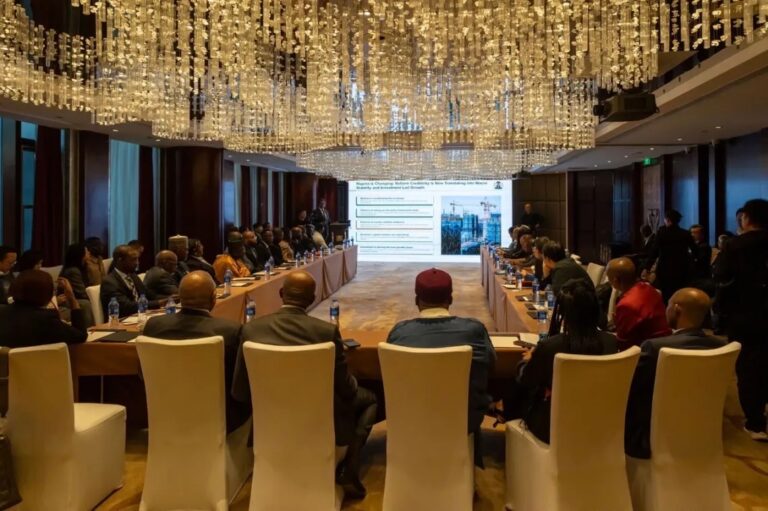
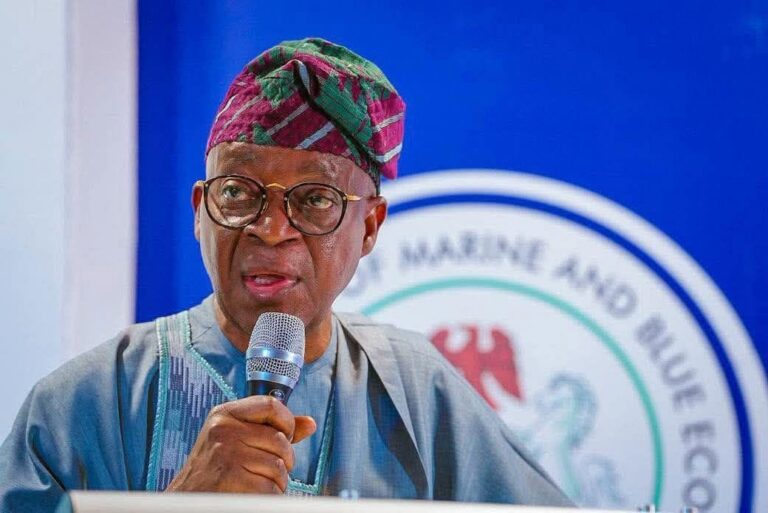
The Managing Director of the Federal Airports Authority of Nigeria (FAAN), Mrs. Olubunmi Kuku, made the disclosure at the Ethiopian Aviation Forum in Addis Ababa held this week as a panelist.
She explained that the gap reflects deeper structural problems, notably chronic funding shortages and weak infrastructure across the country’s airports.
Describing both as key challenges confronting the sector, she warned that limited investment and aging facilities continue to constrain capacity, efficiency and expansion, leaving significant demand untapped and slowing the pace of aviation growth nationwide.
She stressed that for FAAN to bridge Nigeria’s infrastructure gap as a self-sustaining entity, it must deepen private sector partnerships and adopt innovative financing models.
She speaks more about the industry.
What would you describe as some of the challenges and bottlenecks you face with airports in Nigeria?
Nigeria is a country of over 220 million people and when you look at our passenger traffic, we are barely scratching the surface. We have about 17 million passengers, of which about 4.2 million are international, while the rest are domestic. As the Managing Director of the Federal Airports Authority of Nigeria, we manage federal government-owned airports. The federal government owns 22 airports across Nigeria. We also manage, on behalf of some state governments, about six additional airports, and there are also private airports. So imagine: a population of 220 million people, 17 million passengers, and about 28 airports. For any of you who run airports, you can imagine the amount of investment and infrastructure required, especially because we operate in a highly regulated environment. Despite the volume of traffic or aircraft movements at those airports, there are basic standards relating to certifications and safety that we continue to meet.
I would say my biggest challenge is really around the infrastructure deficit and financing that deficit. In the last couple of years, we have explored beyond public finance which is what the country had been doing for a while, which was to rely on the government. I am happy to say that the Federal Airports Authority of Nigeria is now a self-sustaining organisation, at least in the last few years, in the sense that we have been able to drastically increase the revenue we generate, obviously through diversifying non-aeronautical income and also trying to improve aeronautical revenue. But despite that, we have, particularly in the last six to eight months, closed a number of opportunities that are private sector-driven to finance some of the infrastructure. And when I say infrastructure, I mean technology infrastructure as well as airport infrastructure, being both terminals and runways, though that is not to say we no longer rely on public support.
Public support is important, especially where you have had a large infrastructure deficit and are looking to catch up. But to close that gap, we really need to look to the private sector. A lot of what we are doing now, for example, the Minister of Aviation signed off last week on improving our technology infrastructure, largely deploying biometrics at our domestic terminals, financed by the private sector, is about ensuring value for money. Because what we have seen across a number of African airports, and there is a big debate about this. I sit on the ACI board, and we had a board meeting last week where the biggest debate was around airport charges. As we finance this infrastructure, how do we ensure value for money? How do we ensure clarity of purpose in terms of how funding is being used and what the repayment models look like?
So, I would say financing is one of the biggest challenges. The second is the infrastructure gap itself, which is both landside and terminal. But we have prioritised safety infrastructure: airfield lighting and terminal rehabilitations. If you look at the runways in Nigeria, the average lifespan of runway pavements is about 15 to 20 years. We have had situations where some runways, particularly at international airports, have been in service for about 30 years. In the last three years, however, we have been extremely focused on safety. In Lagos, for instance, we have an ongoing rehabilitation of the runway and we completed the international runway last year, and the domestic runway is now being fully rehabilitated. We are doing the same with the Kano airport and the Port Harcourt runway.
In addition, airfield lighting is a priority. Many of our airports do not operate 24 hours. Our international airports do. We have five international airports: Lagos, Abuja, Port Harcourt, Kano and Enugu. Our domestic airports operate on a time-limited basis, a sunrise-to-sunset model where we close some airports down due to traffic levels and capacity constraints. That said, we have been able to extend at least five of those secondary terminals to around 10 p.m. While we work on additional infrastructure airfield lighting upgrades, some moving between Cat 1 and Cat 2 which allows us to improve efficiency and increase traffic, because demand does exist at those airports. So for me: first, financing; second, infrastructure, both landside and terminal; with safety infrastructure, airfield lighting and terminal rehabilitations as our priority.
Other News
We would love to get your perspective on tapping not just public funds, but also Asian, European and North American capital markets, where you typically need an AA2 credit rating to be considered investment grade. Any ideas on how, as a continent, both the public and private sides can approach this?
I am a finance professional by nature before transitioning to aviation, so this is a sweet spot for me. You have rightly spoken about some of the ratings our African countries carry and how challenging it is to raise finance.
The key thing to note is that it is even more challenging as an operator to raise financing, particularly with country risk.
It is difficult to raise capital at any level above that country’s risk ceiling. If you have BB or B-minus ratings, that ceiling is low. But I think one of the key considerations is really the financing model you choose.
In more developed markets, airports go out and raise very sophisticated instruments. We are seeing all sorts of green bonds and infrastructure bonds emerging. But in our context and in Nigeria specifically, we have looked at various models for both managing and financing airport infrastructure. One is concessions. Another is longer-term, sustainable private equity. It really helps, when you are talking about financing, to have investors who have an interest across the entire value chain, not just airport infrastructure, but ground handling, service infrastructure, MROs, and so forth. So one model is longer-term private equity, with investors who are not simply looking for a five-to-seven-year exit and an eight-times return, but who are strategically aligned with your long-term goals as an airport company.
The second consideration is modular infrastructure. In Nigeria, we are currently rehabilitating our Lagos terminal and we are spending approximately $500 million, a relatively modest project focused on rehabilitating Terminal One, expanding Terminal Two, and upgrading the apron. But we have heard about countries spending $15 billion or more on their airports. Where some countries make a mistake is in the absence of a long-term, modular master plan for each airport. If you structure your financing options modularly, you can draw from the debt and equity markets in tranches, development finance institution debt combined with domestic and international private sector capital. That, to me, is the right model: a structured capital stack rather than a straitjacket commitment to one type of financing.
Ethiopia, by the way, is an example of what I believe has been done extremely well, they did not just rely on domestic traffic; they adopted the hub-and-spoke model and built a long-term vision around it.
Also worth considering are debt convertibles, you take on debt initially and, as the airport business grows and its valuation matures, you convert that into equity. That is far preferable to a rigid, single-instrument approach.
What does a smart airport in Africa actually look like? Not in theory, but in practice?
For me, it is a seamless passenger experience. Whatever future-proof technology you build in, it must be easy and smart. For us in Nigeria, it has to be simple, quick, and fast; biometrics, automatic e-gates for immigration, bag-drop [transcript: backdrop] areas, and more airlines on our self-check-in kiosks. Relevance and passenger experience.
If you could change one thing about how airport authorities in Africa operate, what would that be?
I would say policy continuity and governance, strengthening governance structures at the management level, the board level, and at the federal government level, meaning ministerial actions as well.
Looking ahead to 2035, what does success look like for African airports?
For me, success is about enabling connectivity. SAATM is something we have been preaching for years and are still struggling to deliver. I was in Lusaka last year, departing was fine, I transited through Kenya. But on my return, due to timing, I had to fly through Dubai. As we build future-proof airports and world-class infrastructure, we also need to ensure that the fleets and the connections are there to deliver the experience.