Follow Us on Google

Chinelo Obogo, [email protected]
It has been over a year since the crash of Ethiopian Airlines flight 302 on March 10, 2019 which claimed 157 lives from over 30 nationalities. Yet it is still not clear to both the families of the victims or aviation stakeholders who should be held liable for the disaster. Indeed, for the last one year since the incident occurred, it has been a period of buck passing between Boeing and the management of the airline as to what went wrong. While some stakeholders are alleging that the jet manufacturer owes the families an explanation regarding its deficient software that triggered danger alarm when indeed nothing was wrong, Boeing blamed the misfortune on lack of capacity on the part of the airlines’ pilots and crew.
This was as families who were affected have continued to push for the overhaul of global aviation laws and the prosecution of Boeing executives given that it was the second of such event in five months that a new Boeing 737 max had crashed.
On November 28, 2018, a Lion Air flight crashed into the sea moments after takeoff in Indonesia, killing all 189 people on board . But while the world was still lamenting the loss another incident involving, Ethiopian Airlines jet occurred on March 10, 2019 six minutes after takeoff from Addis Ababa, killing all 157 people on board. The two fatal plane crashes which rocked the Boeing, the US aircraft maker forced the worldwide grounding of the Chicago-based company’s 737 Max 8 airliners.
Two Nigerians, a professor and writer, Pius Adesanmi, and Ambassador Abiodun Bashua, a former Joint Special Representative for the African Union-United Nations Hybrid Operation in Darfur, Sudan, were among the 157 people that died in the Ethiopian Airlines jet crash. A month after the Ethiopian crash, Boeing pledged $100million to families and communities affected by the crashes. The company later said half of the money would be reserved for direct payments to families, with the other half set aside for education and development programmes in affected communities. It said families who lost relatives will be paid about $144,500 (£116,200) each. The money comes from a $50million financial assistance fund which the company announced in July 2019.
After it emerged that Boeing has made plans to pay compensation to the victim’s families, Daily Sun reached out to a close family friend of the Adesanmis (Prof Adesanmi lived in Canada with his family till his demise) who didn’t want her name to be mentioned to know how what the family planned to do over the unfortunate incident. She however said the family’s lawyer is handling all the negotiations and is the only one allowed to comment on issues concerning everything that has to do with the crash. Many of his close friends and colleagues took to social media last Sunday to commemorate the anniversary of his death.
Carleton University, Canada, where Adesanmi was director of the Institute for Africa Studies up till his demise released a statement last Sunday in remembrance of the crash. The University described him as an irreplaceable educator, thinker and friend and said a memorial fund had been established to support students at the school and to continue his life’s work.
Daily Sun also sent a message to one of Ambassador Bashua’s sons, Lekan, on his Facebook page but there was no response from him.
Result of investigation
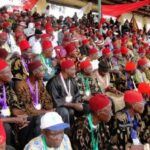
Meanwhile in Ethiopia, where the incident occurred, some relatives of the victims held a memorial service at the site of the crash in Addis Ababa, to commemorate the anniversary of the tragedy. Some community elders especially from the Oromo ethnic stock prayed for the victims and poured the traditional brew on the ground asking that nothing of such should befall their communities again. But as the period of mourning draws to an end, the search for answers continues. While awaiting the airline industry’s final report on what caused the Boeing 737 MAX to crash, surviving relatives have called for Boeing to be excluded from the anniversary memorials having sued the company for compensations.
Draft reports from Ethiopian Accident Investigation Bureau recently released and circulated to US agencies, said the crash was caused by design flaws in the Boeing 737 Max plane and not for the performance of the airline or its pilots. The draft report said a flawed flight control system, triggered by faulty sensor data was also partly responsible. It also found that pilots on the 737 MAX were not provided with adequate training by the aircraft’s manufacturer and determined that Boeing’s Maneuvering Characteristics Augmentation System, (MCAS) which aggressively pushed down the nose of the plane, was “vulnerable to undesired activation.”
The investigations revealed that pilots had not been trained to operate the MCAS that they—along with all other MAX flight crews, didn’t know existed. The report confirmed that Boeing knew all along that the pilots had only 10 seconds to identify the problem and deal with it before being overpowered by the MCAS’s actions.
When the MCAS of the aircraft was triggered, it was responding to false data fed to it from a sensor on the jet’s nose that suggested that the airplane was approaching a stall, when it was not and the House report also confirmed that at least 80 percent of the world’s fleet of MAX jets were not fitted with a warning light that would have alerted pilots to a false reading. In their last moments, the pilots had tried to switch the system off, following emergency procedures but had failed to take control of the plane. This was exactly the same situation the Lion Air pilots had faced in October just before the crash. But Boeing denied that the Lion Air crash was caused by a single-point failure that had no backup system to check and correct it.
The report also stated that the crash could have been prevented if the plane had been equipped with two additional indicators which could have helped with the type of software problem the pilots faced. These indicators are usually optional and Boeing charged additional money for installing them since the US regulatory authority had not set them as a mandatory safety feature. Both Ethiopian Airlines and Lion Air had decided to opt out possibly due to the cost, not knowing that the indicators were a “life-saving” feature.
Few weeks ago, a preliminary report by the U.S House Committee on Transportation and Infrastructure said that a ‘culture of concealment’ at Boeing had contributed to both plane crashes. But Ethiopian Airline has also faced criticism for the way it handled the crash, as some former employees have come forward to accuse it of prioritising profit at the expense of safety. A former chief engineer of the airline, Yonas Yeshanew told Associated Press that the airline had a culture of shoddy maintenance. While Yeshiwas Zeggeye, the former head of the Ethiopian Airline Pilots Association described the response of the airline after the Lion Air crash of October 2018 as inadequate.
With investigations still ongoing, families of victims are still waiting for justice. Aljazeera reports that on March 28, lawyers for the family of Jackson Musoni, a Rwandan victim of the plane crash, filed a wrongful death claim against Boeing, alleging that the firm failed to warn of the defect in the plane’s flight control system, which eventually led to the crash. On April 5, the family of American citizen Samya Stumo, who died in the crash, followed suit, saying in a statement: “Blinded by its greed, Boeing haphazardly rushed the 737 MAX 8 to market, with the knowledge and tacit approval of the United States Federal Aviation Administration”.
And on April 16, family members of Kenyan victim, George Kabau, also announced they are filing a wrongful death lawsuit against the company.
Boeing responded in a statement last Monday saying it looks forward to reviewing the full details and formal recommendations that will be included in the final report from the Ethiopian Accident Investigations Bureau.
Boeing suffers losses
Days after the second crash, Boeing grounded its 737 Max and according to CNN, the crisis has cost the company $18.7billion as orders for the aircraft were being either cut down or out rightly cancelled.
Nigeria’s startup airline, Green Africa Airways is reportedly “close to signing a deal” with Airbus, Boeing’s major competitor for 100 aircraft according to reports by the Wall Street Journal. The company previously planned to acquire Boeing’s controversial 737 Max but ditched the plan for the European aircraft maker, Airbus.
In December 2018, Lagos-based Green Africa Airways announced a commitment for up to 100 737 MAX 8 aircraft, evenly split into 50 firm aircraft and 50 options, as the airline gears up to begin commercial operations. The total deal carried a list-price of $11.7 billion, the largest aircraft agreement from Africa, and was to be reflected on Boeing’s Orders and Deliveries website once finalised. But after two crashes involving Boeing, the deal between Green Africa and Boeing was jettisoned as the former has now signed a deal with Airbus instead.
Green Africa Airways founder, Babawande Afolabi, said in 2018 that the company’s “long-held dream of building a world-class airline that will unlock a new realm of positive possibilities for millions of customers would be achieved with the fleet build from Boeing Max 8.”
Afolabi is a former investment banker with Morgan Stanley where he worked for about 2 years. Green Africa Airways, has received its Air Transport License from the Federal Government.