Follow Us on Google
From Fred Ezeh, Abuja
Cardinal Onaiyekan Foundation for Peace (COFP) has taken up the responsibility of pushing for peace and religious tolerance among different religious groups in Nigeria.
This was contained in a communique issued by the 8th Cohorts of the COFP Fellowship programme released in Abuja.
The communique jointly signed by Simon Faeren Yateghtegh and Farida Zahradeen, noted that the new responsibility was in addition to the efforts of several other inter-religious organisations that are working on better religious relationship, peace and unity of Nigerians irrespective of religious, ethnic or political differences.
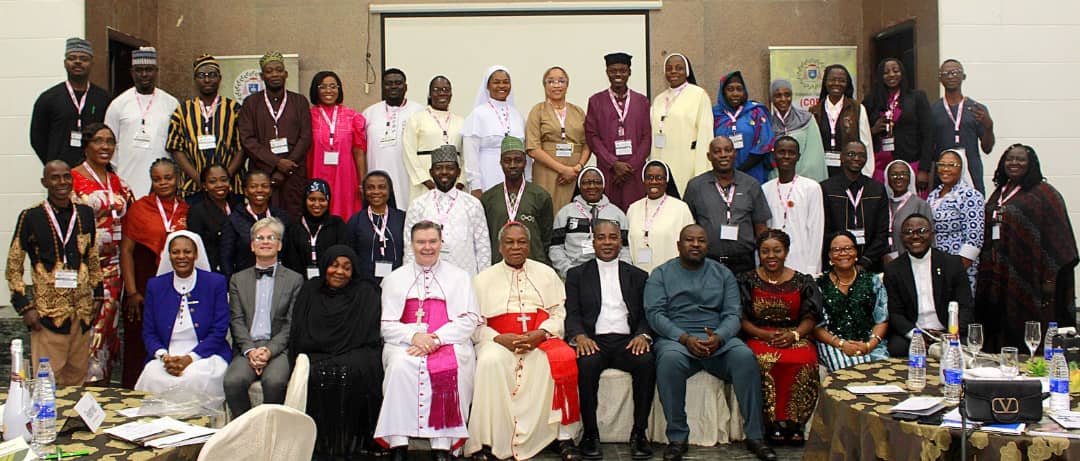
Members of the 8th Cohorts of the COFP Fellowship programme which includes young leaders from Nigeria and West African countries pledged to be ambassadors of peace across the region leveraging the knowledge and expertise acquired in the first training module of the COFP Fellowship Programme.
The eight-day intensive training programme which brought together young leaders from across Nigeria as well as Niger, Ghana, and Cameroon, focused on peace building, conflict transformation, and inter-religious dialogue, deepening participants’ appreciation of the fact that while all religions fundamentally promote peace, they are often misinterpreted or manipulated to fuel division and conflict.
The Fellows highlighted key challenges fueling division and conflict while putting forward bold recommendations to strengthen interfaith dialogue, counter youth radicalization, and build resilient communities.
“These include a limited understanding of peace building principles within faith communities, persistence of stereotypes and misconceptions, insufficient spaces for interfaith dialogue, growing radicalization of youth, and the underutilization of religious leaders in structured peacebuilding efforts.
They also expressed concern on the role of media and social media in amplifying stereotypes and inflammatory rhetoric as well as the limited number of neutral institutions capable of mediating conflicts.
The Fellows, however, made series of recommendations including, greater proactive engagement of religious leaders in interfaith dialogue; integration of peace education into school curricula; regular interfaith forum inclusive of youth, women, and traditional leaders; public awareness campaigns to dispel myths and misconceptions; strengthening of neutral institutions for mediation; youth-focused initiatives to counter radicalisation; intentional inclusion of women in peacebuilding; and stronger regional cooperation among Nigeria, Niger, Ghana, Cameroon, and neighboring countries to address cross-border extremism.
The Fellows further declared that “peace is not merely the absence of conflict, but the presence of justice, tolerance, mutual respect, and constructive dialogue. Guided by the principles of our diverse faiths and cultures, we pledge to uphold these values and resist all attempts to manipulate religion for division and violence.”
They called on the governments, religious and traditional leaders, civil society, the media, and all people of goodwill to join hands in advancing peace, reconciliation, and inclusive coexistence. Together, they expressed a firm belief that a more peaceful and united society is not only possible but achievable.
The Fellows also pledged to serve as ambassadors of peace, promoting tolerance, unity, and respect across lines of faith, ethnicity, and culture.