Follow Us on Google
• Says Tinubu, Atiku are ‘Siamese twins’ on economic reforms; challenges Obi to release FBI records
Nigeria’s Ambassador-designate to Mexico, Reno Omokri, has predicted victory for President Bola Tinubu in the 2027 presidential election, declaring that any attempt to forge an alliance between former Vice President Atiku Abubakar and Peter Obi is “dead on arrival”.
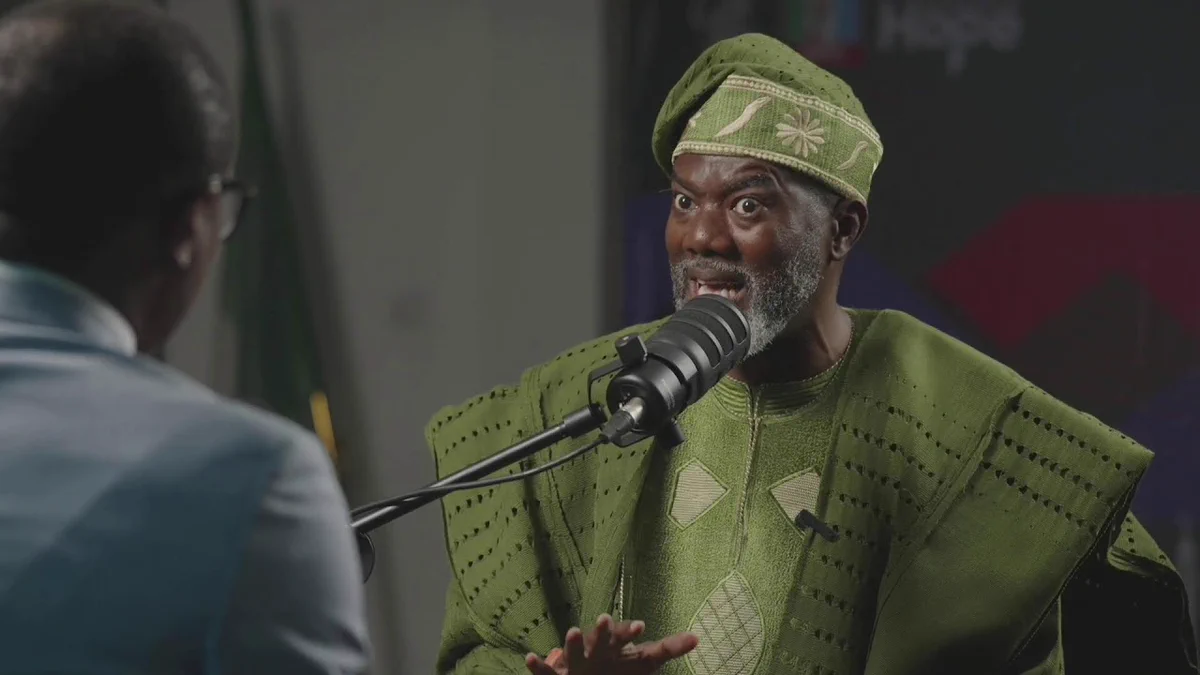
Omokri, who spoke during the City Boy Movement Media One-on-One podcast with Otega Ogra and select journalists, said the competing presidential ambitions of Atiku and Obi, now operating from separate political platforms, would make it difficult for the opposition to unite behind a single candidate capable of defeating Tinubu.
He also described Tinubu and Atiku as “Siamese twins” on economic policy, arguing that the two political leaders shared substantially similar free-market philosophies and that key reforms being implemented by the Tinubu administration had earlier been proposed by Atiku.
The former presidential aide also waded into the controversy surrounding records relating to Tinubu held by the United States Federal Bureau of Investigation (FBI), insisting that there was no fresh criminal case against the President in the United States.
According to Omokri, the current controversy arose from a Freedom of Information Act (FOIA) request concerning records linked to an investigation dating back to 1993, and not from a new criminal prosecution instituted against Tinubu in 2026.
“There is no 2026 case. There’s none,” Omokri said.
“What happened is that a gentleman by the name of Aaron Greenspan filed a FOIA request. The FOIA request, for those who don’t know, is just Freedom of Information Act.
“He filed, so it’s not like there is a new case. There is no case. This is a 1993 investigation. The target of the investigation was not President Bola Ahmed Tinubu.”
On the 2027 presidential election, Omokri said attempts to build a united opposition front would struggle because neither Atiku nor Obi was likely to sacrifice his presidential ambition for the other.
“Peter Obi is not going to step down for Waziri Atiku Abubakar. Waziri Atiku Abubakar is not going to step down for Peter Obi,” he said.
“So it’s dead on arrival.”
He said opposition leaders might continue political consultations and hold meetings through their representatives, but insisted that the leading presidential contenders would struggle to reach the political compromise required to produce a formidable joint ticket.
Omokri expressed confidence that Tinubu would secure another term in office, arguing that the President was politically stronger than he was during the 2023 election and now had the advantage of incumbency.
“The best predictor of future events is past events,” he said.
“If this man won an election when he had a lot of things going against him, how much more now?”
He said the fragmented nature of the opposition would further strengthen Tinubu’s chances as the country moves towards the 2027 presidential election.
Defending Tinubu against claims arising from the FBI records controversy, Omokri argued that Nigerians must distinguish between records held by a law enforcement agency and an actual criminal record.
“There is no criminal FBI record against President Bola Tinubu. There’s nothing like that,” he declared.
“A record is just that, a record. There’s a difference between a record and a criminal record.”
Omokri said much of the political controversy surrounding the issue had deliberately blurred that distinction in a manner capable of misleading Nigerians.
He displayed what he described as a communication from the FBI, transmitted through the United States Embassy in response to an inquiry made by Nigerian authorities in 2003.
According to him, the letter was addressed to the then Inspector-General of Police following a request for information concerning Tinubu.
Reading from the document, Omokri said: “In relation to your letter dated February 3, 2003… regarding Governor Bola Ahmed Tinubu, a record check of the Federal Bureau of Investigation’s National Crime Information Center was conducted.”
He said the response indicated that the search returned no criminal arrest record or warrant against Tinubu.
Omokri challenged journalists and other interested Nigerians to independently verify the document rather than merely reproducing his claims.
“If you’re watching, I say Nigerian media tomorrow, I don’t want you to hear that Reno Omokri claims. No, that’s lazy journalism. Go to the American Embassy,” he said.
He maintained that FBI records could arise from several forms of contact with American institutions and should not automatically be interpreted as proof that an individual committed a crime.
According to him, background checks associated with visa applications and other official processes could generate records with American agencies.
“They are counting on your ignorance to just bandy words,” he said of those, according to him, equating FBI records with criminality.
He argued that the relevant question was not simply whether an institution held records concerning an individual, but whether such records constituted a criminal record or established criminal liability.
Omokri said his challenge to Obi to release any FBI records concerning him was made in defence of his argument that Tinubu could not simply be compelled to publicly release every document held by an American law enforcement agency.
He argued that such records could contain sensitive information, including details relating to third parties, biometric data, fingerprints, family information, financial records and, depending on the circumstances, medical or DNA-related information.
“Would someone not want his private information released to the public, regardless of what?” Omokri asked.
“Your FBI record is going to contain biometrics, meaning that your fingerprints, your eye scan. It’s going to contain details about your body. It’s going to contain details about your blood group. It’s going to contain details about your DNA — not in all cases.”
He said the fact that a political figure had records with the FBI or any other foreign institution did not, by itself, establish criminality.
Omokri consequently argued that those demanding that Tinubu’s records be made public should be prepared to apply the same standard to themselves.
“Release your own FBI record,” he said, challenging Obi.
“Once you release your FBI record… then you have the moral authority to ask for President Bola Ahmed Tinubu to release his.”
To further illustrate his argument about the handling of private and sensitive records, Omokri referenced the action taken by billionaire businessman Dr Deji Adeleke, father of Afrobeats star David Adeleke, popularly known as Davido, during a public controversy over claims regarding the paternity of a child.
Omokri referred to Adeleke’s decision to address the matter publicly and present evidence to counter allegations made against his son, arguing that there was a distinction between voluntarily presenting evidence relevant to a specific allegation and opening up all private records to unrestricted public scrutiny.
Other News
He maintained that sensitive records controlled by law enforcement institutions could involve information relating not only to the principal individual but also to other persons whose privacy rights must be protected.
Omokri said an investigation, allegation, record or even an indictment must also be distinguished from a criminal conviction before conclusions about a person’s criminality could be drawn.
Turning to the economy, Omokri said political emotions had prevented many Nigerians from recognising what he described as striking similarities between Tinubu and Atiku.
“There is almost no difference between Asiwaju Bola Ahmed Tinubu and Waziri Atiku Abubakar in terms of the economy,” he said.
According to Omokri, the economic programme presented by Atiku’s camp during the 2023 presidential campaign included the removal of fuel subsidy, the floating of the naira, devolution of powers from the Federal Government to states and local governments, and the introduction of student loans.
“We said we were going to do four things. We were going to remove fuel subsidy. We said we were going to float the naira. We said we were going to devolve power from the Federal Government to the states and local governments, and finally, we said we were going to give student loans.
“What is the President doing now? Those things.”
Omokri, who previously worked closely with Atiku, said his relationship with the former Vice President gave him an extensive understanding of his political philosophy and economic agenda.
“There is nobody with Waziri Atiku Abubakar who understands his economic policy better than me,” he said.
He argued that it was politically inconsistent for Nigerians to support Atiku’s economic policies while condemning Tinubu for implementing similar reforms.
“If you say you don’t hate this man, but you hate his actions, and then I can prove to you that his actions are exactly the same actions that you have supported, then if you continue to hate this man, that means that you hate him,” he said.
“On a policy level, you are Siamese twins.”
Omokri said the approaching 2027 election could encourage politicians to embrace populist positions that might not necessarily reflect their long-standing economic philosophies.
“Right now, we have an election coming, and because we have an election coming, it is necessary to be populist,” he said.
“You are going to have politicians saying things that maybe they do not believe just because they want to be popular.”
Omokri also explained his dramatic political transition from being one of Tinubu’s vocal critics to becoming one of the President’s prominent defenders.
He said his change of position followed his personal examination of evidence relating to allegations he had previously believed.
He recalled travelling to Chicago while politically opposed to Tinubu to investigate questions surrounding the President’s academic records at Chicago State University.
“I landed in Chicago with the express intention to disgrace Asiwaju Bola Ahmed Tinubu,” Omokri said.
He said the evidence he encountered convinced him that Tinubu attended the university and graduated from the institution.
“I was given incontrovertible evidence that Asiwaju Bola Ahmed Tinubu not only attended that school, but that he graduated cum laude,” he said.
Omokri said he publicly acknowledged the findings despite being politically opposed to Tinubu because he believed the evidence compelled him to change his position.
He said he initially continued to hold his earlier views on the United States civil forfeiture controversy involving accounts linked to Tinubu until documents tendered during litigation arising from the 2023 presidential election prompted him to conduct further checks.
“When we had the court case, things came to rise. A lot of things were presented at the court,” he said.
“So I was able to get certified true copies of these documents, and it established beyond a reasonable doubt that I was wrong. This man was not who I thought he was.”
Omokri said his examination of the documents convinced him that the matter was a civil forfeiture proceeding and not a criminal conviction against Tinubu.
“It was a completely civil case,” he said.
He said he subsequently withdrew his earlier position and apologised personally to the President.
“As soon as the Supreme Court gave its judgment, I was on Channels Television… I said, ‘Hey, I believed it at that time. I have found out that I’m wrong. I’m sorry.’
“And then I contacted, I believe it was somebody who could bring me in front of the President, and I apologised in person to President Bola Tinubu.”
Omokri stressed that he genuinely believed the allegations when he initially made them and that his subsequent reversal was based on evidence he later obtained.
“At that time, I believed everything that I said, everything that I said,” he maintained.
Asked whether he would still be defending Tinubu if he had not been nominated ambassador, Omokri said his public defence of the President predated the appointment.
“I think that I will defend the truth, whether or not I’m an ambassador or anything. Before the President appointed me an ambassador, I was defending the truth,” he said.
Omokri, who previously campaigned for Atiku, said he remained personally close to the former Vice President despite supporting Tinubu ahead of the 2027 presidential election.
He also maintained that he had not joined the ruling All Progressives Congress (APC).
“I am not an APC member. I have only been in one political party. I joined the PDP… and I’ve never changed political party, never,” he said.
Despite his criticism of opposition politicians and his prediction of another Tinubu victory, Omokri said political competition should not translate into permanent personal hostility.
“Peter Obi is going to be defeated. Asiwaju Bola Ahmed Tinubu is going to win the next election,” he said.
“And after that, we must all come back and reconcile, and Nigeria must continue making progress.”