Follow Us on Google
By Arinze Acho
When the COVID-19 lockdowns brought Nigeria’s bustling roads to a standstill, a new crisis quietly emerged: victims of traffic crashes stranded for hours without prompt response. In a country where the traffic death rate stands at a staggering 21.4 per 100,000 people and emergency operations are frequently crippled by poor coordination, this failure underscored the urgent need for smarter, locally adaptable safety systems.
It was within this gap that Oladimeji Basit Alaka, a civil engineer serving with the Federal Road Safety Corps (FRSC) Community Development Service (CDS) Group in Oredo, Edo State, designed an innovation now making waves across the country, the Accident Response Locator (ARL), a low-cost, data-driven platform that connects crash scenes to nearby hospitals, patrol units, and first responders in real time.
Unlike traditional systems that depend heavily on centralized dispatch networks, the ARL operates on a Dynamic Risk Routing Model (DRRM), a unique geospatial algorithm developed by Alaka to pair each detected incident with the most accessible and best-equipped response team. The model considers time of day, network congestion, route reliability, and proximity, learning continuously from past data to identify viable routes in real-world Nigerian conditions.
Speaking on his motivation, Alaka explained: “The problem isn’t just about detecting accidents. It’s about ensuring that the first ambulance can actually get there. Our roads can turn unpredictable within minutes. DRRM was built to think like a local driver, not a satellite.”
The system, built using open-source mapping tools and designed to work even with limited internet access, does more than just send alerts. It integrates crash detection, route intelligence, and medical resource mapping into a single interface, what FRSC officials have described as “an operational bridge between data and action.”
During its pilot phase in Oredo, FRSC teams recorded a 35 percent reduction in response time, thanks to ARL’s ability to automatically match responders to nearby crash sites while simulating alternate routes around congested corridors. The system also uncovered previously unnoticed “silent zones,” road stretches with frequent minor crashes that often escaped official records, allowing authorities to reposition patrol teams more effectively without adding manpower.
Technology and safety experts across Nigeria have hailed the project as a breakthrough in context-aware civic innovation. Civilhive.ng described ARL as “a transportation efficiency breakthrough disguised as a safety tool,” while Safety Africa noted that “its real genius lies in understanding the realities of the roads it serves, irregular networks, limited signals, and human unpredictability.”
According to Olusegun J. Oladipupo, President of the FRSC CDS Group in Oredo, Alaka’s work represents the best of grassroots innovation.
“Oladimeji’s project is an extraordinary demonstration of applied engineering,” Oladipupo said. “He didn’t just design an app, he reimagined how transportation systems can self-correct and respond faster under real Nigerian conditions.”
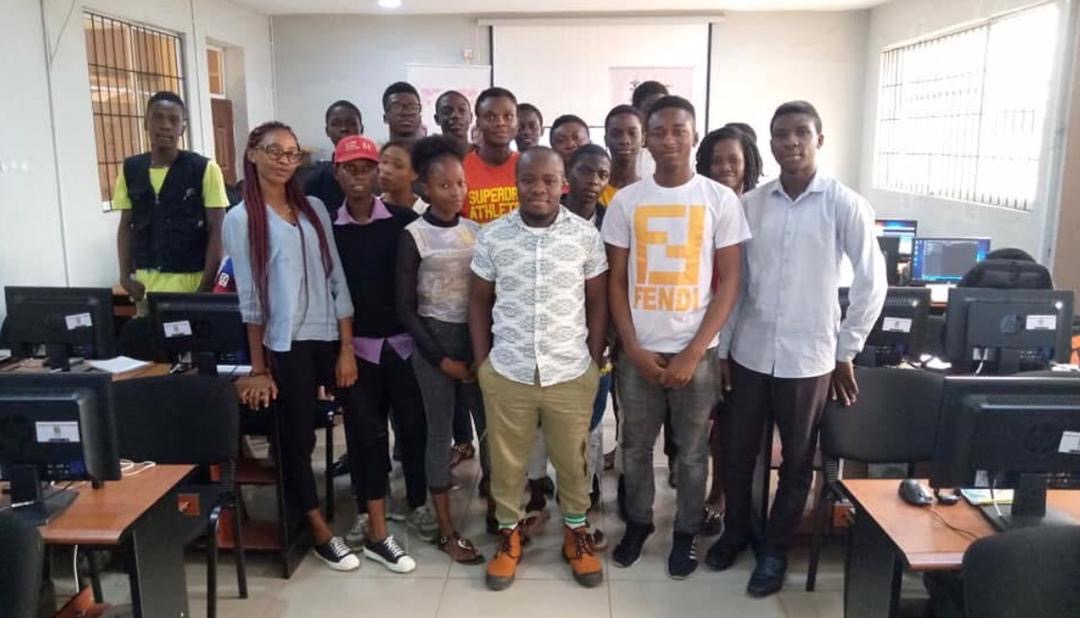
Beyond technology, Alaka has also invested in capacity building. Through a collaboration with the Edo Bit ICT Academy, he has trained young Nigerians in the use of Python, GIS tools, and FRSC open data to analyze crash clusters and road accessibility. The academy has since launched a student-led challenge aimed at replicating ARL’s framework for inter-city logistics and rural transport planning.
This recognition also highlights Alaka’s place among a small circle of younger engineers in Nigeria capable of merging transportation engineering, data analytics, and public safety insight, a combination of high value within the country’s civic technology landscape.
The ARL has since attracted the attention of regional governments and civic tech partners who are now exploring ways to adopt its low-cost, data-driven framework for broader transport management.
In a nation where road safety often suffers due to cost and infrastructure limitations, Oladimeji Alaka’s Accident Response Locator stands as a shining example that innovation does not always need massive budgets, only local insight, ingenuity, and the will to solve real problems.