Follow Us on Google
By Oluseye Ojo
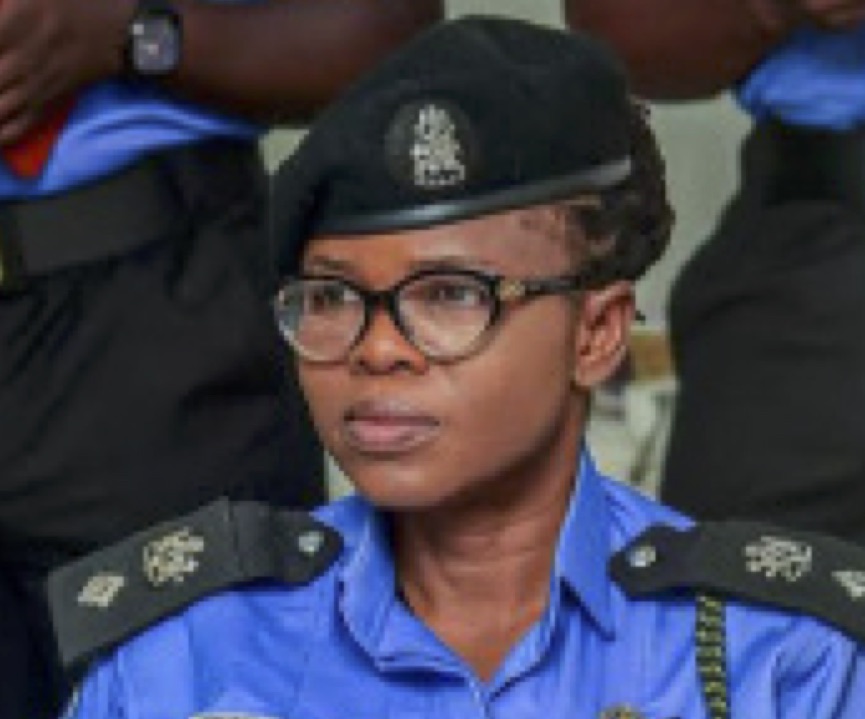
In the heart of Nigeria’s security landscape, a trailblazing figure stands at the forefront of the battle against cultism, drug abuse, and social vices. Meet Olabisi Okuwobi, the National Coordinator of the Police Campaign Against Cultism and Other Vices (POCACOV) and a Chief Superintendent of Police (CSP) with the Nigeria Police.

With over two decades of experience within the police, her expertise spans a diverse range of domains, including her tenure as a Police Information Officer with the United Nations Missions in Liberia and as a Police Public Relations Officer for Delta, Benue, and Oyo States. Okuwobi holds a Master of Arts in Peace and Conflict Studies from the University of Ibadan.
Her prowess in crime fighting and innovative leadership has earned her widespread recognition, including the coveted UN Award of Commendation for Outstanding Performance, the Red Cross Award of Honour, and the Legislative Award for Outstanding Performance.
She is actively engaged with professional bodies, such as the International Association of Chiefs of Police (IACP), the Nigerian Institute of Public Relations (NIPR), and the International Public Relations Association (IPRA), leveraging these platforms to drive positive change.
In this interview, she opens up on spearheading the implementation of targeted strategies:
Why was Police Campaign Against Cultism and Other Vices initiated by the Nigeria Police?
The POCACOV is all about preventive policing initiative of the Nigeria Police Force. Of course, it made its debut on 13th August 2015 in Enugu State. But the present Inspector-General of Police (Kayode Egbetokun) felt that it’s just like an ideology that was on paper. It was more actually in some states like South East. It’s supposed to be all over the country; and that is the IGP’s ideology about preventive policing unit. This was what led to the suspension of POCACOV sometime late last year.
The IGP, in his wisdom, appointed me to be in charge of POCACOV with a marching order that POCACOV should be in all the states of the federation, and in the six geo-political zones. We should have leadership and coordinating presence in all the six geo-political zones, and at the state, local government and even up to the ward levels. We are currently on the membership drive and restructuring of POCACOV.
What actually led to the re-jigging of POCACOV is because the IGP felt that law enforcement alone cannot do it. Police are law enforcement officers. What we do is to enforce the laws created by our law books, such as the constitution, the criminal codes, the Criminal Procedure Act, the Penal Code and so on.
When an offence or a breach of law is committed, the police swing into action and carry out police duties, which comprise mobilisation, arrests, investigation, prosecution, and end with the judiciary.
In the wisdom of the IGP, he took the action to reduce crime, which is hinged on the ideology that prevention is better than cure.
We believe that cultism is like the mother of all crimes. Most criminals that were arrested for organised crimes or individualistic crimes, by the time you hear from them, most especially felonious offences, you will discover that cultism is like a gateway to criminal activities.
Our strategies include going to schools, market places, communities, churches, mosques and all different facets of life to sensitise people about the consequences of criminality, consequences of cultism and disadvantages of going into organised crime groups, and also the benefits of not even going into it, as well as the benefits of believing in yourself, building resilience among the youth, to building confidence among them.
What is the current extent of cultism and other vices in the country, and how is POCACOV working to address the problems?
The extent of cultism in this country is alarming, and it calls for immediate action from all stakeholders, members of the communities and Nigerians. It should not be left for the police alone.
Cultism, to me, is a pandemic, and that is why I have been comparing it to COVID. Those who are in it, we have to think of how to salvage them before it kills them as COVID killed some people, especially all these our youth.
Those who are not yet members, we should put up stringent, intentional and deliberate measures, so that they do not become members. Why? Many of them that are there are now regretting. They don’t even know how to come out of it because of the oath they had taken, or fear for their lives, such as coming out to attack them.
Criminality is local. Now, it is becoming national. It is so because of the internal migration within the country. It is not even just about internal migration, it is also about some youth that do not have anything to showcase, but exportation of cultism to other countries.
There was a time that we saw videos of some Nigerians running after themselves in a country in the Middle East. They attacked themselves. They macheted themselves in the full glare of the camera. This could be one of the numerous issues that made that country to place a visa ban on Nigeria.
Given the deep-rooted nature of cultism, especially with alleged links to the judiciary, security agencies, and public service, how does POCACOV intend to effectively tackle this challenge?
It is a big, enormous, and humongous challenge. But I know that it is surmountable. We will overcome the challenge. In life, there must be challenges. But the ability to overcome the challenges makes you a human being. Challenges must come because they are part of life. Cultism and drug abuse are Siamese twins. They are so knitted together. Members of cult groups use drugs, among other things, during their initiation process. That is where they would start taking drugs.
The challenge that I have is not only about cultism, but about all organised crimes. Cultism leads to organised crimes. Those who are in one cult or the other usually belong to particular organised crime groups.
When drug barons want to look for those that could help them peddle their drugs, they look for cultists. When land grabbers want to look for those to assist them to dispossess somebody of his or her legitimately land, they look for cultists. If some people are looking for somebody to kill for them, they look for cultists. Somebody offended them and they want to teach him a lesson, they look for cultists. So, this is why we say cultism is the mother of all crimes.
Then, the morphology of cultism comes from the word culture. It is supposed to be a cultural thing. As at the time it came up, it was a cultural movement. In fact, when it started, it was a traditional cult organisation, before independence of the country in 1960. But along the line, violence was attached to it. So, the violence is what gives us concern.
I am not saying that we cannot find it in all these places that you have mentioned. In fact, it can also be in religious organisations, where you expect piety and ambience of Godliness.
The laws of our land kick against it. Again, as public servants, being a member of a cult group is against the law. Our public servants include security agencies…
How does POCACOV differentiate between those who are already cult members and those who are at risk of joining? And what strategies are employed for each group?
Of course, we take our time to do some research, and we know what we use to identify them. We know them because of our professional expertise.
For those at the risk of joining, it is because of them that we are embarking on the campaign. Our major aim is to ensure that those who are likely to join do not join, and for those who are there to come out.
Other News
Some people were not even aware that they were at the risk of joining cult groups. For instance, a boy was invited to a naming ceremony and he did not know that it was an initiation ceremony. So, some of them joined ignorantly out of peer pressure or because of violent threats to their lives, especially on campuses.
Of course, we first have both preventive arm and rehabilitative arm of POCACOV. Preventive arm is to prevent those at the risk of joining. We go to schools to campaign, to churches to campaign, tell our priests, pastors, evangelists, prophets, and Imams on the need for them to use the same Bible or the Quran to talk to the youth about the ills and consequences of cultism.
If you look at the children joining cultism in higher institutions, they are either from Christian or Muslim homes. But what went wrong? Some of them follow their parents to churches and mosques. How come they entered universities to go and join cult groups?
So, each of our religious groups should pay special attention to their children in different departments. They should use the holy books to tell them about the ills of belonging to secret societies from the spiritual angle. This is why our target includes religious groups for collaboration.
Also, we have POCACOV outreach to schools. We go to market places to talk to the market people not to use two eyes to watch their products. But they should be using one eye to look at their products and use the second eye to monitor their children.
Then, we also have community engagement, whereby we enter streets and talk to the street people. For instance, in Lagos, we collaborate with Community Development Association (CDA), CDC and so on. We talk to community leaders.
Then, something was launched in the past, which we are going to resuscitate, which is NYSC POCACOV CDS Group, whereby from orientation camp, we will have volunteers among corps members.
There are people going to schools to recruit new intakes or JAMBITES. On this, we are bringing sports as a tool of association for students. When you associate at the sporting level, you may become the champion. Why will a champion go and join a cult group?
Also, we have a talent hunt, which is also a strategy, whereby we organise talent hunt shows. With this, we will help the youth to form their talents. Eventually, those who emerge the best will be given support to take their talents or activities to higher levels. It can also earn them economic empowerment, social accountability, and many good things.
We are actually thinking of POCACOV clubs, whereby in schools from primary school to higher institution. We also have POCACOV Apprenticeship Club because cultism has spread to the street as well. Many of these boys that are learning some trade such as mechanics, vulcanising and so on, are members of cult groups. We have POCACOV Digital Technology Club for the youth to identify their digital prowess and operate in artificial intelligence.
We have a rehabilitative arm of POCACOV. Our method is that we start with a campaign to denunciation and renunciation, and thereafter, we will talk about disarmament. We would use the opportunity to prevail on them to bring out their guns. We use the opportunity to mop up small and light weapons in society. This will be followed by rehabilitation.
The rehabilitation is in two ways. For those who want to go to school and are exceptionally brilliant, we will facilitate scholarship for them. Then, the other one is rehabilitation in terms of skill acquisition. We have POCACOV Technical and Vocational Centres in all the states, whereby these people would be trained. We have rehabilitation from drugs and economic rehabilitation too.
How has POCACOV been helping students of high institutions being threatened to join cult groups?
We have three numbers that we have registered and we have our website. They can go there and codedly send us messages. Then, we shall apply both law enforcement and preventive policing. Before those people would know, they would be rounded up.
Then, we shall release the name of the issuers of the threats and the cult group they belong as the reasons for their arrests. But it is imperative to warn our youth against raising false alarm.
Many successful people around the world belong to one cult group or the other. How does POCACOV justify its stance against cultism in Nigeria, given this global phenomenon?
I am not ignorant of the fact that there are some influential people abroad in one cult or the other. But the ideals of such groups in Nigeria were to fight colonialism, injustice and inequality. But what do we have today? It is our cult group fighting? Are they not involved in violence, carnage, bloodletting, and bloodsucking? Are they not used to cutting down ambitions of future leaders of this country?
We know that the level of criminalities attached to cult groups has reached a crescendo. This is why the Inspector-General of Police decided that enough is enough. We have anti-cult group tackling them on one hand. But POCACOV is using non-kinetic approach to tackle the menace.
Were you ever into cultism? If yes, how did you come out of it, and how did you survive it?
I was never a cult member. But I had an experience. When I was seeking admission to higher institutions, there was a man in our street in Abeokuta. He was quiet, easy-going, unassuming, and humble. So, whenever he saw my parents, he would prostrate flat on the floor.
When I was given admission to Ogun State Polytechnic, he was in that school. My mum called him and said: ‘See your sister. She has been given admission to your school. Help me look for a house for her because there was no hostel in the school.’ He only said ‘okay mummy.’
The house he got for me was where he was living. And he was a capon of Eiye Confraternity. In that same house, they would have their meetings. I was the only young girl at that time living in that house. They would have their meetings at the passage in the night. I would be hearing everything they were saying in my room.
There was a time that some rival cult members came to attack them. I thank God that I went home that time. When I returned to school, the whole house was deserted. I was the only one in the house. So, that was how I first got my baptism of knowing what cult is all about. But I dare not go home to tell my parents.
Whenever I wanted to travel home, I used to leave my key with them. Then, I travelled home at a time. When I came back, I just entered my room, laid on the bed. I put my head on the pillow. All of a sudden, I felt something cold, like my body was touching a metallic thing. I raised the pillow fully. It was a pistol under my pillow. Then, I saw another one, making two pistols. I was shivering. What could have happened? Why would they keep pistols in my room? And I did not have the gut to go and meet him because I had seen it all.
May be he realised that he kept pistol in my room and felt this girl must have come back. He came to my room. It might be that he saw the fear on my face. The next thing, he sent me to go and buy something for him. Before I came back, he had removed the two pistols. Those are parts of the dangers of joining cult groups or mingling with them…
The second experience was when I crossed from Ogun State Polytechnic to Ogun State University. The house that I lived, there were cult guys living there. They were in Buccaneers’ confraternity. We did not even know they were cult members. They were very decently behaved guys, until the other rival group came and busted the house at night.
We were in all our different rooms. We were only hearing sporadic shootings of guns. Some of them jumped from the storey building. Some broke their legs. Some were shot. We were just lucky in that hall that time. It was so terrible. And that was the end of those guys. They did not come back to school. They were in their final year. They abandoned everything in their rooms. They could not come back to pack them.
So, I was never a cultist. But it might be because of this job that God made me see all of those things so that I would be better prepared for this job.
As the national coordinator, what are your long-term aspirations for POCACOV?
I sincerely wish that one day POCACOV will be a reference point or referral point for other countries to study. POCACOV will become a conceptual diasporic referral to solving problems of other countries in such that they will not have issues of cultism or extremism, gangs, organised crimes, because prevention is better than cure.
POCACOV is one of the community policing tools of the Nigeria Police Force. It is presently under the Office of the Force Public Relations Officer, directly to the Inspector-General of Police Office. It should be owned by the community.