Follow Us on Google

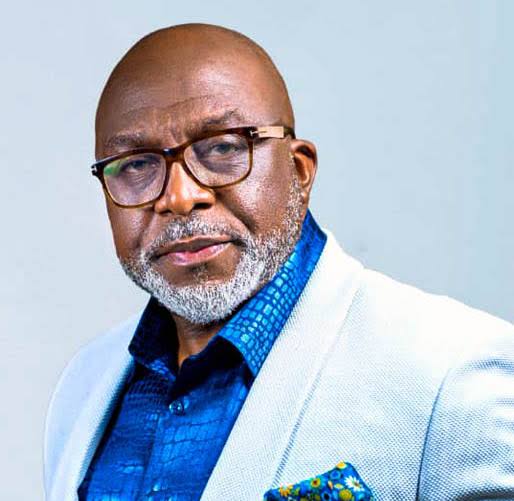
•Pushes self-regulation, warns against censorship
From Juliana Taiwo-Obalonye, Abuja
Executive chairman of United Nigeria Airlines, Prof. Obiora Okonkwo, has warned that hate speech, misinformation and irresponsible communication could be as destructive as weapons, citing the 1994 Rwandan genocide as a chilling example of how manipulated information could incite mass violence, destroy lives and destabilise nations.
He also raised concerns over the growing sophistication of artificial intelligence (AI), warning that its capacity to generate convincing fake images, videos and voices posed fresh threats to democracy, national security and public trust, particularly during elections and periods of political tension.Okonkwo spoke on Thursday while delivering the opening address at the African session of the World Public Relations Forum (WPRF) Abuja 2026, where he challenged journalists, public relations practitioners, advertisers and corporate communication professionals to strengthen self-regulation and uphold ethical standards to prevent communication platforms from becoming instruments of propaganda and social division.
Speaking on the theme, “Responsible Communication in Africa: The Importance of Self-Regulation and Information and Media Literacy”, he said the growing influence of communication demanded greater responsibility from those who shaped public opinion.
“The lesson is unmistakable. Communication is not always an innocent exercise. In the hands of irresponsible actors, the microphone can become as disruptive as a very dangerous weapon,” he declared.
Drawing lessons from the Rwandan genocide, Okonkwo recalled how Radio Télévision Libre des Mille Collines (RTLM) spread ethnic hatred, dehumanised targeted communities and incited violence, helping to create an atmosphere in which neighbours turned against one another. He noted that the International Criminal Tribunal for Rwanda subsequently established the criminal responsibility of media figures involved in inciting genocide, stressing that the tragedy demonstrated the devastating consequences of communication deliberately deployed to promote hatred.
Turning to Nigeria, Okonkwo cited the 2023 general elections as another example of the dangers of irresponsible communication, noting that although social media facilitated political mobilisation, it also enabled the circulation of fabricated election results, unverified claims and divisive ethnic and political narratives.
He recalled that the European Union Election Observation Mission documented misleading political communication during the polls, warning that such practices could undermine public confidence in democratic institutions and citizens’ ability to make informed electoral choices.
“In an age of unprecedented information flow, the credibility, integrity and social value of what we communicate are as important as the freedom and the platforms through which we communicate,” he said.
The airline chairman also cited the COVID-19 pandemic, when the World Health Organisation identified an infodemic of false and misleading information that confused populations, encouraged risky behaviour and weakened confidence in public health institutions.
He said misinformation surrounding Ebola outbreaks in parts of the Democratic Republic of Congo similarly fuelled distrust of health workers and undermined disease-control interventions.
“These examples demonstrate that irresponsible communication can threaten not only democratic stability but also human lives,” he warned.
Okonkwo maintained that the emergence of AI-generated content had made information verification more urgent, particularly as digital platforms increasingly allowed individuals to publish and distribute information without traditional editorial safeguards.
He explained that information literacy enabled citizens to identify credible sources and evaluate evidence, while media literacy helped them understand how messages were produced, framed and distributed.
“In an age when almost anyone with a smartphone can become a publisher and distributor of information, the ability to question, verify and critically assess information is an essential requirement of citizenship,” he said.
He urged governments, educational institutions, media organisations and professional associations to integrate information and media literacy into school curricula, public enlightenment programmes and professional development initiatives.
Other News
On professional responsibility, Okonkwo insisted that self-regulation must extend beyond written codes of conduct to credible enforcement mechanisms, accountability and continuous professional education.
“Self-regulation must go beyond professional codes of conduct to embrace credible enforcement, accountability, continuous professional education and an uncompromising commitment to accuracy, transparency and the public interest,” he said.
He cautioned public relations practitioners against allowing their profession to become an instrument of propaganda, image manipulation and the manufacture of favourable impressions at the expense of truth.
“Public relations, in particular, must resist being reduced to propaganda, image manipulation and the manufacture of favourable impressions, irrespective of the truth.
“Our greatest professional asset must be public trust,” he declared.
However, Okonkwo warned that efforts to combat misinformation must not become an excuse for censorship or political control, insisting that freedom of expression must be protected alongside professional accountability.
He challenged communication professionals to develop practical mechanisms for enforcing ethical standards without compromising their independence or allowing governments and other powerful interests to suppress legitimate criticism.
Speaking from his experience in the aviation industry, he said transparent communication was indispensable to maintaining public confidence, particularly during flight delays, cancellations and safety-related incidents that could generate anxiety and speculation.
“Timely, factual and transparent communication can prevent speculation, correct misinformation and sustain stakeholder confidence, while aggressive statements or concealment of facts can turn manageable operational difficulties into an institutional crisis,” he said.
He maintained that leadership responsibility went beyond defending organisations or projecting favourable public images to communicating facts accurately and sustaining public confidence through transparency and accountability.
Linking his concerns to the forum’s three pillars of peace, democracy and development, Okonkwo said peaceful societies required communication that promoted understanding rather than hatred, while democracy depended on credible information that enabled citizens to make informed choices and hold leaders accountable.
He added that sustainable development required public trust, transparent governance and reliable information, warning that these objectives could not be achieved where misinformation and institutional dishonesty had become normal features of public communication.
“None of these objectives can be sustainably achieved where misinformation and institutional dishonesty become normal features of public communication,” he said.
Okonkwo urged participants to move beyond discussions and develop practical strategies for strengthening professional self-regulation, improving media literacy and preparing African citizens for the challenges of AI-driven disinformation.
“Communication can build bridges or deepen divisions; enlighten citizens or manipulate them; strengthen democratic institutions or weaken confidence in them. The difference lies essentially in the values, professional standards and sense of responsibility governing the production, distribution and consumption of information,” he said.
He maintained that Africa’s aspiration to become “the voice of the world” must be matched by a commitment to truth, integrity and responsible communication that promoted peace, strengthened democracy and supported development.